Filter by what founders actually say

We read 360 product pages ourselves and only recorded a claim when the page said it in its own words — no guessing. This is a small, growing slice of the full catalog, not a replacement for it.

39 products match all selected filters

Aiden

Live

A physical open-source USB device that watches your screen and can operate your phone or computer by voice, entirely offline with zero data collection. Built for makers and privacy-focused tinkerers.

Works offlineOpen sourceSelf-hosted
What to know
How it works
A physical USB device that plugs into any phone or computer, watches the screen over HDMI, and sends taps and keystrokes over USB HID to operate real apps the same way a person would — no app install, jailbreak, developer mode, or API required. It captures the screen, sends it to an AI model of your choice, decides the next action, and repeats until the task is done; voice mode runs on-device.
What's different
Works one layer below software integrations, so it can operate any app you can see and tap, including ones with no API or accessibility layer.
Best for
Makers and privacy-focused users who want to automate phone or computer tasks entirely offline without granting an app API access.

Watched for 26 days · last checked 10d ago

Details →

A browser extension that hides X (Twitter) posts from countries you pick, detecting location locally with no external servers or sign-up. A niche personal timeline filter, not a developer tool.

No sign-upWorks offlineOpen sourceNo tracking
What to know
How it works
A browser extension where you check countries in a popup and posts from those countries disappear from your X For You feed, Following feed, search, and reply threads; detection runs locally using known accounts, country/city keywords, post language, and public profile location.
What's different
No sign-up, no tracking, and no external servers — settings and detection stay in your browser; open source (MIT).
Best for
X users who want to filter their timeline by country without sending data to a third-party server.

Watched for 26 days · last checked 1d ago

Details →

A VPN with only US-based, RAM-only servers, open-source code you can audit, and anonymous sign-up by number, payable in cash or Monero. A general consumer privacy product, not a developer tool.

Open sourceNo tracking
What to know
How it works
A VPN running only on US-based, RAM-only servers (making log retention technically impossible), with open-source code you can audit and account signup by a 16-digit number instead of email.
What's different
Anonymous accounts and payment by mail-in cash, prepaid vouchers, or Monero, plus open-source code for independent auditing.
Best for
US-based users who want their VPN traffic and account to stay off American-soil data requirements without disclosing identity.

Watched for 26 days · last checked 10d ago

Details →

Describe your idea and it generates an animated, narrated slide deck with interactive reveals, playable on web, Mac, Windows, iOS and Android - free, and clearly AI-built.

FreeOpen source
What to know
How it works
You describe your idea and it builds an animated deck with reveals timed to your talking points; slides are interactive (clickable, draggable sliders, live-updating charts) and each deck can generate a spoken narration to walk through it on its own.
What's different
One file plays across web, Mac, iPhone, iPad, Windows and Android, and decks can narrate themselves.
Pricing
Free and fully open.
Best for
Anyone who wants an interactive, narratable deck instead of a static slide file.

Watched for 26 days · last checked 10d ago

Details →

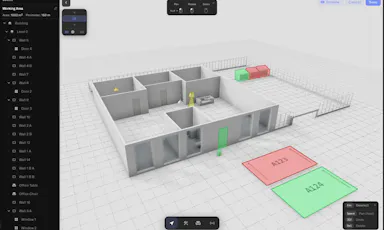
AI-first IoT platform that lets businesses describe what to monitor, then connects devices, writes automation rules, and escalates alarms until a human responds.

What to know
How it works
Provides a visual rules engine with versioning/rollback, two-way device control, an immutable audit trail, and live 3D building twins, scaling from one sensor to thousands.
Pricing
Start free.

Watched for 26 days · last checked 11d ago

Details →

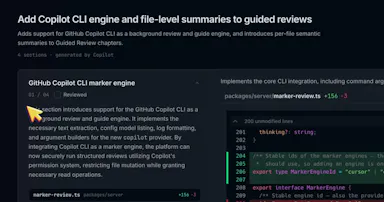
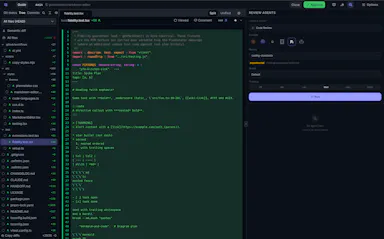
A free, open-source local diff viewer for reviewing AI-agent-written code across git, jj, Perforce and GitHub/GitLab PRs, with optional AI-assisted review - for developers.

FreeOpen sourceSelf-hosted
What to know
How it works
A local diff viewer for reviewing AI-agent-written code, supporting git, jj, Perforce, and GitHub/GitLab pull requests. You annotate lines and files, and those notes feed back into your agent session. An optional AI layer adds inline Q&A, guided reviews and launchable review agents.
What's different
Notes feed directly back into the coding agent's session rather than staying siloed in the review tool.
Pricing
Free, MIT / Apache-2.0 licensed, runs on your machine.
Best for
Developers reviewing large volumes of AI-agent-generated code across multiple version control systems.

Watched for 26 days · last checked 11d ago
Details →

A self-hosted agent that lets you talk to any REST API in plain English through its MCP layer, using your own LLM such as Ollama — built for developers.

Open sourceSelf-hosted
What to know
How it works
A self-hosted agent with an MCP layer that lets you talk to any REST API in natural language, using your own LLM (e.g. Ollama) instead of a hosted one.
What's different
Bring-your-own-LLM and fully self-hosted, so API credentials and data stay under your control.
Best for
Developers who want to interact with REST APIs conversationally while keeping their own LLM and data ownership.

Watched for 26 days · last checked 11d ago

Details →

A 1.2GB AI model that runs fully offline on your laptop and claims to beat GPT-5 on coding benchmarks. Open source with no subscription, built for developers wanting a local coding assistant.

Works offlineOpen sourceNo subscription
What to know
How it works
A 1.2GB AI model that runs fully offline on a laptop, using a neuro-symbolic architecture combining neural pattern recognition with symbolic logic for software engineering tasks.
Pricing
Open-source, no subscription.
Best for
Developers wanting a local, offline coding assistant without cloud dependence.
Watch out
The listing claims it beats GPT-5 on coding benchmarks and cites a 68.4% SWE-bench Lite score — an unverified vendor claim.

Watched for 26 days · last checked 11d ago
Details →

A hosted console that runs Nmap, Nuclei and OWASP ZAP vulnerability scans with client-ready reports, aimed at MSPs, pentesters and security teams.

Nothing to install
What to know
How it works
A hosted console that runs Nmap, Nuclei and OWASP ZAP vulnerability scans with no local install, producing client-ready reports; credits don't expire.
Best for
MSPs, pentesters and security teams who need to run scans and hand clients a report.

Watched for 26 days · last checked 11d ago

Details →

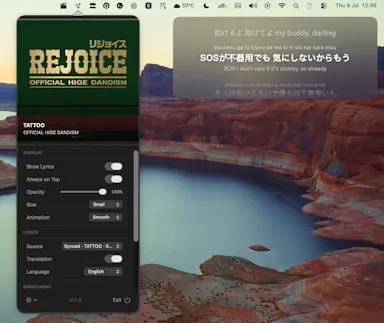
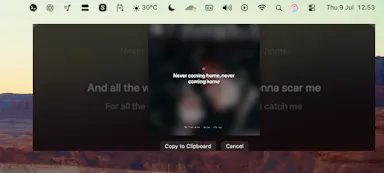
A macOS menu bar overlay that shows synced Spotify lyrics on top of any app, with translations, romanization and shareable lyric cards.

What to know
How it works
A macOS menu bar app that overlays synced Spotify lyrics on top of any app, with live scrolling, word-level fill, translations, romanization, music controls and shareable lyric cards.
Best for
Mac users who want a karaoke-style lyrics overlay while playing music through Spotify.

Watched for 26 days · last checked 11d ago

Details →

SBOMix

Live

Scans your codebase to generate standard SBOM files plus an inventory of the AI models, API providers and MCP servers your code uses. A free CLI for developers, not an API product itself.

Free
What to know
How it works
Scans a repo and produces standard SBOM output (CycloneDX, SPDX) plus an AI-BOM listing the models, API providers and MCP servers the code calls, each with its authority scope.
What's different
Standard SBOM tools don't surface a codebase's AI stack or the agents in it; SBOMix adds that layer.
Pricing
Free CLI, with an optional dashboard.
Best for
Developers who need to inventory not just dependencies but the AI models and agents their code relies on.

Watched for 26 days · last checked 11d ago

Details →

ACTRA

Live

An open-source platform for building custom study exercises (image hotspots, drawing, text checks) with spaced repetition — a study tool for students and self-learners, not a developer tool.

Open source
What to know
How it works
An open-source platform for creating custom study tasks — image hotspots, drawing, text checks — bundling them into complexes, practicing with spaced repetition, and tracking retention progress.
Best for
Students and self-learners who want to build custom active-recall exercises.

Watched for 26 days · last checked 11d ago

Details →

An open-source threat-intelligence platform pulling from feeds like URLhaus, CISA KEV and VirusTotal, building a relationship graph of IPs, domains and CVEs, and exporting to SIEM via STIX/TAXII — for security engineers, not IT generalists.

Open sourceCan export my data
What to know
How it works
Automatically ingests data from feeds like URLhaus, CISA KEV, OTX, Shodan, and VirusTotal, correlates IOCs, resolves conflicting data, and builds a knowledge graph of relationships between IPs, domains, and CVEs, explaining why each alert was generated.
What's different
Open source, and exports to SIEM tools via STIX 2.1/TAXII 2.1, with automated response playbooks included.
Best for
Security engineers building or extending a threat-intelligence pipeline.

Watched for 26 days · last checked 11d ago

Details →

Turns a topic into a two-host AI video podcast with lip-synced avatars and captions, driven from the CLI or a studio UI using your own AI API keys. Open source.

Open source
What to know
How it works
Turns a single topic into a two-host video podcast with mixed AI voices, lip-synced avatars, and word-timed captions, rendered to MP4, driven from the CLI or a live studio interface.
What's different
Open source and runs on your own API keys, so you pay the underlying provider's rates directly.
Best for
Developers or creators who want to generate AI video podcasts from the command line.

Watched for 26 days · last checked today

Details →

Five Python scripts for repetitive office tasks — CSV cleanup, bulk email, file organizing, PDF merging, web scraping. The code is free; the paid bundle adds support, and you'll need enough Python comfort to run scripts yourself.

Free
What to know
How it works
Five Python scripts that automate repetitive office tasks: CSV cleaning, bulk emails, file organizing, PDF merging, and web scraping.
Pricing
The code is free on GitHub; the $29 bundle adds support.
Best for
Developers or makers comfortable running Python scripts who want to automate recurring office tasks.

Watched for 26 days · last checked 11d ago

Details →

Scans your Mac for node_modules folders and package caches eating disk space, with one-click cleanup to Trash. Scanning is free; cleanup needs a one-time fee.

FreeOpen sourcePay onceNo subscription
What to know
How it works
Lives in the macOS menu bar and shows what dev projects cost in disk space: every node_modules folder, the pnpm store, and every installed package with versions and security advisories. One-click cleanup always moves files to Trash rather than deleting with rm -rf.
Pricing
Scanning is free forever; one-click cleanup is a one-time 19 euro lifetime license at the founding price.
Best for
Developers whose Mac disk is filling up with node_modules and package caches across projects.

Watched for 26 days · last checked 11d ago

Details →

An open-source AI coding agent that works in your editor, terminal, or via Discord and Telegram, with approvals and diff review before it touches code. For developers who want to supervise an agent, not just chat with one.

Open source
What to know
How it works
An open-source, local-first AI coding agent for VS Code-compatible editors, CLI/TUI, and messengers via Ether Live Mode (Discord, Telegram), keeping a reviewable task timeline with approvals, checkpoints and pending diffs, and routing across BYOK or Grik-hosted models.
What's different
Keeps a reviewable approval timeline instead of running as an editor-only assistant, with swarm workers for recurring checks and remote follow-ups.
Best for
Developers who want to supervise and approve an AI agent's changes rather than just chat with it.

Watched for 26 days · last checked 11d ago

Details →

A browser-based wiring planner for hand-soldered perfboards that checks your layout against a rule checker implemented separately in JS and Python and cross-verified in CI, catching shorts, backwards parts, and missing connections before soldering.

FreeNothing to install
What to know
How it works
Drag parts onto a canvas to match your real perfboard while a dual-implemented, CI-verified rule checker flags shorts, backwards parts, and missing connections.
Pricing
Free, single HTML file, no install.

Watched for 26 days · last checked 11d ago

Details →

Soromi

Live

A workspace manager for AI coding agents like Claude Code and Codex, giving each project its own logins and terminals so agents keep running after you close the window.

What to know
How it works
A workspace manager for AI coding agents like Claude Code and Codex — each project gets its own terminals, login and folders, and you switch between them like Slack workspaces; agents keep running after the window closes and you can answer their prompts from your phone.
What's different
Deliberately small — no boards, personas or dashboards, just workspace isolation and persistence.
Best for
Developers running multiple AI coding agent projects who want separate logins and persistent sessions.

Watched for 26 days · last checked 11d ago

Details →

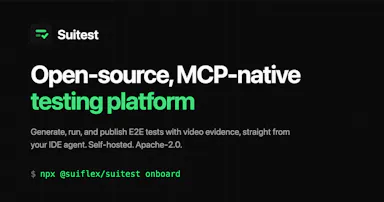
A self-hosted QA tool that generates and runs end-to-end tests with video evidence for AI coding agents like Claude Code and Cursor, pitched as a free TestSprite alternative.

FreeSelf-hosted
What to know
How it works
A self-hosted QA platform that generates, runs and publishes end-to-end tests with video evidence from Claude Code or Cursor, and works with or without an LLM.
What's different
Free and self-hosted, positioned as an alternative to TestSprite.
Pricing
Free.
Best for
Developers using AI coding agents who want reviewable E2E test evidence.

Watched for 26 days · last checked 11d ago

Details →

Noeron

Live

A native Mac/iPad/iPhone OSINT tool that expands a single email, domain, username, phone, IP, wallet or company into a linked intelligence graph using 40+ plugins; open source under MIT.

Open source
What to know
How it works
Turns a single selector — email, domain, username, phone, IP, wallet or company — into a live intelligence graph, running 40+ plugins (most needing no API key) automatically to expand findings.
What's different
Open source under MIT, with a native SwiftUI app for Mac, iPad and iPhone.
Best for
People doing digital/OSINT investigations on Apple devices.

Watched for 26 days · last checked 1d ago

Details →

A free, open-source, browser-based node editor for building procedural 2D/3D geometry with SDFs instead of polygon meshes, exporting to GLSL, PNG or STL — no install needed.

FreeNothing to installOpen source
What to know
How it works
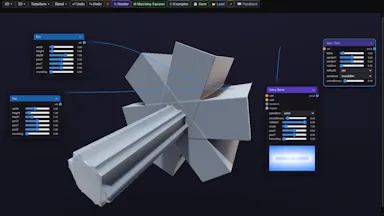
A browser-based node editor for building procedural 2D/3D geometry from primitives, transforms and smooth boolean operations, rendered as CPU contours, GPU GLSL, or ray-marched scenes.
What's different
Uses SDFs instead of polygon meshes — you compose mathematical operations rather than editing vertices.
Pricing
Free and open source, no installation required.
Best for
Developers and designers building procedural geometry for shaders or 3D printing.

Watched for 26 days · last checked 11d ago

Details →

An open-source Chrome extension that lets an AI agent read and act on the page you're viewing, using whatever model you plug in, with API keys kept local and no telemetry.

No sign-upOpen sourceNo tracking
What to know
How it works
An open-source Chrome extension where an AI agent reads and acts on the page you're viewing, using any model you plug in — OpenRouter, OpenAI, Claude, Gemini, Groq, or a local model.
What's different
Model-agnostic and keeps API keys local in the browser rather than sending them through a vendor's servers.
Pricing
MIT license, no account required.
Best for
Developers who want a browser agent they can point at any LLM provider, including local models, without vendor lock-in.

Watched for 26 days · last checked 11d ago

Details →

A free, open-source utility that pauses Netflix or Prime Video the moment you switch away and resumes when you return, with no tracking or server.

Open sourceNo tracking
What to know
How it works
Pauses Netflix or Prime Video the moment you switch to another app, tab, desktop space, or lock your screen, and resumes only if it was the one that paused it — a pause you make yourself stays paused.
What's different
Only resumes a pause it caused itself, so manually pausing on purpose won't get auto-resumed.
Pricing
Open source, no stated price.
Best for
People who frequently step away from Netflix or Prime Video mid-episode and want it to pause automatically without server-side tracking.
Watch out
No tracking, no analytics, no servers, per the product's own description.

Watched for 26 days · last checked today

Details →

A lightweight proxy that sits in front of coding-agent tool calls to block repetitive failing calls, mutate strategy when the agent is stuck, and compress bloated tool outputs, working across Claude, OpenAI, DeepSeek, Ollama, and OpenCode.

What to know
How it works
Runs as a background proxy (installed via pip) that detects and blocks repetitive failing tool calls, mutates strategy on loops, and compresses tool outputs, with a real-time dashboard and savings report.
Best for
developers running coding agents who want to cut token waste and loops.

Watched for 26 days · last checked today

Details →

An open-source agent platform where a lead AI agent takes tasks from WhatsApp, Slack, GitHub, MCP and more, then delegates to worker agents - built for technical teams running agents across their stack.

Open source
What to know
How it works
A persistent, open-source multi-agent system where a lead agent receives tasks from WhatsApp, Slack, GitHub, GitLab, Linear, Jira, email, MCP or API, breaks them down, and delegates to worker agents running in isolated environments.
What's different
Lets teams control costs, manage users, add custom tools, and swap harness or LLM providers, with operational knowledge staying portable across those swaps.
Pricing
Open source (MIT/FOSS).
Best for
Technical teams that want a persistent agent layer working across their existing tools like Slack, GitHub, Jira and Linear.

Watched for 26 days · last checked 11d ago

Details →

Lynq

Live

An open-source Kubernetes operator: add a database row and it provisions a running app, deactivate the row to tear it down. Apache 2.0, for developers and DevOps teams.

Open sourceSelf-hosted
What to know
How it works
An open-source Kubernetes operator that treats a database as the source of truth for infrastructure — adding a row provisions a fully running, continuously reconciled app stack, and deactivating the row tears it down.
What's different
Infrastructure is driven by database rows rather than manifests or a separate deployment pipeline.
Pricing
Open source, Apache 2.0.
Best for
Developers and DevOps teams who want to provision and tear down app stacks by editing database rows.

Watched for 26 days · last checked 11d ago

Details →

PAI

Live

An early-stage project framing itself as a foundational layer for personal LLM-based computing, with no concrete features described in available text.

Watched for 26 days · last checked 11d ago

Details →

A self-hosted, open-source alternative to Calendly and Zoom that runs as one Go binary with SQLite — lets developers own their scheduling and video data instead of paying a subscription.

Open sourceCan export my dataSelf-hosted
What to know
How it works
A self-hostable alternative to Calendly and Zoom that runs as a single Go binary with SQLite, for booking meetings and hosting video calls with recordings saved to your own storage bucket.
What's different
Ships as one small, auditable Go binary instead of a subscription SaaS product, with recordings kept in your own bucket rather than the vendor's.
Pricing
Roughly 30 cents per month to run, versus a subscription; licensed Apache-2.0.
Best for
Developers who want to self-host their own scheduling and video-call data instead of paying for Calendly and Zoom.

Watched for 26 days · last checked 11d ago

Details →

Lets you e-sign a document by forwarding it via email, using your provider's DKIM signature as proof instead of a signing company; open source, self-hosted or hosted, pay-per-document.

No sign-upWorks offlineOpen sourceNo subscription
What to know
How it works
Forward a document to the service and type 'I sign this document' — your email provider's existing DKIM signature becomes the proof of signing, bundled into one self-contained file anyone can verify offline in a browser.
What's different
No third-party signing company is trusted with the signature — the proof relies entirely on infrastructure (DKIM) that already exists and would still verify even if this service disappeared.
Pricing
4 free signatures, then $0.25 per document, no subscription. Open source (Apache-2.0) — self-host or use the hosted version.
Best for
People who need a lightweight, verifiable e-signature for occasional documents without paying for a full e-signature platform subscription.
Watch out
The provider states it never holds a signing key and can't forge or alter documents — that's the product's own security claim, not independently audited.

Watched for 26 days · last checked 11d ago

Details →

A design tool that turns a plain-language screen description into a real native iOS app, not a mockup, using Claude Code and the iPhone Simulator; shared prototypes open in a free companion app on the recipient's iPhone.

Free
What to know
How it works
Describe a screen in plain language and it renders as a real native iOS app rather than a webview mockup; Prototo Desktop puts Claude Code and the iPhone Simulator side by side with no terminal or commands needed.
What's different
Publishes prototypes as a link that opens in a free companion app, running natively on the recipient's own iPhone with real gestures and haptics.
Pricing
Free companion app for viewing shared prototypes; pricing for the desktop tool itself isn't stated.
Best for
iOS designers and developers who want to test a native-feeling prototype on a real device instead of a webview mockup.

Watched for 26 days · last checked 11d ago

Details →

Paste a recipe link and get a clean, ad-free ingredient-and-steps card saved locally in your browser, not on a server; open source, works offline, no account needed.

No sign-upWorks offlineOpen sourceNo ads
What to know
How it works
Paste a recipe link and it strips out everything but the ingredients and steps, saved locally in your browser rather than on a server, with a cook mode that includes step timers.
What's different
Recipes are stored in your browser, not a server — open source (MIT) and works offline.
Pricing
Free, no account, no ads.
Best for
Anyone who wants a clean, ad-free recipe card without scrolling through a blog post to reach the ingredient list.
Watch out
Since recipes are saved in your browser rather than the cloud, they won't sync across devices — the page doesn't mention a sync or export option.

Watched for 26 days · last checked 1d ago

Details →

An open-source React textarea component for AI chat UIs, with mentions, slash commands, tags, markdown and attachments, installable via npm or shadcn.

Open source
What to know
How it works
An open-source React textarea component for AI chat interfaces, with @mentions, /commands, #tags, inline markdown, undo/redo, file attachments and dark mode built in.
What's different
Installable directly via npm or the shadcn registry — a drop-in component rather than a full chat UI framework.
Pricing
Free, open source.
Best for
Developers building a custom AI chat interface who don't want to build a rich text input from scratch.

Watched for 26 days · last checked 11d ago

Details →

A locally-run personal AI assistant that automates tasks, writes code, manages workflows, and generates UGC-style videos and speech, with optional cloud model support.

Works offline
What to know
How it works
Runs an AI assistant locally (with optional cloud models) that automates tasks, writes code, manages workflows, and creates UGC videos plus TTS/STT.

Watched for 26 days · last checked 11d ago

Details →

The Control Plane and Network Layer For AI Agents

What to know
How it works
A control plane and global network connecting AI agents across different frameworks, providers and APIs, without opening inbound ports, setting up tunnels, or changing DNS/firewall rules.
What's different
Built on PubNub's existing real-time infrastructure (used by 113,000+ apps), applying that connectivity to agent-to-agent networking specifically.
Best for
Teams connecting AI agents across multiple frameworks and providers who need a network layer instead of custom point-to-point connections.
Watch out
This is PubNub's existing infrastructure repositioned for AI agents — worth knowing if you're evaluating it as a new product versus an established platform's new feature.

Watched for 26 days · last checked 11d ago

Details →

An open-source, Git-native IDE for running and reviewing AI coding agents — shows what changed in the logic, not just the diff. Built for developers working with AI agents.

Open source
What to know
How it works
A Git-native IDE for running AI coding agents: it tracks the agent's changes at the function and class level and compares the resulting code against your original intent, rather than just showing a line diff.
What's different
Where Git shows lines changed, Aura is built to show what changed in the logic — letting you verify a task was actually completed before committing.
Pricing
Open source.
Best for
Developers who run AI coding agents and want to verify logic-level correctness before trusting a commit.

Watched for 26 days · last checked 11d ago

Details →

An end-to-end platform for building, deploying and monitoring AI agents and workflows — retrieval, orchestration, UI, observability and evals in one stack — for technical teams shipping AI products.

What to know
How it works
One platform to build AI agents and workflows, connect them to your data, design interfaces, then deploy, monitor, evaluate and govern them.
What's different
Consolidates retrieval, orchestration, UI, observability and evals into one stack instead of assembling them from separate tools.
Best for
Technical teams turning AI prototypes into production systems who don't want to stitch together five separate tools.

Watched for 26 days · last checked today

Details →

A local gateway that lets every AI coding client share one set of MCP server connections instead of configuring each tool separately, cutting how many tools your agent has to load.

FreeNo sign-upWorks offlineOpen source
What to know
How it works
A local-first, open-source gateway. You set up and authenticate each MCP server once, and every connected AI client — Claude, Cursor, VS Code, Codex — shares that same connection instead of you configuring it per tool.
What's different
Claims up to 91% less tool-token overhead by giving an agent a handful of meta-tools instead of loading hundreds of individual tool definitions; API keys stay in the OS keychain.
Pricing
Free, open source, no sign-up.
Best for
Developers running multiple AI coding clients against the same set of MCP servers who don't want to re-authenticate each one separately.
Watch out
The '91% overhead cut' figure is the product's own claim; we haven't independently benchmarked it.

Watched for 28 days · last checked today

Details →

Dim0

Live

An open-source infinite canvas that combines notes, diagrams and an AI agent that writes results directly onto the board — built to replace juggling Notion, Excalidraw and a chat window.

Open sourceSelf-hosted
What to know
How it works
An open-source, real-time collaborative canvas. Notes, hand-drawn diagrams and interactive mini-apps live as nodes on one board; an AI agent reads the board, searches the web, and writes results back as new nodes instead of a chat reply.
What's different
Replaces switching between Notion for notes, Excalidraw for diagrams and a separate AI chat window — everything, including the agent's output, lands on the same canvas.
Best for
Teams and individuals who think visually and want an AI agent's output to live alongside their own notes and diagrams, not in a separate chat log.

Watched for 28 days · last checked today

Details →