Filter by what founders actually say

We read 360 product pages ourselves and only recorded a claim when the page said it in its own words — no guessing. This is a small, growing slice of the full catalog, not a replacement for it.

11 products match all selected filters

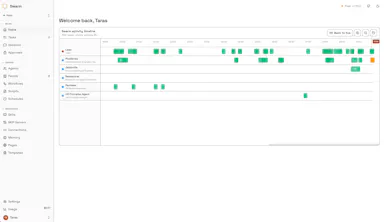
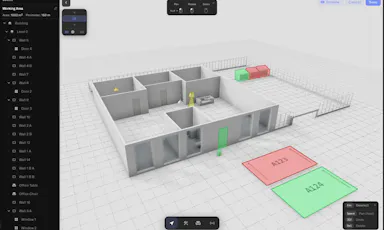
AI-first IoT platform that lets businesses describe what to monitor, then connects devices, writes automation rules, and escalates alarms until a human responds.

What to know
How it works
Provides a visual rules engine with versioning/rollback, two-way device control, an immutable audit trail, and live 3D building twins, scaling from one sensor to thousands.
Pricing
Start free.

Watched for 26 days · last checked 11d ago

Details →

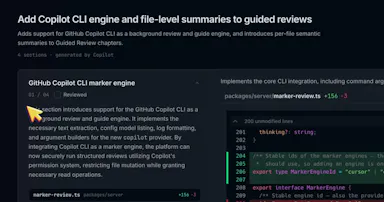
A free, open-source local diff viewer for reviewing AI-agent-written code across git, jj, Perforce and GitHub/GitLab PRs, with optional AI-assisted review - for developers.

FreeOpen sourceSelf-hosted
What to know
How it works
A local diff viewer for reviewing AI-agent-written code, supporting git, jj, Perforce, and GitHub/GitLab pull requests. You annotate lines and files, and those notes feed back into your agent session. An optional AI layer adds inline Q&A, guided reviews and launchable review agents.
What's different
Notes feed directly back into the coding agent's session rather than staying siloed in the review tool.
Pricing
Free, MIT / Apache-2.0 licensed, runs on your machine.
Best for
Developers reviewing large volumes of AI-agent-generated code across multiple version control systems.

Watched for 26 days · last checked 11d ago

Details →

A self-hosted agent that lets you talk to any REST API in plain English through its MCP layer, using your own LLM such as Ollama — built for developers.

Open sourceSelf-hosted
What to know
How it works
A self-hosted agent with an MCP layer that lets you talk to any REST API in natural language, using your own LLM (e.g. Ollama) instead of a hosted one.
What's different
Bring-your-own-LLM and fully self-hosted, so API credentials and data stay under your control.
Best for
Developers who want to interact with REST APIs conversationally while keeping their own LLM and data ownership.

Watched for 26 days · last checked 11d ago
Details →

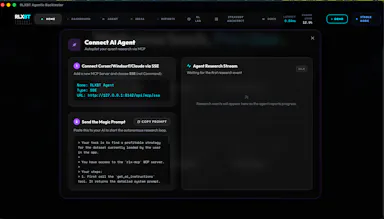
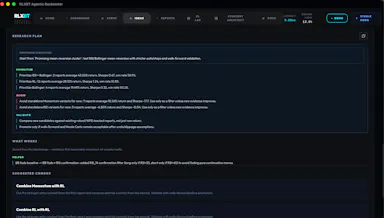
A native macOS app with a Rust backtesting engine for trading strategies, built to be driven by AI coding agents like Claude or Cursor over MCP.

What to know
How it works
A native macOS app with a Rust backtesting engine that connects to Claude, Cursor, or any MCP-compatible agent, letting the agent design, backtest, optimize, and stress-test trading strategies locally.
What's different
Combines a high-performance Rust engine with reinforcement-learning workflows and an AI-native interface built for autonomous agents to iterate on strategies in real time, unlike traditional backtesting tools.
Pricing
Free tier included; Pro unlocks unlimited research.
Best for
Quantitative researchers who want to drive strategy backtesting through an AI coding agent on macOS.

Watched for 26 days · last checked 11d ago

Details →

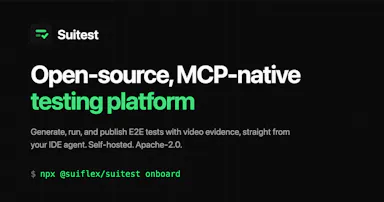
A self-hosted QA tool that generates and runs end-to-end tests with video evidence for AI coding agents like Claude Code and Cursor, pitched as a free TestSprite alternative.

FreeSelf-hosted
What to know
How it works
A self-hosted QA platform that generates, runs and publishes end-to-end tests with video evidence from Claude Code or Cursor, and works with or without an LLM.
What's different
Free and self-hosted, positioned as an alternative to TestSprite.
Pricing
Free.
Best for
Developers using AI coding agents who want reviewable E2E test evidence.

Watched for 26 days · last checked 11d ago

Details →

An open-source agent platform where a lead AI agent takes tasks from WhatsApp, Slack, GitHub, MCP and more, then delegates to worker agents - built for technical teams running agents across their stack.

Open source
What to know
How it works
A persistent, open-source multi-agent system where a lead agent receives tasks from WhatsApp, Slack, GitHub, GitLab, Linear, Jira, email, MCP or API, breaks them down, and delegates to worker agents running in isolated environments.
What's different
Lets teams control costs, manage users, add custom tools, and swap harness or LLM providers, with operational knowledge staying portable across those swaps.
Pricing
Open source (MIT/FOSS).
Best for
Technical teams that want a persistent agent layer working across their existing tools like Slack, GitHub, Jira and Linear.

Watched for 26 days · last checked 11d ago
Details →

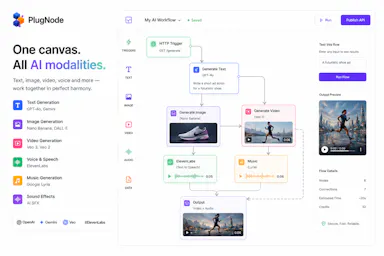
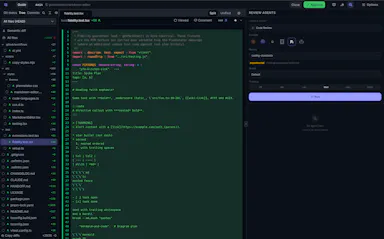
A visual, drag-and-drop builder for chaining AI models like GPT-4o, Gemini, and ElevenLabs into workflows, then exposing them as ready-to-use API endpoints for developers.

What to know
How it works
A visual, drag-and-drop canvas for building multimodal AI workflows across text, image, video and voice, connecting models like GPT-4o, Gemini, Veo and ElevenLabs, then publishing the workflow as an API endpoint.
What's different
Turns a visual node workflow directly into a production-ready API endpoint without separate backend work.
Pricing
Free to start.
Best for
Developers building AI-powered apps, backend automations or content pipelines without wanting to write backend code from scratch.

Watched for 26 days · last checked 11d ago
Details →

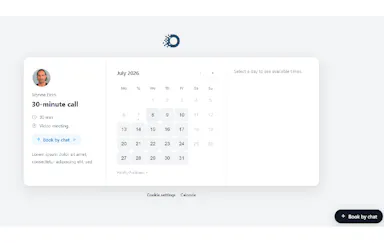
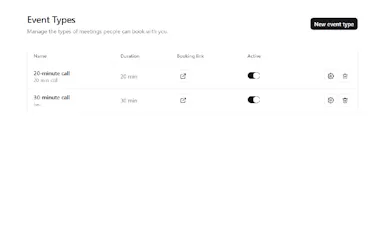
A self-hosted, open-source alternative to Calendly and Zoom that runs as one Go binary with SQLite — lets developers own their scheduling and video data instead of paying a subscription.

Open sourceCan export my dataSelf-hosted
What to know
How it works
A self-hostable alternative to Calendly and Zoom that runs as a single Go binary with SQLite, for booking meetings and hosting video calls with recordings saved to your own storage bucket.
What's different
Ships as one small, auditable Go binary instead of a subscription SaaS product, with recordings kept in your own bucket rather than the vendor's.
Pricing
Roughly 30 cents per month to run, versus a subscription; licensed Apache-2.0.
Best for
Developers who want to self-host their own scheduling and video-call data instead of paying for Calendly and Zoom.

Watched for 26 days · last checked 11d ago

Details →

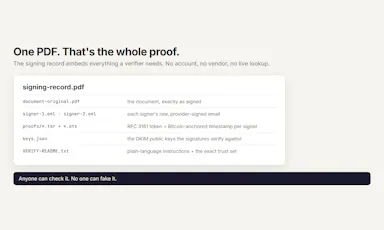
Lets you e-sign a document by forwarding it via email, using your provider's DKIM signature as proof instead of a signing company; open source, self-hosted or hosted, pay-per-document.

No sign-upWorks offlineOpen sourceNo subscription
What to know
How it works
Forward a document to the service and type 'I sign this document' — your email provider's existing DKIM signature becomes the proof of signing, bundled into one self-contained file anyone can verify offline in a browser.
What's different
No third-party signing company is trusted with the signature — the proof relies entirely on infrastructure (DKIM) that already exists and would still verify even if this service disappeared.
Pricing
4 free signatures, then $0.25 per document, no subscription. Open source (Apache-2.0) — self-host or use the hosted version.
Best for
People who need a lightweight, verifiable e-signature for occasional documents without paying for a full e-signature platform subscription.
Watch out
The provider states it never holds a signing key and can't forge or alter documents — that's the product's own security claim, not independently audited.

Watched for 26 days · last checked 11d ago

Details →

An end-to-end platform for building, deploying and monitoring AI agents and workflows — retrieval, orchestration, UI, observability and evals in one stack — for technical teams shipping AI products.

What to know
How it works
One platform to build AI agents and workflows, connect them to your data, design interfaces, then deploy, monitor, evaluate and govern them.
What's different
Consolidates retrieval, orchestration, UI, observability and evals into one stack instead of assembling them from separate tools.
Best for
Technical teams turning AI prototypes into production systems who don't want to stitch together five separate tools.

Watched for 26 days · last checked today

Details →

Dim0

Live

An open-source infinite canvas that combines notes, diagrams and an AI agent that writes results directly onto the board — built to replace juggling Notion, Excalidraw and a chat window.

Open sourceSelf-hosted
What to know
How it works
An open-source, real-time collaborative canvas. Notes, hand-drawn diagrams and interactive mini-apps live as nodes on one board; an AI agent reads the board, searches the web, and writes results back as new nodes instead of a chat reply.
What's different
Replaces switching between Notion for notes, Excalidraw for diagrams and a separate AI chat window — everything, including the agent's output, lands on the same canvas.
Best for
Teams and individuals who think visually and want an AI agent's output to live alongside their own notes and diagrams, not in a separate chat log.

Watched for 28 days · last checked today

Details →