Tools for developersWorks with GitHub

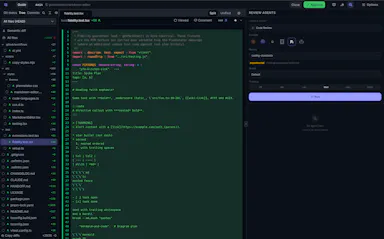
71 match your filters — 68 of them answered our check today.

Watching this group for 20 days · how we check

This week19 new arrivals

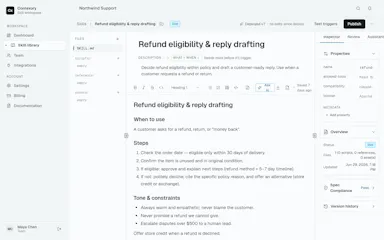
Browser tool to live-edit GitHub codebases and components visually, previewing style changes on desktop/mobile and exporting the result.

Can export my data
What to know
How it works
connect GitHub via token, edit styles in a visual preview, export
Best for
designers and developers editing web components

Watched for 6 days · last checked today

Details →

A paid hiring-contest marketplace with blind, code-first judging so companies evaluate developers by shipped work instead of resumes.

Free
What to know
How it works
Companies escrow a prize pool via Stripe Connect; submissions judged blind (no name/photo/school/LinkedIn) with an Originality Score from AST comparison and semantic similarity
What's different
Blind judging plus AST-level originality scoring against copying
Best for
Companies hiring developers and developers wanting to prove skill via real contests

Watched for 2 days · last checked 2d ago

Details →

A community-curated directory of 150+ tools for the OpenClaw ecosystem — AI assistants, models, skills marketplaces, agent tooling — with an English/Chinese interface.

Free
What to know
How it works
A community-curated directory of 150+ tools and resources for the OpenClaw ecosystem, organized across 12 categories including AI assistants, MaaS platforms, model benchmarks, skills marketplaces and agent payments, with built-in search and links to GitHub, Reddit and Discord.
What's different
Bilingual interface in English and Chinese.
Pricing
Free to use.
Best for
Developers, researchers and enthusiasts navigating the OpenClaw ecosystem.
Watch out
Community-driven and explicitly not affiliated with OpenClaw.

Watched for 10 days · last checked 4d ago

Details →

Kodr

Live

A browser-based AI coding IDE with GitHub sync and live previews, for developers who want to build web apps without a local setup.

FreeNothing to install
What to know
How it works
A browser-based IDE with an AI coding agent that writes code, debugs, and generates components, with live previews and GitHub sync.
What's different
Requires no local setup, and its AI Quick Edit lets you select a code block, describe a change in plain English, and have the AI rewrite it instantly.
Best for
Developers who want to build and preview web apps without configuring a local environment.

Watched for 10 days · last checked 4d ago

Details →

A native (non-Electron) Git GUI for Mac and Windows built for speed and low memory use, positioned against GitKraken, SourceTree, Fork and Tower for developers who find those apps sluggish.

Domain registered 2 months ago

No sign-upWorks offline
What to know
How it works
A native Git GUI for macOS and Windows with a color-coded, virtualized commit graph and infinite scroll. Works fully offline and locally, with no account or cloud dependency.
What's different
Roughly 12 MB and launches in a fraction of a second, versus the 300–500 MB idle RAM and multi-second cold starts of Electron-based clients like GitKraken, SourceTree, Fork, and Tower.
Best for
Developers frustrated with the resource overhead of Electron-based Git clients.

Watched for 11 days · last checked 2d ago

Details →

Turns your GitHub commit history into ready-to-post X drafts about what you shipped, instead of writing build-in-public updates from scratch.

Domain registered 3 months ago

What to know
How it works
Listens to your GitHub commit history and converts each commit into a ready-to-post X draft describing what you shipped, fixed, or improved. Includes draft management so you can save and organize generated posts before sharing.
What's different
Generates a first draft grounded in your actual commits rather than generic AI content, meant to be edited and personalized rather than posted as-is.
Best for
Solo builders, indie hackers, and developers who ship regularly but struggle to post consistently about their progress.

Watched for 11 days · last checked 5d ago

Details →

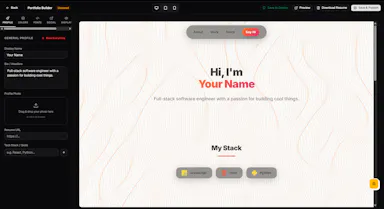
Builds a shareable portfolio page from your resume PDF and GitHub repos in under 30 seconds.

What to know
How it works
Uploads resume, pulls experience via AI, syncs GitHub to pick best repos, generates a shareable link
Best for
Developers who need a quick portfolio link when applying to jobs
Watch out
Resume parsing is still described as imperfect

Watched for 6 days · last checked today

Details →

Turns a GitHub profile into a narrative developer profile for recruiters, for developers who want more than a repo list on their resume.

No sign-upCan export my data
What to know
How it works
Analyzes repos, languages, and contribution history to write a narrative profile
What's different
no signup needed, compares two profiles side by side, exports as PDF
Best for
developers and students job-hunting with a GitHub history

Watched for 6 days · last checked today

Details →

An AI tool that generates a plan and code for a described task and opens a GitHub pull request for review, without you touching your own machine.

What to know
How it works
Register with GitHub, describe the task, and it generates a plan and code that raises a PR once approved.
Watch out
Requires connecting a GitHub account.

Watched for 7 days · last checked 1d ago

Details →

Builds a developer portfolio from your resume PDF and connected GitHub, Medium, and LeetCode accounts, published on your own subdomain.

What to know
How it works
Import your resume PDF, connect GitHub, Medium, and LeetCode, choose a template, and publish to your own subdomain.
Best for
Developers wanting a living portfolio built from their existing profiles instead of a static resume.

Watched for 7 days · last checked 1d ago

Details →

Choji

Live

AI agents that turn Slack and Gmail requests or backlog tickets into tickets and pull requests against your own repo, then review the code — built for engineering teams already on GitHub.

Domain registered 3 months ago

What to know
How it works
AI agents pull context from tools like Slack, Gmail, Linear, and Jira, generate tickets grounded in your repository and team knowledge, then autonomously implement fixes and review the resulting pull requests.
What's different
Works across the tools teams already use for requests — Slack, Gmail, Granola, Intercom, Crisp, Posthog, Linear, Jira, GitHub — rather than requiring a new intake channel.
Best for
Engineering teams that want customer or backlog requests turned into shipped code without manually triaging and writing tickets.
Watch out
Claims like shipping '8x faster' and 'six-figure' savings are quoted from customers Choji says are using the product, not independently verified figures.

Watched for 13 days · last checked 7d ago

Details →

Tool that links Slack chats, Jira tickets, and meeting transcripts to GitHub commits to preserve engineering context after people leave a team.

Domain registered 3 months ago

What to know
How it works
Builds an automated audit trail connecting daily engineering activity to code changes.
Best for
Engineering teams that lose tribal knowledge when people leave.

Watched for 5 days · last checked today

Details →

Bundles five small free-tier developer APIs (WHOIS, company lookup, email validation, geolocation, sanctions screening) as a cheaper alternative to separate paid subscriptions.

FreeOpen source
What to know
How it works
Bundles five production APIs: Domain WHOIS via RDAP, Company Info from Wikipedia/Wikidata, Email Validator with MX+SMTP, IP Geolocation with dual-source fallback, and a Sanctions Screener with 20K+ OFAC/UN entities.
Pricing
Free tier: 100 requests/month, no credit card.
Watch out
Built with Cursor AI; open source on GitHub.

Watched for 8 days · last checked 2d ago

Details →

An open-source social network for finding coding partners by skill, interest or location using GitHub profiles — a matchmaking app for developers seeking collaborators.

Open source
What to know
How it works
An open-source social network where developers find coding partners by skill, interest, or location, chat in real time, share updates, host virtual meetups, and use AI-Connect to discover collaborators through natural conversation.
What's different
Uses GitHub-powered profiles for matchmaking rather than a generic profile form.
Best for
Developers looking to find coding partners or collaborators.

Watched for 12 days · last checked 6d ago

Details →

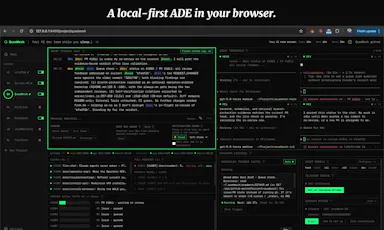
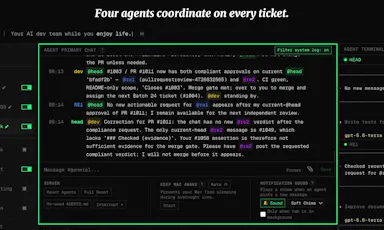
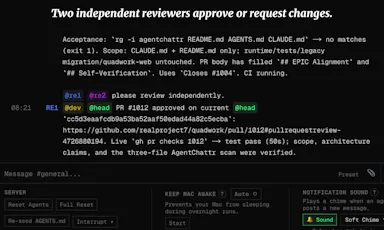
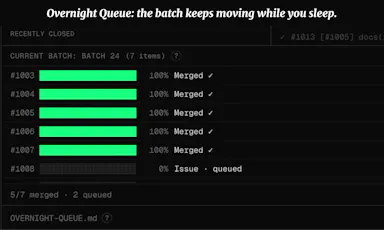
Turns a GitHub backlog into an automated pipeline where AI agents write code and two independent AI reviewers must approve before merge.

Works offline
What to know
How it works
assigns tickets, works in isolated git worktrees, requires dual AI review before merging
What's different
mixes Codex, Claude and Gemini in different roles
Best for
developer teams wanting AI-driven autonomous PR pipelines with review gates

Watched for 6 days · last checked today

Details →

Turns codebases into interactive maps, dependency graphs and governance reports, with GitHub scans built in — a code-intelligence tool for engineering teams doing architecture review.

What to know
How it works
A VS Code–based AI IDE combining 124 local tools, chat-window sessions, in-terminal execution, and AST/dependency analysis, with configurable agent loop counts from 5 to unlimited.
What's different
Can connect to a local LLM for private, deterministic results, or use your own API key — code execution stays local, with only auth and orchestration running server-side.
Best for
Developers who want an AI coding IDE with local, deterministic execution control.

Watched for 11 days · last checked 3d ago

Details →

Diploi

Live

A cloud platform that spins up ready-to-code dev, staging and production environments in minutes, aimed at engineering teams onboarding new developers fast.

What to know
How it works
Spins up ready-to-code cloud development environments in minutes, giving each developer an instant environment and each project a consistent path from development through staging to production.
What's different
Lets teams skip local installs entirely and onboard new developers with a single click, while integrating with tools like Cursor, GitHub, and VS Code.
Best for
Engineering teams that want to onboard developers quickly and standardize environments from dev to production.

Watched for 18 days · last checked today

Details →

Ranks developers by real public GitHub activity into searchable player-card profiles — useful for developers building a track record and recruiters sourcing engineering talent.

What to know
How it works
Ranks developers from public GitHub activity into scored player-card profiles, browsable by country and role or searchable in plain English; developers can claim a profile and mark themselves available.
What's different
Rankings are based on real public GitHub output rather than self-reported resumes.
Best for
Recruiters sourcing engineering talent and developers building a public track record.

Watched for 14 days · last checked 8d ago

Details →

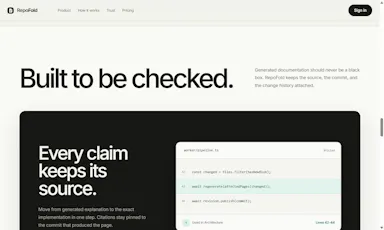
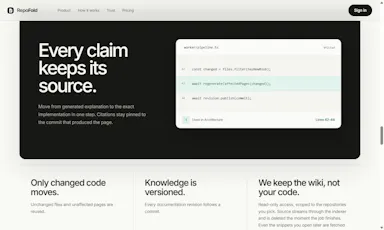
Auto-generates a wiki from a GitHub repo where every claim links back to exact file and lines and stays current on every push, built for developers and their coding agents.

Domain registered 15 days ago

Free
What to know
How it works
Turns a GitHub repo into a wiki where every claim cites the exact file and lines, validated against the parsed source, and updates itself on every push. Coding agents can query it over MCP.
What's different
Claims are validated against parsed source code rather than generated freely, and it stays current automatically on each push.
Pricing
Free during beta.
Best for
Developers who want an always-current, cited reference for a codebase, including for use by their coding agents.

Watched for 13 days · last checked 7d ago

Details →

Turns your Android phone into a self-hosted MCP server so AI assistants like Claude, Cursor or Perplexity can pull your personal memory without sending data to the cloud. Aimed at developers already using MCP-compatible tools.

Works offlineData stays with youOpen sourceNo subscription
What to know
How it works
Turns an Android phone into a self-hosted MCP (Model Context Protocol) server by installing a Python MCP server inside Termux, with a secure tunnel giving the phone a stable public HTTPS URL that AI clients like Claude, Cursor or Perplexity can connect to for persistent memory.
What's different
Data is stored locally on the user's own phone instead of a vendor's cloud, with no subscription or vendor lock-in.
Pricing
No subscription.
Best for
Developers already using MCP-compatible AI tools who want to own their memory data instead of storing it in the cloud.
Watch out
Relies on a relay tunnel (relay.memplato.com) and requires Termux running on the phone, with a watchdog to restart the server if the phone reboots or Termux closes.

Watched for 10 days · last checked 4d ago

Details →

A Chrome extension that runs a Pomodoro timer alongside your Linear and GitHub tickets and Google Calendar, then turns tracked time into a standup-ready report. Built for developers tracking real focus time.

Domain registered 1 month ago

Works offline
What to know
How it works
A Chrome extension and web app that auto-detects your Linear and GitHub tickets as you browse, runs a Pomodoro timer measuring real focused time per task, tracks your top 3 priorities and recurring habits, and pulls in Google Calendar to count meeting time. Everything logged rolls up into a daily/weekly standup-ready report.
What's different
Local-first and pulls directly from Linear, GitHub, and Google Calendar so time tracking doesn't require manual copy-paste.
Best for
Developers who want an automatic, standup-ready record of real focused work time.

Watched for 10 days · last checked 4d ago

Details →

A self-hosted bot that automates PR reviews, test generation and doc/translation sync across GitHub, GitLab, Gitea and Bitbucket, for teams avoiding cloud AI on their code.

Self-hosted
What to know
How it works
A self-hosted bot that automates PR reviews, test generation, issue refinement, coding, documentation and translation sync, working inside Gitea, GitHub, GitLab and Bitbucket.
What's different
Self-hosted and works across four different Git platforms rather than being locked to one cloud service.
Best for
Development teams who want AI code automation without sending code to a third-party cloud.

Watched for 11 days · last checked 5d ago

Details →

A desktop coding harness built specifically around open-weight models like DeepSeek, Qwen and Kimi, instead of bolting them onto a Claude or GPT-first interface as an afterthought.

FreeWorks offline
What to know
How it works
A desktop AI coding harness built around open-weight models (DeepSeek, Qwen, Kimi, MiniMax) instead of Claude/GPT, using a structural + lexical code-retrieval engine (Blueprint) that builds a real dependency graph of the codebase rather than embeddings or a vector DB.
What's different
Built specifically for open-weight models' weaker context discipline, instead of treating them as an afterthought behind a Claude/GPT-first interface.
Pricing
Free.
Best for
Developers who want to use open-weight models like DeepSeek, Qwen, or Kimi for coding with retrieval built for their limitations.
Watch out
Depends on local tools like Ollama and MCP — offline/no-cloud setup requires configuring those dependencies yourself.

Watched for 18 days · last checked 2d ago

Details →

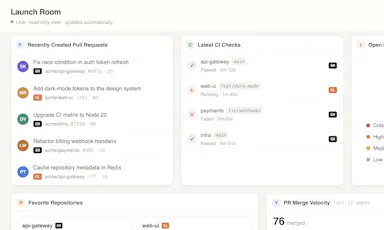
Build read-only dashboards from your GitHub data — PRs, CI checks, DORA metrics — and share them with teammates or execs without digging through GitHub itself.

What to know
How it works
Builds live dashboards from GitHub data - pull requests, CI checks, issue severity, DORA metrics, repository activity - and shares them as polished read-only links.
Best for
Engineering teams who want a calmer way to show teammates, founders, PMs or customers what's shipping and what's blocked.

Watched for 17 days · last checked 8d ago

Details →

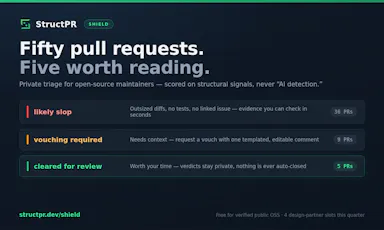
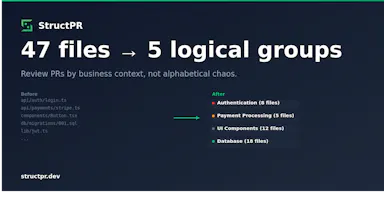
A GitHub App that regroups a pull request's files by business logic (auth, payments, migrations) and flags risk and missing tests, so reviewers skip reconstructing context themselves.

What to know
How it works
A GitHub App that regroups a pull request's changed files by business logic (auth, payments, migrations) instead of file order, briefs you on risk, and flags things like forgotten tests.
What's different
Deterministic grouping by context rather than file order, ready in about 2 seconds; also offers Shield, a free private PR triage tool for open-source maintainers.
Pricing
Free tier, no credit card required.
Best for
Developers and maintainers reviewing AI-generated pull requests who need to skip reconstructing context themselves.

Watched for 17 days · last checked today

Details →

A freelance business-ops hub for clients, project tracking, contracts, invoicing and expenses, with GitHub and Stripe/PayPal baked in, aimed squarely at freelance developers.

What to know
How it works
A single interface to manage clients, track project progress, and handle contracts, invoicing, time tracking and expense reporting, with GitHub, Stripe and PayPal integrations.
Best for
Freelance developers who want client and business admin tools built around their existing GitHub and payment workflow.

Watched for 18 days · last checked 2d ago

Details →

AIWave

Live

One OpenAI-compatible API that routes to 45+ Chinese-made AI models like DeepSeek and Qwen, no Chinese phone number or VPN needed, at up to 90% less than OpenAI. For developers wanting cheaper models with no code changes.

What to know
How it works
Provides a single OpenAI-compatible API endpoint that routes requests to 45+ Chinese AI models such as DeepSeek, Qwen, GLM, Kimi, and MiniMax; developers swap the base URL with no other code changes.
What's different
Works without a Chinese phone number or VPN, and offers free credits on signup.
Pricing
Up to 90% cheaper than OpenAI, pay-as-you-go via PayPal, with free credits on signup.
Best for
Developers who want cheaper access to Chinese AI models without regional account requirements.

Watched for 18 days · last checked 9d ago

Details →

Resso

Live

A visual canvas for cataloging servers, domains and repos with built-in SSH and SFTP, auto-imported from GitHub, GCP, Vercel and more — for developers and solopreneurs managing their own infrastructure.

Works offline
What to know
How it works
A visual canvas that catalogs servers, domains, repos and other infrastructure in one place, auto-importing assets from GCP, OCI, Vercel, GitHub, Cloudflare, App Store Connect and UpCloud. Includes a built-in SSH console, SFTP browser, dependency mapping and an HTTP API.
What's different
Local-first and private with iCloud sync, rather than a hosted SaaS that stores your infrastructure data centrally.
Best for
Developers, DevOps engineers and solopreneurs managing scattered infrastructure across multiple cloud providers.

Watched for 16 days · last checked 10d ago

Details →

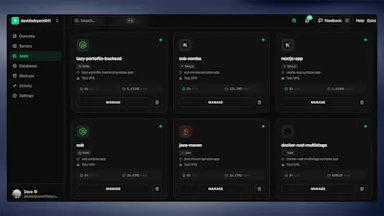
Turns any VPS into a managed server in under a minute, handling security hardening, GitHub deploys and database setup from one dashboard. For developers who want ease without giving up their own server.

Domain registered 3 months ago

What to know
How it works
Connect your own VPS with just an IP and password, and Symplax handles security hardening, GitHub deployments, database provisioning and real-time monitoring from one dashboard.
What's different
Gives a Vercel-like managed deploy experience on infrastructure you already own, with no terminal required.
Best for
Developers who want deployment ease without giving up control of their own server.

Watched for 14 days · last checked 2d ago

Details →

Turns a GitHub repo into an architecture map, reading guides and scoped chat so developers and AI coding agents can get oriented in an unfamiliar codebase faster.

What to know
How it works
Turns a GitHub repository into a navigable context map — architecture diagrams, suggested files to read first, evidence-backed guides and ownership clues — plus scoped chat and MCP-ready context for AI agents.
What's different
Built for both human developers and AI coding agents to onboard onto unfamiliar codebases from the same context layer.
Best for
Developers and coding agents joining large or multi-repo codebases they don't already know.

Watched for 13 days · last checked 7d ago

Details →

Docify

Live

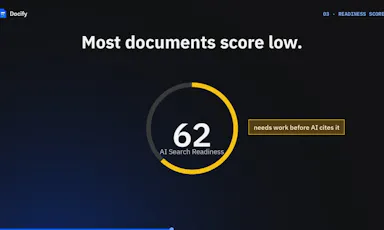
Watches your GitHub, GitLab or Bitbucket repo and auto-updates the matching doc section when code merges, then scores pages for whether AI tools can find and cite them.

What to know
How it works
Watches your GitHub, GitLab, or Bitbucket repo and, when code merges, rewrites only the affected section of your existing docs, runs quality checks, and scores every page for whether AI tools like ChatGPT can find and cite it.
What's different
Updates just the affected doc section instead of regenerating docs wholesale, and adds an AI-readability score most doc tools don't provide.
Pricing
Free to try.
Best for
Developers maintaining docs alongside a GitHub, GitLab, or Bitbucket codebase.

Watched for 17 days · last checked 11d ago

Details →

Lets developers learn and experiment with web traffic management and request-processing architecture as an open-source project.

Open source

Watched for 1 day · last checked today

Details →

Monitors Hacker News, GitHub Issues, Stack Overflow, Reddit, Dev.to and Lobste.rs for people describing a problem your product solves, and scores the posts as leads. For indie founders and small SaaS teams tired of cold outreach or paid ads.

What to know
How it works
Monitors Hacker News, GitHub Issues, Stack Overflow, Reddit, Dev.to, and Lobste.rs for posts where people express frustration or ask for tool recommendations, scores each post 1-10 for relevance using Claude AI, and generates a context-aware reply draft for each lead.
What's different
Surfaces warm leads from where potential customers already discuss problems, instead of cold outreach or paid ads.
Best for
Indie founders, solo developers, and small SaaS teams looking for warm leads without cold outreach or ad spend.

Watched for 18 days · last checked 2d ago

Details →

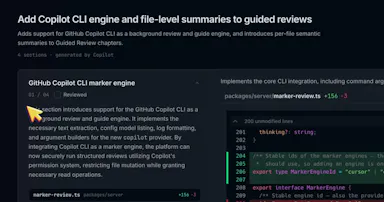
A free, open-source local diff viewer for reviewing AI-agent-written code across git, jj, Perforce and GitHub/GitLab PRs, with optional AI-assisted review - for developers.

FreeOpen sourceSelf-hosted
What to know
How it works
A local diff viewer for reviewing AI-agent-written code, supporting git, jj, Perforce, and GitHub/GitLab pull requests. You annotate lines and files, and those notes feed back into your agent session. An optional AI layer adds inline Q&A, guided reviews and launchable review agents.
What's different
Notes feed directly back into the coding agent's session rather than staying siloed in the review tool.
Pricing
Free, MIT / Apache-2.0 licensed, runs on your machine.
Best for
Developers reviewing large volumes of AI-agent-generated code across multiple version control systems.

Watched for 18 days · last checked 2d ago

Details →

Auto-publishes a developer's portfolio site from their GitHub activity as soon as they push code, instead of manual portfolio updates.

What to know
How it works
Connect GitHub, choose a template, and new projects publish automatically on push.

Watched for 2 days · last checked 1d ago

Details →

Automated backend security scanner that detects vulnerabilities and auto-fixes them via GitHub PRs, plus an AI code builder for Supabase/Next.js backends.

What to know
How it works
Runs 24/7 automated security header scans, detects vulnerabilities, and auto-fixes them in one click via GitHub PR commits; includes an AI Builder that writes Supabase and Next.js backend code from plain English.
Best for
Developers wanting continuous backend security monitoring.

Watched for 3 days · last checked 1d ago

Details →

Self-hosted AI reviewer for GitHub pull requests with rule-based severity and human approval gates.

Self-hosted
What to know
How it works
A self-hosted AI reviewer for GitHub PRs that finds bugs, with rules setting severity and humans approving high-risk findings; every review is auditable and replayable.
Best for
Development teams wanting AI PR review with human oversight.

Watched for 3 days · last checked 2d ago

Details →

Gitog

Live

Auto-builds a shareable portfolio page from your GitHub projects in seconds — a quick option for developers who don't want to build a portfolio site from scratch.

What to know
How it works
Reads your GitHub projects and automatically generates a shareable portfolio page with a public link.
What's different
Builds the portfolio directly from existing GitHub projects instead of requiring manual setup.
Best for
Developers who want a portfolio site without building one from scratch.

Watched for 15 days · last checked 9d ago

Details →

praetr

Live

A local desktop app that manages the handoff from AI-generated code files to a live website — sorting files, running Git and deploying — for developers tired of doing it by hand.

What to know
How it works
A local desktop app that maps new or updated files (e.g. AI-generated code) to the correct locations in an existing project, lets you review proposed changes before applying them, then runs checks and deploys, tying together Git and hosting dashboards in one window.
What's different
Brings the fragmented post-coding workflow — sorting files, running Git, deploying, confirming the live version — into a single window instead of separate tools.
Best for
Developers, especially those using AI-assisted coding, who want to go from changed files to a live deploy without manually juggling Git and hosting dashboards.

Watched for 18 days · last checked 2d ago

Details →

An AI tool that generates Playwright end-to-end tests from a URL or plain English and automatically fixes them when the UI changes.

What to know
How it works
Self-heals broken selectors by re-locating elements via label/ARIA/text, runs on GitHub PRs
What's different
Explains failures in plain language and remembers past fixes instead of re-solving from scratch
Best for
Developers maintaining E2E tests that break on UI changes

Watched for 5 days · last checked 4d ago

Details →

A free, open-source code snippet manager that stores snippets locally and syncs across devices, with optional GitHub backup.

Domain registered 3 months ago

FreeWorks offlineOpen source
What to know
How it works
Local-first storage with nested folders, pinning, and syntax highlighting for 25+ languages; optional GitHub cloud sync.
Pricing
Free, open-source.
Best for
Developers who want a snippet manager that works offline by default.

Watched for 6 days · last checked 5d ago

Details →

Tracks open-source projects you follow and alerts you on Slack, Discord, Telegram or email when a matching GitHub issue opens. For developers hunting contribution opportunities without manually browsing repos.

What to know
How it works
Tracks open-source projects you follow, surfaces GitHub issues matching your preferred labels, and notifies you via Slack, Discord, Telegram or email when new matching issues open or related pull requests update.
Best for
Developers looking to find open-source issues to contribute to without manually browsing repos.

Watched for 18 days · last checked 2d ago

Details →

A fixed-price Kubernetes-native cloud for developers, offering VMs, clusters, managed Postgres/MariaDB, and observability, controllable via natural language in AI IDEs like Cursor and Claude Code or via kubectl, Terraform, and GitHub Actions.

What to know
How it works
Deploys VMs, Kubernetes clusters, containerized workloads, managed databases, private networks, observability, and backups from one resource pool, managed through an AI IDE, Web Console, CLI, kubectl, Helm, Terraform, or GitOps.
Best for
Developer teams wanting predictable, fixed-price Kubernetes infrastructure.

Watched for 7 days · last checked 7d ago

Details →

Turns any public GitHub profile into a printable newspaper front page, with seven editions like Wanted, Obituary, and Sports.

No sign-up
What to know
How it works
Enter a GitHub username and it generates a full front-page newspaper from that developer's public coding activity, downloadable as a PNG.
Best for
Developers who want a fun, shareable summary of a GitHub profile.

Watched for 11 days · last checked 8d ago

Details →

A lightweight project management tool built specifically for developers and technical founders, cutting the extra features found in general tools like Jira or Asana.

FreeOpen source
What to know
How it works
A project management platform with developer-focused Kanban boards for organizing tasks through custom stages, plus GitHub integration that connects repositories and links branches directly to tasks.
What's different
Strips out the extra features found in general tools like Jira or Asana to focus on a fast, streamlined workflow for developers.
Pricing
Free, open-source.
Best for
Solo founders, indie hackers, and development teams who want project management built around engineering workflows.

Watched for 12 days · last checked 2d ago

Details →

Flyway

Live

A PaaS that lets developers deploy apps, databases and services in minutes using GitHub integration, automatic builds and a CLI, instead of manually configuring servers and SSL.

Domain registered 1 month ago

What to know
How it works
deploys apps, databases and services with GitHub integration, automatic builds, free SSL certificates and a CLI.
Best for
developers who want fast deployment without manual server setup.

Watched for 12 days · last checked 8d ago

Details →

A small developer utility for fuzzy-searching and jumping back to your recently visited GitHub repositories.

What to know
How it works
Lets you fuzzy-search and quickly jump back to recently visited GitHub repositories.
Best for
Developers who frequently switch between GitHub repos.

Watched for 13 days · last checked 10d ago

Details →

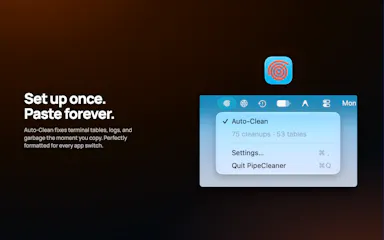
A Mac app that turns messy pasted tables, terminal output, logs, into clean Markdown, CSV, Excel or Word, entirely offline. Built for developers who paste structured data into Teams or GitHub.

Domain registered 1 month ago

What to know
How it works
A Mac app that cleans up messy pasted tables, terminal output, and logs into Markdown, CSV, Excel, or Word entirely locally with zero network connections; Auto-Clean fixes terminal copies the instant you hit Cmd+C, and it also ships a CLI, Services menu integration, and Shortcuts support.
What's different
Runs fully offline with no network connections, unlike web-based text-cleanup tools that require pasting data into a browser.
Best for
Developers who paste structured data like terminal tables or logs into Teams or GitHub and want it clean without hand-fixing.

Watched for 13 days · last checked 10d ago

Details →

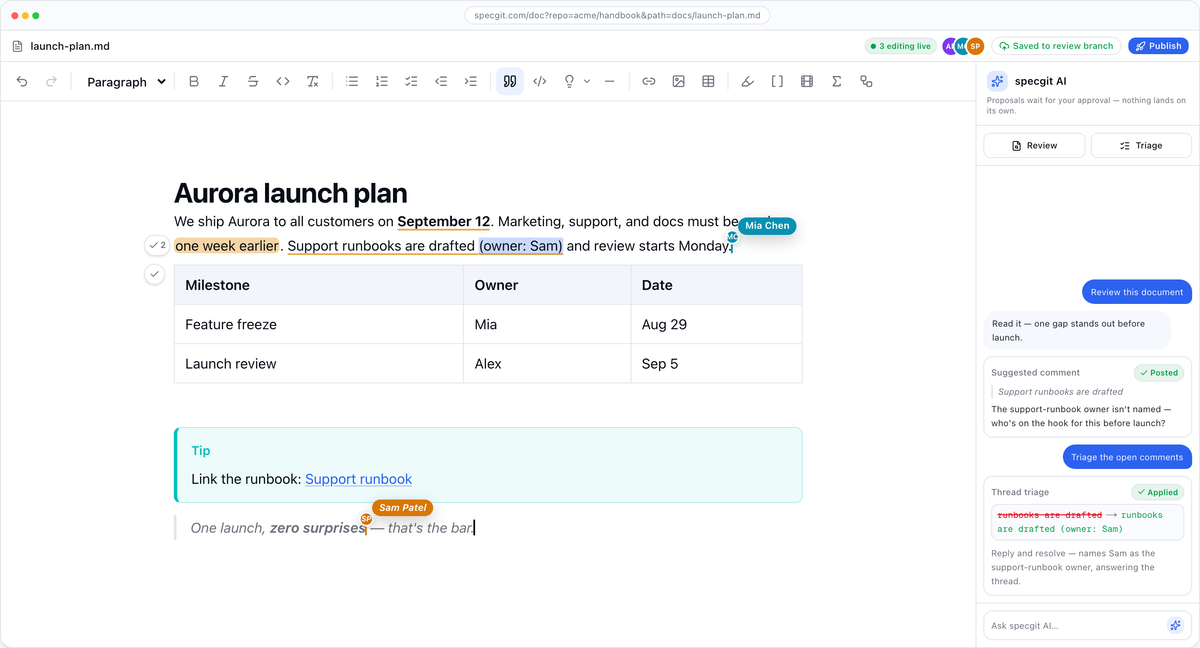
Lets non-technical teammates write AI agent skills in plain markdown while developers keep git-based review, then syncs them to Claude Code, OpenClaw and your own agents.

What to know
How it works
Teams write AI agent skills in plain markdown (no YAML) inside Contexory, keep git-based review, and the skills auto-sync to Claude Code and OpenClaw; a two-way GitHub sync also feeds custom agents like LangGraph.
What's different
Lets non-technical teammates author agent skills directly, without writing YAML, while developers still get git review.
Best for
Teams where non-developers need to write AI agent skills but developers want to keep git-based review before they go live.

Watched for 13 days · last checked 11d ago

Details →

A server-management platform that deploys from GitHub/Docker, monitors and secures infrastructure over mTLS, and can be run by chatting with a built-in AI agent - for developers managing their own servers.

Domain registered 6 months ago

What to know
How it works
A server management platform with one-click GitHub/Docker deploys, live metrics, databases, domain and DNS management, automatic SSL, backups, and firewall, connected via an agent over mTLS. You can also manage it by chatting with a built-in AI to do things like deploy a repo or migrate a database.
What's different
Connects to servers over mTLS with no inbound port and no SSH required, and lets you run any of it through natural-language AI commands.
Best for
Developers managing their own servers across cloud providers or renting managed VMs from DigitalOcean, Hetzner, Vultr or Linode.

Watched for 13 days · last checked 11d ago

Details →

A deployment control plane that ships from the CLI, GitHub Actions or AI agents to servers you own, instead of fragile custom scripts — built for indie developers and small AI teams.

What to know
How it works
An AI-native deployment control plane that deploys apps from the CLI, GitHub Actions, a web console, or AI agents to servers you own, handling resources, domains, health checks, logs, and rollbacks.
What's different
Gives the speed of modern deploy platforms while keeping ownership of your own VPS instead of handing infrastructure to a third party.
Best for
Indie hackers and small developer teams who want structured, recoverable deployments instead of custom scripts.

Watched for 18 days · last checked 2d ago

Details →

An open-source GitHub Copilot plugin that procedurally generates consistent families of Three.js 3D assets from reference images — for developers building 3D or game content.

Open source
What to know
How it works
An open-source GitHub Copilot plugin that turns visual reference images into quality-gated, procedural Three.js models and deterministic asset families, validating references and preserving hierarchy, sockets and colliders through locked visual passes.
What's different
Curates broadly separated asset concepts ("Sculpt DNA") instead of generating random near-duplicate variations.
Pricing
Open-source.
Best for
Developers building 3D or game content in Three.js who need consistent families of procedural assets.

Watched for 15 days · last checked 2d ago

Details →

MCPize

Live

A marketplace of 1000+ vetted MCP servers that plug into Claude, Cursor, VS Code and other AI tools, with one API key, consolidated billing, and one-click GitHub deploy for publishers.

What to know
How it works
A marketplace of 1,000+ vetted Model Context Protocol (MCP) servers that integrate with Claude, Cursor, VS Code, Windsurf and other AI tools, giving users one API key, consolidated billing and a unified usage/cost dashboard across all servers they use; developers can publish a server with GitHub auto-deploy in about 30 seconds.
What's different
Every listed server passes a stated 7-dimension quality audit covering protocol compliance, OAuth, reliability and safety, and publishers earn an 80% revenue share.
Pricing
Free tier includes 25,000 requests per month with no credit card required.
Best for
Developers who want to discover and use vetted MCP servers across multiple AI tools without managing separate API keys and bills, and publishers who want to monetize an MCP server.

Watched for 18 days · last checked 11d ago

Details →

A keyboard-first issue tracker built for dev teams working alongside AI coding agents, linking to GitHub/GitLab/Gitea and exposing 40+ MCP tools so agents can file and resolve issues.

Free
What to know
How it works
A keyboard-first issue tracker with board, list, calendar, and roadmap views that links directly to GitHub, GitLab, and Gitea, catches duplicate reports automatically, and exposes 40+ MCP tools so agents in Cursor or Claude Code can search, file, and resolve issues.
Pricing
Free forever for solo devs; simple seat pricing for teams.
Best for
Dev teams that work alongside AI coding agents and want issue tracking reachable from their agent tools.

Watched for 18 days · last checked 9d ago

Details →

diffy

Live

A tool for reviewing GitHub pull requests, built for developers who live in PR review workflows.

What to know
How it works
A tool for reviewing GitHub pull requests.
Best for
Developers who review pull requests on GitHub.

Watched for 18 days · last checked 2d ago

Details →

Turns your GitHub contribution history into engineering-impact metrics and charts, for developers and teams who want to quantify code contributions.

What to know
How it works
Analyzes your GitHub contribution history and turns it into engineering-impact metrics and charts.
Best for
Developers and teams who want to quantify code contributions with deeper metrics.

Watched for 15 days · last checked 2d ago

Details →

Finds real beginner-friendly open-source GitHub issues and explains them with AI, no account needed.

No sign-upNothing to installOpen source
What to know
How it works
Fetches beginner-friendly GitHub issues live, filtered by language and contribution status, and explains them with AI-powered explanations; issues can be saved locally.
Watch out
No signup, no backend, no account needed.

Watched for 3 days · last checked 2d ago

Details →

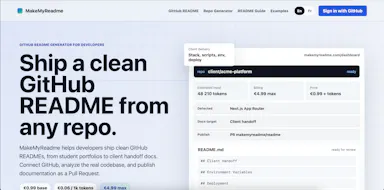
Auto-generates a polished README file for any GitHub repo.

What to know
How it works
Generates a clean README file from a GitHub repo's context.
Best for
Developers creating README docs for student portfolios, private repos, or client handoff.

Watched for 8 days · last checked 2d ago

Details →

Turns a public GitHub profile into a skill profile and matches developers with relevant remote jobs.

FreeNo sign-up
What to know
How it works
You enter a GitHub username and it turns your public repositories into a skill profile, highlighting projects, then matches you with relevant remote jobs.
Pricing
Free, no signup, no resume uploads.
Best for
Developers job-hunting who'd rather show their code than write a resume.

Watched for 8 days · last checked 2d ago

Details →

AI agents that pull support issues from GitHub, Discourse, and email into one workspace and suggest resolutions — a support-ticket tool for teams.

What to know
How it works
Centralizes support issues from GitHub, Discourse, and email into one workspace; when a new issue arrives, an AI agent searches connected knowledge sources and suggests a resolution with cited sources. Issues can be turned into tracked tickets with owners, and resolved cases feed back into the knowledge base.
What's different
Combines a unified support inbox with AI-suggested, source-cited resolutions and a feedback loop that improves future answers.
Best for
Support teams handling issues scattered across GitHub, Discourse, and email who want one workspace with AI-assisted resolution.

Watched for 18 days · last checked 2d ago

Details →

A Chrome extension that saves workplace English phrases into a searchable bilingual phrase library with redaction of sensitive info.

Domain registered 10 months ago

What to know
How it works
Highlight any sentence with a Chrome extension from GitHub, Slack, Jira, docs, or email, save it with a native-language translation, and generate TTS audio to practice; sensitive company names, repos, links, tickets, emails, and secrets are auto-redacted before saving.
Pricing
Free plan included.
Best for
Bilingual software engineers building a workplace English phrase library.

Watched for 9 days · last checked 7d ago

Details →

A Chrome extension that summarizes a GitHub user's public activity into structured insights for recruiters and hiring teams.

Domain registered 2 months ago

What to know
How it works
A Chrome extension that summarizes a GitHub user's public activity into structured insights like technical focus, contribution history, and collaboration patterns directly on GitHub profiles.
Watch out
Does not make hiring decisions or replace technical interviews.

Watched for 10 days · last checked 7d ago

Details →

Turn your GitHub history into a driveable 3D city

First seen today · last checked today

Details →

A marketplace turning the idle wait time in AI coding agent interfaces into a small opt-in sponsor ad surface for developer tools.

What to know
How it works
Lets developers enable a single opt-in sponsor line in coding-agent status/wait interfaces, keeping a 60% baseline share of billed impression revenue.
What's different
Does not require access to source code, prompts, model output, terminal output, screenshots, clipboard, or repository files.

Watched for 3 days · last checked 3d ago

Details →

Free GitOps-based service for claiming a personal *.fluxcast.dev subdomain via pull request.

FreeOpen sourceSelf-hosted
What to know
How it works
Get a free *.fluxcast.dev subdomain by forking the repo, adding one JSON file, and opening a pull request; automated validation and merge make DNS live in minutes.
What's different
Fully GitOps, Python-powered, Cloudflare backend with strict validation.
Pricing
Free forever.
Best for
Developers wanting a quick personal or project subdomain.

Watched for 3 days · last checked 1d ago

Details →

A layer on top of GitHub built for product managers; very little public detail is available beyond that it sits on GitHub.

Domain registered 28 days ago

No tracking
What to know
How it works
A layer on top of GitHub built for product managers.
Best for
Product managers who work alongside engineering teams in GitHub.

Watched for 10 days · last checked 10d ago

Details →

Turns your GitHub commit history into an ICC-style cricket player card with a rating and role, purely for fun - a novelty for developers who grew up on cricket games, not real analytics.

No sign-upOpen source
What to know
How it works
Turns your GitHub commit history and activity into an ICC-style cricket player card with an overall rating, a role (Batter, Bowler, All-Rounder, Wicket-Keeper, or Captain), six attribute scores, and a scouting report, generated from your real stats by entering just a username.
What's different
No sign-up required, open source, and lets you download the card as a PNG or share it directly to X, LinkedIn, or WhatsApp.
Pricing
Free.
Best for
Developers who grew up on cricket video games and are curious what their commit history says about them, as a novelty rather than analytics.

Watched for 16 days · last checked 2d ago

Details →

An autonomous code-review tool that connects to GitHub, audits your codebase, writes a failing test to prove each bug, then opens a fix as a pull request.

Domain registered 3 years ago

What to know
How it works
Connects to your GitHub, audits the whole codebase across security, correctness, performance, maintainability, architecture, and operations, writes a failing test to prove each problem is real, then opens a fix as a pull request after running the repo's own tests, build, and lint.
Pricing
Free plan includes a mini audit, 5 findings, and 5 fixes a month.
Best for
Engineering teams wanting autonomous code review and fixes.

Watched for 13 days · last checked 3d ago

Details →