We check every product on this page once a day and record whether it still answers.
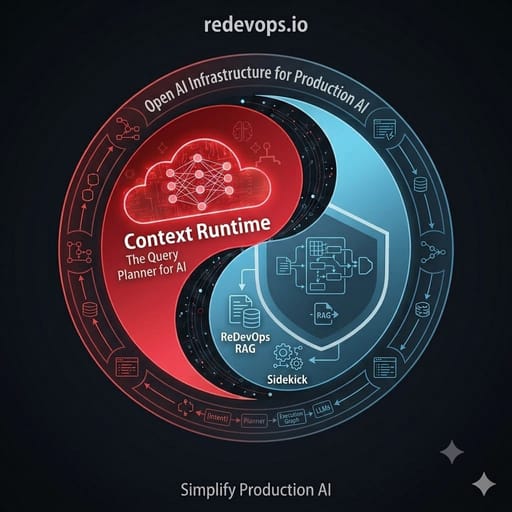
An open-source runtime for building and running production AI agent systems, for developers who don't want to hand-roll retrieval, memory, and execution logic.
Open sourceSelf-hosted
What to know▼
How it works
Handles retrieval, memory, model routing, and verification instead of hardcoded pipelines
What's different
Self-hostable, open-source, with governed execution including planning, verification, and replay
Best for
Developers building production AI systems in Python or Go
We check every product on this page once a day and record whether it still answers.
Open-source control plane that detects your hardware and configures/runs the right local LLM engine automatically.
Open source
What to know▼
How it works
Detects your RAM and VRAM, recommends models that fit, applies hardware-tuned settings, downloads weights, and starts an OpenAI-compatible server via llama.cpp, MLX-LM, or vLLM.
What's different
Coordinates proven runtimes rather than building another inference engine, and shows the launch plan before executing.
We check every product on this page once a day and record whether it still answers.
A free, open-source macOS menu-bar app that keeps your Mac awake during downloads, renders or AI agent runs, with smart triggers and closed-display mode.
FreeOpen source
What to know▼
How it works
A native macOS menu-bar app that keeps your Mac awake during downloads, renders, or AI agent runs using smart triggers, timed sessions, and a closed-display mode.
Pricing
Free and open source.
Best for
Mac users running long downloads, renders, or agent tasks that need the machine to stay awake.
We check every product on this page once a day and record whether it still answers.
Local firewall binary that sits between AI agents and the network to block secret leaks, prompt injection, SSRF, and MCP tool poisoning, for developers running autonomous agents, producing a signed offline-verifiable receipt instead of blind trust.
No sign-upWorks offlineOpen source
What to know▼
How it works
A single Go binary scans every outbound request from an agent and writes a signed receipt you verify offline against a published key when it blocks something.
Pricing
Apache 2.0, install via brew.
Best for
Developers whose AI agents have shell access, secrets, and an open line to the internet.
We check every product on this page once a day and record whether it still answers.
A local terminal dashboard that manages multiple Claude Code agent sessions in one view, with worktree isolation and diff review, instead of juggling separate windows.
Works offlineOpen source
What to know▼
How it works
Runs locally and open source; install with a single npx command, with all sessions shown on one live terminal wall.
Best for
Developers running several Claude Code agents at once.
We check every product on this page once a day and record whether it still answers.
An open-source Node.js library that wraps your OpenAI and Anthropic calls to enforce spending limits and log usage locally, with no telemetry. For developers guarding against runaway agent costs.
Open source
What to know▼
How it works
An open-source Node.js library that wraps OpenAI and Anthropic SDK calls to enforce hard spending limits, block calls once a budget is reached, and keep a local audit log.
What's different
Sends no telemetry — the audit log stays local.
Pricing
Open-source.
Best for
Developers who want to guard AI agents against runaway API spend without adding a telemetry dependency.
We check every product on this page once a day and record whether it still answers.
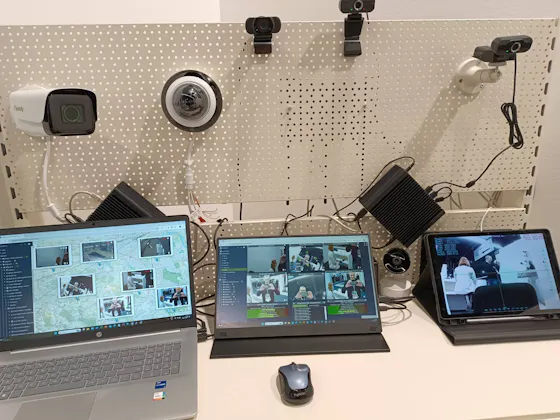
Self-hosted, open-source monitoring for cameras and IoT sensors — footage stays on your own hardware while a hosted portal just handles remote access — a free alternative to Frigate, Blue Iris and Shinobi.
FreeOpen sourceSelf-hosted
What to know▼
How it works
An open-source Java agent turns cameras, sensors and physical systems into one automated setup using ONVIF/RTSP, Modbus and MQTT, with detection via YOLO or Gemini AI; a hosted portal provides remote access over WebRTC.
What's different
Video and sensor data stay on your own hardware — the hosted portal only handles connection and billing, unlike cloud-based VMS platforms.
Pricing
Free Community plan.
Best for
People self-hosting camera and IoT sensor monitoring who want an alternative to Frigate, Blue Iris or Shinobi.
We check every product on this page once a day and record whether it still answers.
Managed hosting for the open-source Kanboard project-management tool, so small businesses get task tracking without installing or maintaining it — a cheaper alternative to Asana.
Open source
What to know▼
How it works
Managed hosting for the open-source Kanboard project-management tool, so you get task and team tracking without installing or maintaining the software yourself.
What's different
Built on open-source Kanboard rather than a proprietary tool, positioned as a cheaper alternative to Asana.
Best for
Small businesses that find tools like Asana too expensive.
We check every product on this page once a day and record whether it still answers.
A free, open-source Windows tool that runs apps like Discord, ChatGPT and Meta products inside isolated local sandboxes to block client-side scanning and OS-level telemetry. For privacy-conscious users worried about surveillance, not a ChatGPT alternative.
FreeOpen source
What to know▼
How it works
Runs locally on Windows, enforcing hyper-isolated memory partitions to encapsulate apps like Discord, ChatGPT and Meta webgrids, blinding host OS scanning daemons while keeping the apps fully functional.
What's different
Works entirely on-device with no remote servers, positioned as active defense against Client-Side Scanning and EU Chat Control rather than a cloud service.
Pricing
Free and open-source.
Best for
Privacy-conscious Windows users worried about client-side scanning or telemetry from apps like Discord, ChatGPT and Meta products.
We check every product on this page once a day and record whether it still answers.
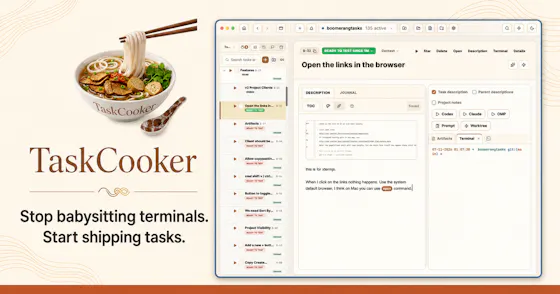
A free, open-source tool for managing tasks across multiple AI coding agent terminals instead of juggling tabs.
FreeOpen source
What to know▼
How it works
Organizes tasks across multiple AI coding agent terminals so you focus on the task instead of juggling 20-40 terminal tabs across worktrees, working with any AI subscription you already have.
We check every product on this page once a day and record whether it still answers.
An open-source approval layer that intercepts AI agents before payments, refunds, emails or account changes so a human can approve, block or escalate the action first.
Open source
What to know▼
How it works
An open-source control layer that intercepts AI agent actions — payments, refunds, emails, account changes and other irreversible actions — and lets a human approve, block or escalate before execution.
What's different
Open-source and focused specifically on gating irreversible actions rather than general agent monitoring.
Best for
Developers building AI agents who need a human-in-the-loop checkpoint before high-stakes actions execute.
We check every product on this page once a day and record whether it still answers.

An open-source TypeScript SDK for spinning up sandboxes across providers like Vercel, E2B, Daytona and Upstash with one syntax, for developers building agent tooling.
Open source
What to know▼
How it works
An open-source TypeScript SDK for spinning up sandboxes with one syntax across multiple providers — Vercel, E2B, Daytona, Upstash and others — with integrations for tools like AI SDK, Eve and Mastra, plus included agent skills.
What's different
One consistent syntax across different sandbox providers instead of learning each provider's own API.
Pricing
Open source, MIT licensed.
Best for
Developers building agent tooling who need sandbox environments across multiple providers.
We check every product on this page once a day and record whether it still answers.
A free, open-source, MIT-licensed penetration-testing agent bundling 90+ recon tools (nmap, nuclei, sqlmap and more) into a three-agent pipeline — for security engineers running assessments from the command line.
FreeOpen source
What to know▼
How it works
A reconnaissance agent that runs from inside the environment being tested (desktop, mobile, terminal or headless), bundling 90+ pentest tools like nmap, nuclei, sqlmap and aircrack-ng, plus native port scanning, device enumeration, WiFi discovery and packet capture. A three-agent pipeline (red team, validator, report) turns recon into verified findings.
What's different
Single Rust/Dioxus codebase across desktop, mobile, terminal and headless environments, and is MIT licensed so it can be inspected and extended.
Pricing
Free and open-source, MIT licensed.
Best for
Security engineers running penetration tests who want a bundled, extensible recon and reporting agent.
We check every product on this page once a day and record whether it still answers.
An open-source Frame.io alternative for uploading creative files, giving feedback, and collaborating on creative work, including with AI agents, built for creative teams rather than developers.
Open source
What to know▼
How it works
An open-source platform for uploading creative files, managing projects, collecting precise feedback, and collaborating with AI agents in one workspace.
What's different
Open source, positioned as an alternative to Frame.io.
Best for
Creative teams reviewing and collaborating on creative files, rather than developers.
We check every product on this page once a day and record whether it still answers.
An open-source approval inbox that pauses AI agent actions until a human approves, edits or rejects them via Slack, Discord, Telegram or the web - self-hostable for teams running agents.
Open sourceSelf-hosted
What to know▼
How it works
An approval inbox that pauses AI agent actions, such as sending an email, posting a comment, or running a command, until a human approves, edits or rejects them via Slack, Discord, Telegram, mobile or web.
What's different
The approval gate is a data dependency the agent can't skip, not just a prompt instruction.
Pricing
Open source (MIT), self-hostable.
Best for
Teams running AI agents who want a human-in-the-loop approval step before actions execute.
We check every product on this page once a day and record whether it still answers.
An open-source workspace where you assign goals to AI agents in a group chat and approve their high-risk actions, pitched as a no-code way to run an 'AI company'.
Open source
What to know▼
How it works
You hire AI employees and assign them goals inside a group chat; the agents discuss before acting and you approve every high-risk move before it executes.
What's different
No prompt engineering or workflow graphs — the whole interface is a group chat, so anyone who can run a chat can run the agents.
Best for
Teams who want to delegate work to multiple coordinating AI agents without building custom workflows.
We check every product on this page once a day and record whether it still answers.
An open-source, self-hostable observability platform for developers to collect errors, events, sessions, and analytics via custom SDKs and view them in a multi-tenant dashboard.
Open sourceSelf-hosted
What to know▼
How it works
Custom SDKs send errors, events, sessions, and analytics data to a self-hosted, multi-tenant dashboard with organization/project management, API keys, and usage metering.
Best for
Developers who want self-hosted, open-source production observability instead of a third-party SaaS.
We check every product on this page once a day and record whether it still answers.
An open-source AI agent runtime for the terminal, VS Code, and other ACP-compatible editors, letting you bring your own models or API keys instead of a hosted agent service.
Open source
What to know▼
How it works
Runs agent, plan, ask, and design modes with MCP integrations, reusable skills, subagents, and approval controls, using local (llama.cpp/MLX) models or your own API keys.
Best for
Developers who want to control their own agent stack instead of a closed hosted one.
We check every product on this page once a day and record whether it still answers.
A hardware-isolated VM for running Claude Code, Codex, or Grok Build so your API keys and AWS credentials stay protected from malware, exfiltration, and prompt injection.
FreeOpen source
What to know▼
How it works
Runs agentic coding tools in an isolated VM on Apple Silicon or via OpenAI/Anthropic, reachable by app, CLI, or SSH.
Pricing
Free and open source.
Best for
Developers running AI coding agents who want their credentials isolated from supply-chain and prompt-injection attacks.
We check every product on this page once a day and record whether it still answers.
Open-source library plus a hosted dashboard that logs every background job run so you can search history and catch silent failures that Redis-backed tools like Horizon lose — for teams running job queues.
FreeOpen source
What to know▼
How it works
An open-source library plus a hosted Cloud dashboard that logs every background job execution, searchable, with controls to cancel runaway jobs and block broken classes during incidents.
What's different
Keeps job history that Redis-backed tools like Horizon lose once Redis clears it.
Pricing
Free open-source package; a hosted Cloud dashboard is also available.
Best for
Teams running background job queues who need durable, searchable job history.
We check every product on this page once a day and record whether it still answers.
An open-source dashboard and automation layer for Claude Code that tracks repos and sessions, enforces standing checks, and blocks repeat mistakes — built for developers already using Claude Code.
Open source
What to know▼
How it works
An open-source dashboard for Claude Code that tracks every repo, session, and routine, holds standing checks (like "tests always green") true by fixing drift automatically, runs a manager per repo, blocks repeat mistakes machine-wide, and can rescue crashed sessions. Installed with one command, npx claude-basecamp.
What's different
Fully local with zero dependencies and released to the public domain, and only escalates real decisions rather than every drift.
Pricing
Open-source and public domain.
Best for
Developers running multiple Claude Code sessions and repos who want automated drift-fixing and cross-repo oversight.
We check every product on this page once a day and record whether it still answers.
A terminal tool to browse, search, resume and convert AI coding sessions across Claude Code, Codex, Gemini CLI and OpenCode -- local-first, open source, with no telemetry.
Works offlineOpen sourceNo tracking
What to know▼
How it works
A terminal picker to browse, search, resume and branch AI coding sessions across Claude Code, Codex, Gemini CLI and OpenCode, including converting a conversation from one agent's session format to another's.
What's different
Runs 100% locally as a single static Go binary with no telemetry.
Pricing
Free and open source (MIT license).
Best for
Developers juggling multiple AI coding tools who want one place to manage sessions.
We check every product on this page once a day and record whether it still answers.
An open-source live chat platform with an AI chatbot that auto-answers common visitor questions and a shared team inbox, aimed at customer support teams wanting to cut repetitive workload.
Open source
What to know▼
How it works
An open-source live chat platform where an AI chatbot crawls your website to build a knowledge base and auto-answers common visitor questions, backed by WebSocket-powered real-time chat, a shared team inbox, and real-time visitor intelligence (device, browser, location, page and conversation history).
What's different
Open source and self-hostable, combining AI auto-replies with full visitor intelligence in one tool rather than separate live-chat and analytics products.
Best for
Customer support teams who want to cut repetitive question volume with an AI chatbot while keeping a shared inbox for complex cases.
We check every product on this page once a day and record whether it still answers.
A white-label predictive dialer and call-center platform combining voice, SMS and fax with CRM and a REST API, built for businesses running outbound campaigns.
Open source
What to know▼
How it works
A white-label, multi-tenant predictive dialer and call-center platform built on open-source Asterisk, combining predictive/progressive/power/preview/manual dialing modes with drag-and-drop IVR, a REST API, and unified voice, SMS, fax and email in one system.
What's different
Built-in AMD, DNC and TCPA-aware compliance thresholds across five dialing modes, used by 1500+ businesses per the listing.
Best for
Businesses and call centers running outbound predictive-dialing campaigns alongside inbound IVR routing who want one multi-tenant platform instead of separate tools.
We check every product on this page once a day and record whether it still answers.
An open-source CRM (built on SuiteCRM) bundled with a call-center system for businesses that want sales tracking and customer communications in one self-run platform, not a coding tool.
Open source
What to know▼
How it works
Combines the open-source SuiteCRM with the ICTContact contact center and unified communications software, so businesses manage customer relationships and communications from a single self-run platform.
Best for
Businesses that want a self-hosted CRM bundled with call-center and communication tools rather than a coding toolkit.
We check every product on this page once a day and record whether it still answers.
Open-source, self-hosted Laravel software for ISPs and home-service businesses to run their own booking and billing platform — a build-it-yourself alternative to hosted SaaS.
Open sourceSelf-hosted
What to know▼
How it works
An open-source, Laravel-based, white-label software solution for launching and managing an on-demand home service platform, with integrated billing support, covering services like plumbing, electrical, carpentry and repairs.
What's different
Fully open-source and self-hosted, letting entrepreneurs and ISPs build their own branded platform rather than use hosted SaaS.
Best for
ISPs and entrepreneurs who want to launch their own home-service booking platform rather than pay for a hosted alternative.
We check every product on this page once a day and record whether it still answers.
An open-source, self-hosted Python framework for running LLM-powered stock trading bots on Alpaca with local risk guardrails.
Works offlineOpen sourceSelf-hosted
What to know▼
How it works
A self-hosted Python framework for LLM-powered stock trading on Alpaca and similar brokerages, with a local web dashboard for execution logs and agent reasoning, plus programmatic Python guardrails like stop-losses and allocation limits enforced before orders are dispatched.
What's different
Enforces risk boundaries with local code rather than relying on prompts, and supports pluggable custom news feeds, brokerages, and tools.
Pricing
Open-source.
Best for
Developers building LLM-driven trading bots who want local, self-hosted risk controls.