Tools that work offline, on your own deviceWorks with GitHub

16 match your filters — 14 of them answered our check today.

Watching this group for 20 days · how we check

This week7 new arrivals1 stopped answering

Narrow it down

A free, code-free Quran/prayer/habit-tracker PWA template that lets anyone launch a branded Islamic app without hiring a developer, instead of building one from scratch.

FreeWorks offline
What to know
How it works
Static PWA (plain HTML/CSS/JS) deployable free on Netlify, Vercel, or GitHub Pages.
What's different
No backend or server costs needed, unlike most Quran apps.
Pricing
Free.
Best for
Someone who wants an Islamic app without a dev team.
Watch out
No backend means no server-side sync across devices mentioned.

Watched for 2 days · last checked 1d ago

Details →

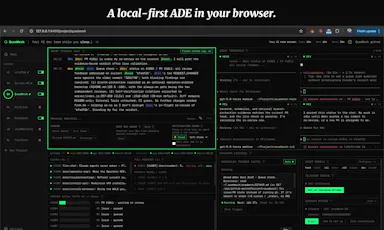
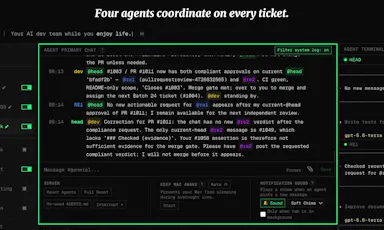
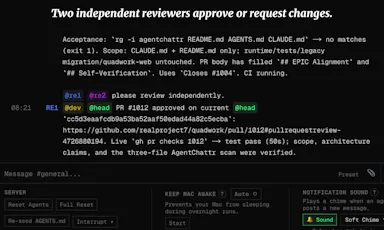
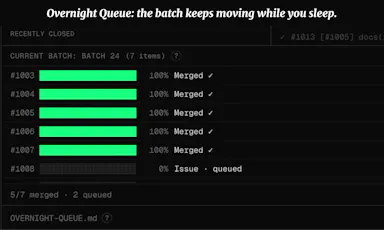
Turns a GitHub backlog into an automated pipeline where AI agents write code and two independent AI reviewers must approve before merge.

Works offline
What to know
How it works
assigns tickets, works in isolated git worktrees, requires dual AI review before merging
What's different
mixes Codex, Claude and Gemini in different roles
Best for
developer teams wanting AI-driven autonomous PR pipelines with review gates

Watched for 6 days · last checked today

Details →

A Chrome extension that runs a Pomodoro timer alongside your Linear and GitHub tickets and Google Calendar, then turns tracked time into a standup-ready report. Built for developers tracking real focus time.

Domain registered 1 month ago

Works offline
What to know
How it works
A Chrome extension and web app that auto-detects your Linear and GitHub tickets as you browse, runs a Pomodoro timer measuring real focused time per task, tracks your top 3 priorities and recurring habits, and pulls in Google Calendar to count meeting time. Everything logged rolls up into a daily/weekly standup-ready report.
What's different
Local-first and pulls directly from Linear, GitHub, and Google Calendar so time tracking doesn't require manual copy-paste.
Best for
Developers who want an automatic, standup-ready record of real focused work time.

Watched for 10 days · last checked 4d ago

Details →

Resso

Live

A visual canvas for cataloging servers, domains and repos with built-in SSH and SFTP, auto-imported from GitHub, GCP, Vercel and more — for developers and solopreneurs managing their own infrastructure.

Works offline
What to know
How it works
A visual canvas that catalogs servers, domains, repos and other infrastructure in one place, auto-importing assets from GCP, OCI, Vercel, GitHub, Cloudflare, App Store Connect and UpCloud. Includes a built-in SSH console, SFTP browser, dependency mapping and an HTTP API.
What's different
Local-first and private with iCloud sync, rather than a hosted SaaS that stores your infrastructure data centrally.
Best for
Developers, DevOps engineers and solopreneurs managing scattered infrastructure across multiple cloud providers.

Watched for 16 days · last checked 10d ago

Details →

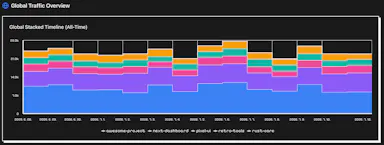
Caches your GitHub repo traffic stats — views, clones, release downloads — locally in a lightweight desktop app, since GitHub itself deletes that data after 14 days.

Works offlineData stays with you
What to know
How it works
A lightweight Tauri desktop app that caches your GitHub repository traffic data — views, clones and release downloads — locally so it persists beyond GitHub's own retention window.
What's different
GitHub deletes repository traffic data after 14 days; this app keeps it forever by storing it locally rather than in the cloud.
Best for
Developers and maintainers who want long-term visibility into their GitHub repo traffic.

Watched for 13 days · last checked 7d ago

Details →

An open-source, zero-knowledge Android password manager that encrypts on-device before anything leaves it, for users who don't trust cloud password managers with plaintext access.

Works offlineOpen sourceNo subscriptionNo ads
What to know
How it works
On-device encryption, offline by default, optional opt-in cloud sync/backup that servers can't read
Pricing
Free tier unlimited entries; Premium €2.99/month or €29.99 lifetime for sync, backup, security report, no ads

Watched for 2 days · last checked 2d ago

Details →

A free, open-source code snippet manager that stores snippets locally and syncs across devices, with optional GitHub backup.

Domain registered 3 months ago

FreeWorks offlineOpen source
What to know
How it works
Local-first storage with nested folders, pinning, and syntax highlighting for 25+ languages; optional GitHub cloud sync.
Pricing
Free, open-source.
Best for
Developers who want a snippet manager that works offline by default.

Watched for 6 days · last checked 5d ago

Details →

Muster

Live

Desktop app that runs each AI coding-agent task in its own isolated git worktree with DB tooling and PR review, offline-first.

Domain registered 16 days ago

Works offline
What to know
How it works
Runs each AI coding-agent task in its own isolated git worktree, with database access through MCP, hunk review, PR creation, SSH, a five-engine DB studio, and Linear/Jira/GitHub imports.
Pricing
$39 one-time per device.
Watch out
Offline-first: code and credentials never leave your machine. Available on macOS, Linux, Windows.

Watched for 3 days · last checked 2d ago

Details →

A native (non-Electron) Git GUI for Mac and Windows built for speed and low memory use, positioned against GitKraken, SourceTree, Fork and Tower for developers who find those apps sluggish.

Domain registered 2 months ago

No sign-upWorks offline
What to know
How it works
A native Git GUI for macOS and Windows with a color-coded, virtualized commit graph and infinite scroll. Works fully offline and locally, with no account or cloud dependency.
What's different
Roughly 12 MB and launches in a fraction of a second, versus the 300–500 MB idle RAM and multi-second cold starts of Electron-based clients like GitKraken, SourceTree, Fork, and Tower.
Best for
Developers frustrated with the resource overhead of Electron-based Git clients.

Watched for 11 days · last checked 2d ago

Details →

Free, fully offline point-of-sale system for hotels and small shops, built with Electron.

FreeWorks offlineData stays with you
What to know
How it works
A fully offline point-of-sale system for hotels and small shops, built with JS and Electron, offering fast billing, a dashboard, and instant receipts.
Pricing
Free, code available on GitHub.
Watch out
No internet or cloud needed; data stays on your PC.

Watched for 10 days · last checked 4d ago

Details →

Turns your Android phone into a self-hosted MCP server so AI assistants like Claude, Cursor or Perplexity can pull your personal memory without sending data to the cloud. Aimed at developers already using MCP-compatible tools.

Works offlineData stays with youOpen sourceNo subscription
What to know
How it works
Turns an Android phone into a self-hosted MCP (Model Context Protocol) server by installing a Python MCP server inside Termux, with a secure tunnel giving the phone a stable public HTTPS URL that AI clients like Claude, Cursor or Perplexity can connect to for persistent memory.
What's different
Data is stored locally on the user's own phone instead of a vendor's cloud, with no subscription or vendor lock-in.
Pricing
No subscription.
Best for
Developers already using MCP-compatible AI tools who want to own their memory data instead of storing it in the cloud.
Watch out
Relies on a relay tunnel (relay.memplato.com) and requires Termux running on the phone, with a watchdog to restart the server if the phone reboots or Termux closes.

Watched for 10 days · last checked 4d ago

Details →

A desktop coding harness built specifically around open-weight models like DeepSeek, Qwen and Kimi, instead of bolting them onto a Claude or GPT-first interface as an afterthought.

FreeWorks offline
What to know
How it works
A desktop AI coding harness built around open-weight models (DeepSeek, Qwen, Kimi, MiniMax) instead of Claude/GPT, using a structural + lexical code-retrieval engine (Blueprint) that builds a real dependency graph of the codebase rather than embeddings or a vector DB.
What's different
Built specifically for open-weight models' weaker context discipline, instead of treating them as an afterthought behind a Claude/GPT-first interface.
Pricing
Free.
Best for
Developers who want to use open-weight models like DeepSeek, Qwen, or Kimi for coding with retrieval built for their limitations.
Watch out
Depends on local tools like Ollama and MCP — offline/no-cloud setup requires configuring those dependencies yourself.

Watched for 18 days · last checked 2d ago

Details →

A free Chrome extension that automatically sorts your open tabs into labeled groups by category, Development, Docs, Shopping, Social and more, with one click and no configuration.

FreeWorks offline
What to know
How it works
A Chrome extension that automatically organizes open tabs into labeled groups with one click, either by category (20+ categories like Development, AI Tools, Finance) or by domain (all tabs from the same site grouped together).
What's different
A 'Smart Group with AI' mode uses Chrome's built-in on-device AI (Prompt API) to read tab titles and page content and group by actual meaning rather than fixed rules, falling back to rule-based grouping otherwise.
Pricing
Free.
Best for
Chrome users who accumulate many open tabs and want them sorted without manual setup.

Watched for 18 days · last checked 2d ago

Details →

A CLI linter that statically checks JSON schemas against each LLM provider's constraints so they don't fail at runtime.

Works offline
What to know
How it works
A CLI that statically lints JSON schemas/tool definitions against each LLM provider's documented constraints (e.g. Anthropic-rejected keywords, missing additionalProperties), pointing to the exact JSON-Pointer path and reason, with a repair pass that emits a best-effort provider-valid variant.
What's different
Makes no model calls, needs no API key, and has zero runtime dependencies.
Best for
Teams whose schemas work on one LLM provider but 400 on another.

Watched for 3 days · last checked 3d ago

Details →

KPLens

Not responding

A native macOS menu bar app showing indie-hacker stack status: Stripe revenue, Vercel deploys, and GitHub PRs at a glance.

Works offline
What to know
How it works
A native macOS menu bar app showing Stripe revenue, Vercel deploy status, GitHub open PRs and notifications, and Resend emails sent and bounce rate at a glance.
What's different
Fully bring-your-own-key — every request runs locally and API keys never touch their servers because there are none.
Best for
Indie hackers who'd rather glance at the menu bar than log into each service.

Watched for 12 days · last checked today

Details →