Open-source toolsAI agent

21 match your filters — 21 of them answered our check today.

Watching this group for 20 days · how we check

This week3 new arrivals

Narrow it down

AEGIS

Live

A self-hosted, MIT-licensed framework for running your own local-LLM AI agents over your tasks, money, knowledge and homelab data, built for developers who want to fork and customize it rather than use a hosted SaaS.

Domain registered 4 years ago

Open sourceSelf-hosted
What to know
How it works
A self-hosted platform where named agents run durable Temporal workflows over your own data (tasks, money, knowledge, homelab alerts), asking for a decision only when they truly need one.
What's different
Local-LLM-first and MIT-licensed, designed to be forked and customized rather than used as a hosted SaaS.
Pricing
Open source (MIT-licensed).
Best for
Developers who want to self-host and customize their own AI agent framework over personal data.

Watched for 13 days · last checked 2d ago

Details →

Dim0

Live

An open-source infinite canvas that combines notes, diagrams and an AI agent that writes results directly onto the board — built to replace juggling Notion, Excalidraw and a chat window.

Open sourceSelf-hosted
What to know
How it works
An open-source, real-time collaborative canvas. Notes, hand-drawn diagrams and interactive mini-apps live as nodes on one board; an AI agent reads the board, searches the web, and writes results back as new nodes instead of a chat reply.
What's different
Replaces switching between Notion for notes, Excalidraw for diagrams and a separate AI chat window — everything, including the agent's output, lands on the same canvas.
Best for
Teams and individuals who think visually and want an AI agent's output to live alongside their own notes and diagrams, not in a separate chat log.

Watched for 20 days · last checked today

Details →

cngx

Live

A CLI that actually runs your test suite before letting an AI coding agent's merge-ready claim through, catching agents that say tests passed when they didn't.

Open source
What to know
How it works
A CLI that reads an AI coding agent's claim that tests passed, actually runs your real checks (pytest, npm test, go test, etc.), and blocks the merge if the agent's story doesn't match the command output.
What's different
The verdict comes from real command output, not a regex match on the agent's claimed text.
Best for
Developers using AI coding agents who want a guardrail against merge-ready claims that were never actually tested.

Watched for 16 days · last checked today

Details →

A local, single-file memory store for coding agents over MCP that cites its sources and abstains rather than hallucinating when it lacks evidence.

Open source
What to know
How it works
One Rust binary, one SQLite file, zero network, talks to agents over MCP.
Pricing
Open source, AGPL-3.0.
Watch out
Abstains instead of answering when there's no evidence.

Watched for 2 days · last checked 1d ago

Details →

An open-source AI agent platform for automating office and personal tasks — describe what you need in plain language and it builds a specialized assistant, no coding required.

Open source
What to know
How it works
An open-source AI agent platform where you create specialized 'office assistant' agents by describing what you need — e.g. one for the employee database, one for leave requests, one for expenses — and interact with them over WhatsApp, Telegram, or a native chat interface.
What's different
Open source and conversational (chat with agents like a colleague) instead of navigating a traditional ERP's pre-built interfaces.
Pricing
Open source.
Best for
Small offices wanting to automate workflows like HR, expenses or leave requests without learning a complex ERP UI.

Watched for 14 days · last checked 8d ago

Details →

An open-source, self-hostable memory layer for AI agents that keeps episodic and semantic context within LLM token limits across sessions. For developers, not an end-user app.

Domain registered 3 months ago

Open sourceSelf-hosted
What to know
How it works
An open-source, self-hostable memory runtime for AI agents providing durable episodic and semantic memory, with ranked retrieval and token-bounded context bundles designed for LLM applications.
What's different
Treats memory as a first-class primitive that persists across sessions rather than an afterthought within a single conversation.
Best for
AI/ML engineers building autonomous agents with frameworks like LangChain, CrewAI or AutoGen.

Watched for 13 days · last checked 7d ago

Details →

Open-source CLI that lets coding agents inspect live web pages, reverse-engineer network requests, and generate reusable browser-automation scripts — a developer tool, not for non-technical users.

Open source
What to know
How it works
An open-source, token-efficient CLI that lets a coding agent inspect live web pages, reverse-engineer network requests, and generate deterministic browser-automation scripts.
What's different
Produces inspectable, runnable, debuggable scripts instead of having an agent improvise at runtime from a prompt.
Best for
Developers using coding agents who want reliable, reusable browser automations rather than one-off prompted actions.

Watched for 14 days · last checked 2d ago
Details →

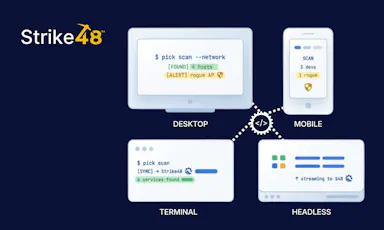
A free, open-source, MIT-licensed penetration-testing agent bundling 90+ recon tools (nmap, nuclei, sqlmap and more) into a three-agent pipeline — for security engineers running assessments from the command line.

Domain registered 10 months ago

FreeOpen source
What to know
How it works
A reconnaissance agent that runs from inside the environment being tested (desktop, mobile, terminal or headless), bundling 90+ pentest tools like nmap, nuclei, sqlmap and aircrack-ng, plus native port scanning, device enumeration, WiFi discovery and packet capture. A three-agent pipeline (red team, validator, report) turns recon into verified findings.
What's different
Single Rust/Dioxus codebase across desktop, mobile, terminal and headless environments, and is MIT licensed so it can be inspected and extended.
Pricing
Free and open-source, MIT licensed.
Best for
Security engineers running penetration tests who want a bundled, extensible recon and reporting agent.

Watched for 10 days · last checked 4d ago

Details →

Open-source voice AI API for building production voice agents that receive and make phone calls, self-hostable or deployable to Vercel.

Open source
What to know
How it works
Built in Next.js on Vercel tooling: Vercel Workflows for post-call analysis, AI Gateway for realtime models, and Vercel Blob for call recordings, exposed as a REST API similar to Vapi or Retell.

Watched for 11 days · last checked 5d ago

Details →

Aiden

Live

A physical open-source USB device that watches your screen and can operate your phone or computer by voice, entirely offline with zero data collection. Built for makers and privacy-focused tinkerers.

Works offlineOpen sourceSelf-hosted
What to know
How it works
A physical USB device that plugs into any phone or computer, watches the screen over HDMI, and sends taps and keystrokes over USB HID to operate real apps the same way a person would — no app install, jailbreak, developer mode, or API required. It captures the screen, sends it to an AI model of your choice, decides the next action, and repeats until the task is done; voice mode runs on-device.
What's different
Works one layer below software integrations, so it can operate any app you can see and tap, including ones with no API or accessibility layer.
Best for
Makers and privacy-focused users who want to automate phone or computer tasks entirely offline without granting an app API access.

Watched for 18 days · last checked 2d ago
Details →

A native macOS app for running AI agents fully offline with persistent memory and cryptographic identity — open-source infrastructure for developers building local agents, not a consumer chat app.

Works offlineOpen source
What to know
How it works
A native macOS harness for running AI agents fully offline, with persistent memory, autonomous execution and cryptographic identity, built in Swift.
What's different
Fully offline and open source, unlike cloud-based agent harnesses.
Pricing
Open source.
Best for
Developers building local AI agents on Mac who want offline execution and no cloud dependency.

Watched for 14 days · last checked 8d ago

Details →

A self-hosted WordPress plugin combining a visual workflow automation engine with an open-source AI agent that builds workflows and asks before acting, using your own LLM API keys.

Domain registered 2 months ago

FreeNo sign-upData stays with youOpen source
What to know
How it works
A low-code workflow builder plus an open-source AI agent and local executor run inside WordPress, with no SaaS component and data staying on your own server.
Pricing
Agent and executor are free; one license covers both paid plugins for the rest of the stack.
Best for
WordPress site owners who want automation without sending data to a third-party SaaS.

Watched for 12 days · last checked 9d ago

Details →

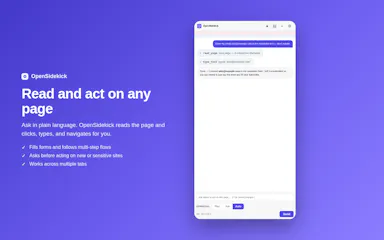
An open-source Chrome extension that lets an AI agent read and act on the page you're viewing, using whatever model you plug in, with API keys kept local and no telemetry.

No sign-upOpen sourceNo tracking
What to know
How it works
An open-source Chrome extension where an AI agent reads and acts on the page you're viewing, using any model you plug in — OpenRouter, OpenAI, Claude, Gemini, Groq, or a local model.
What's different
Model-agnostic and keeps API keys local in the browser rather than sending them through a vendor's servers.
Pricing
MIT license, no account required.
Best for
Developers who want a browser agent they can point at any LLM provider, including local models, without vendor lock-in.

Watched for 18 days · last checked 2d ago

Details →

Auxly

Live

An open-source, local-first memory and task layer for AI coding agents, built around MCP. Developer infrastructure, not a consumer product.

Works offlineOpen source
What to know
How it works
An open-source, local-first memory layer for AI coding agents, with an MCP-powered task manager for tracking agentic workflows.
What's different
Runs locally rather than storing agent memory in the cloud, and is built specifically around MCP for AI code editors.
Best for
Developers building or using AI coding agents who want persistent, local memory and task tracking instead of ephemeral context.

Watched for 18 days · last checked 11d ago

Details →

Directory to discover, compare and launch open-source AI agents for coding, research, automation and business workflows.

Open source

Watched for 2 days · last checked 1d ago

Details →

An open-source, fully local agentic AI platform that runs multi-agent workflows and vector-database ingestion entirely on-device, for organizations and technical users who want AI automation without sending data to the cloud.

Works offlineData stays with youOpen source
What to know
How it works
100% local data processing with optimized vector-database ingestion and multi-agent orchestration to run business workflows securely on-device.
Best for
organizations and developers building AI workflows that require full data privacy.

Watched for 12 days · last checked 8d ago

Details →

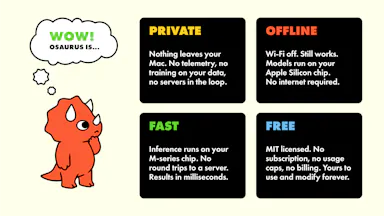
An open-source Android AI agent that runs entirely on-device with MCP support and persistent memory. A technical, open-source project more than a polished consumer assistant app.

Open source
What to know
How it works
An open-source Android AI agent that runs entirely on the phone, with MCP support, skills, persistent memory, multi-modal input, and permission-based file access.
What's different
Runs fully on-device rather than depending on a cloud backend.
Best for
Developers and technical users who want an on-device Android agent they can inspect and extend, rather than a polished consumer assistant app.

Watched for 17 days · last checked 8d ago
Details →

Heard

Live

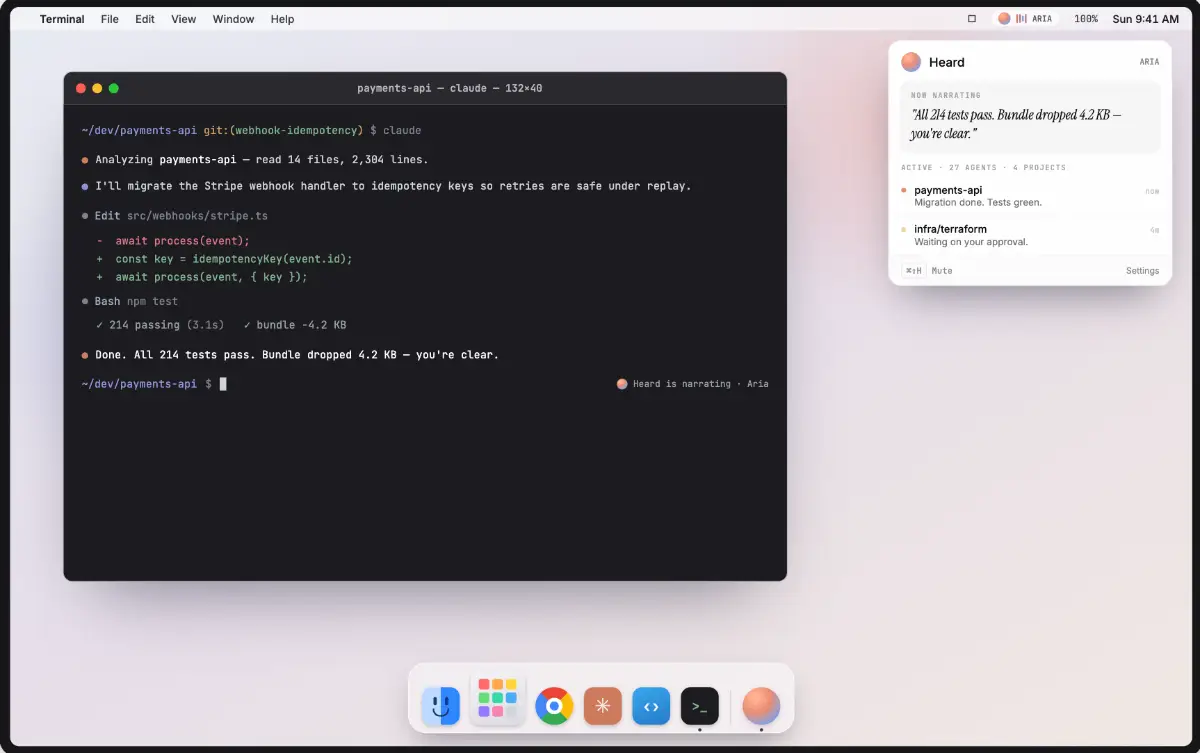
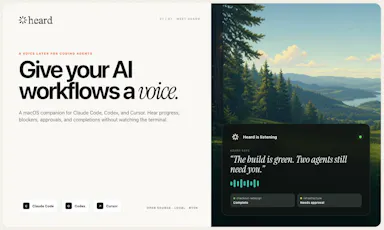
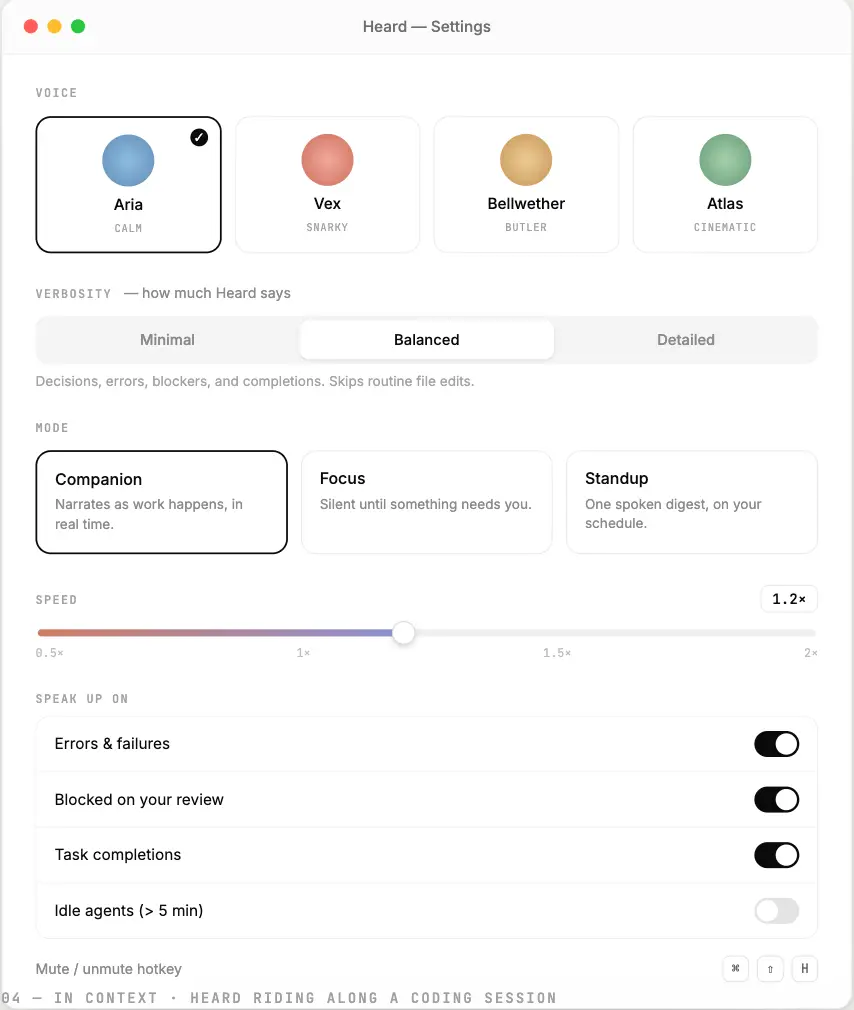
Adds a voice/audio output to AI coding agents, instead of only reading their activity as text logs.

FreeOpen source
What to know
How it works
Gives coding agents spoken audio output.

Watched for 15 days · last checked today

Details →

Open-source agentic AI fuzzer that finds bugs across languages and generates verified security patches automatically.

Open source
What to know
How it works
Uses a multi-agent LLM swarm to analyze source code or decompiled binaries, synthesize payloads, reproduce crashes and generate verified security patches automatically.
What's different
Supports C/C++, Rust, Python, Go, JS/TS and multiple LLM providers including Gemini, Claude, OpenAI and Ollama.
Pricing
Free, open-source.
Best for
Security researchers and developers doing automated fuzzing and patching.

Watched for 3 days · last checked 1d ago

Details →

An open-source Windows desktop AI agent that performs approved computer actions and automations while keeping data and model choice under the user's control.

Works offlineOpen source
What to know
How it works
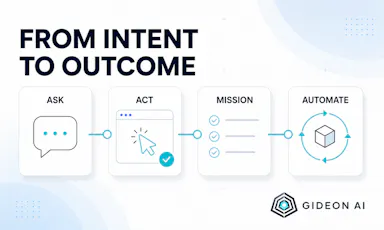
An open-source Windows desktop agent for secure conversations, approved computer actions, durable missions, and reusable automation, letting users bring their own model provider.
What's different
Keeps credentials, data, and control in the user's hands, open source.

Watched for 10 days · last checked 7d ago

Details →