Open-source toolsWorks with Postgres

14 match your filters — 14 of them answered our check today.

Watching this group for 20 days · how we check

This week5 new arrivals


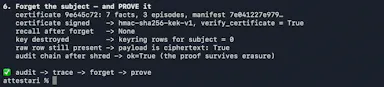
Open-source memory storage for AI agents where every fact has provenance and deletion is cryptographically provable and auditable.

Open source
What to know
How it works
forget() destroys the data's key and issues a signed deletion certificate
What's different
reconciles GDPR deletion requirements with EU AI Act record-keeping
Pricing
open source (Apache-2.0), runs on plain Postgres

Watched for 5 days · last checked today

Details →

An open-source observability platform that stores compact telemetry summaries instead of every raw event, for engineering teams who want p95/p99 and anomaly tracking without ballooning storage costs.

Open source
What to know
How it works
An open-source observability platform that uses sketch data structures to answer production questions — p95/p99 latency, unique users, top events, anomaly movement, SLO burn — from compact telemetry summaries instead of storing every raw event. Includes a hosted playground, dashboards, Postgres durability, SDKs, and Docker/Helm/Kubernetes support.
What's different
Keeps only compact statistical summaries rather than raw event storage, cutting storage costs.
Best for
Engineering teams who want latency and anomaly tracking without their storage bill ballooning.

Watched for 9 days · last checked 3d ago

Details →

PgDog

Live

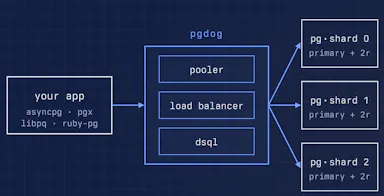
An open source Postgres connection pooler, load balancer and sharding proxy built by database engineers, for scaling Postgres without app changes.

Domain registered 18 months ago

Open source
What to know
How it works
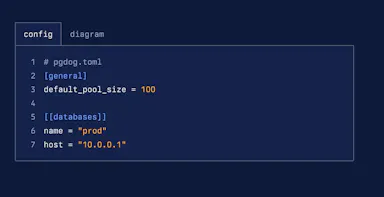
An open source connection pooler, load balancer and sharding proxy that sits in front of PostgreSQL to scale it without requiring changes to the application.
What's different
Postgres-compliant proxy built by database engineers, aimed specifically at sharding and pooling rather than being a general API gateway.
Pricing
Open source.
Best for
Teams scaling a Postgres deployment who want pooling and sharding without rewriting their application.

Watched for 13 days · last checked 2d ago

Details →

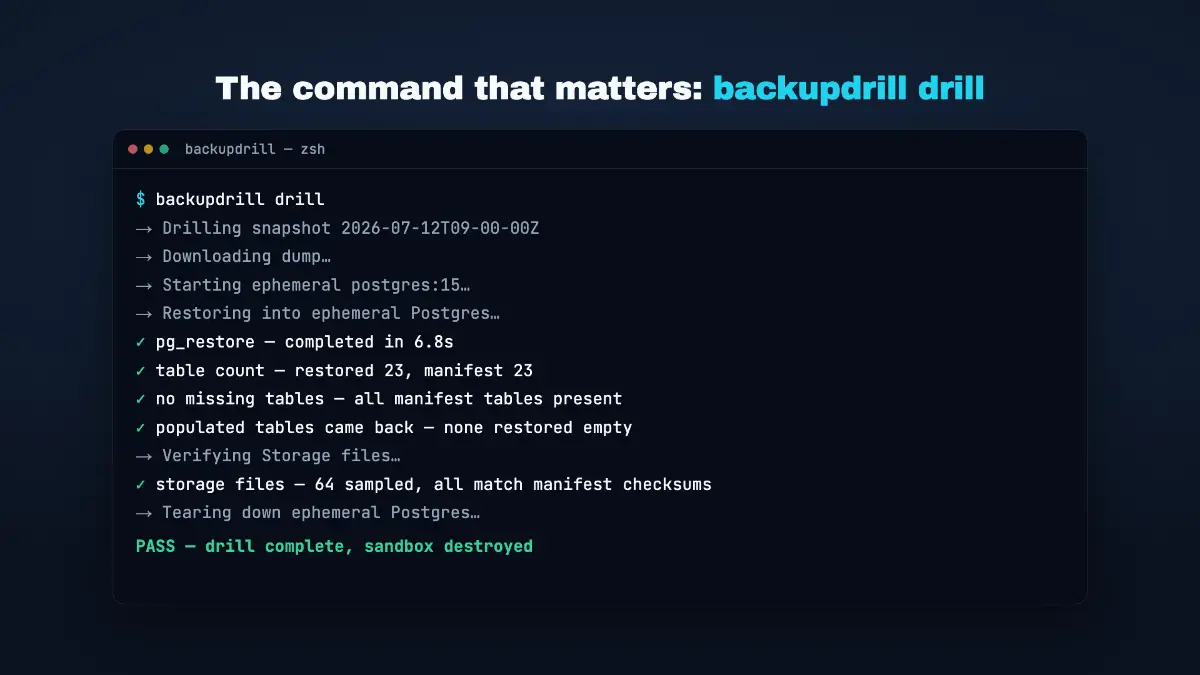
Backs up your Supabase Postgres database and storage files to your own S3-compatible bucket, then proves the backups actually work with weekly automated restore drills. Built for developers running Supabase in production.

Domain registered 24 days ago

Open source
What to know
How it works
Backs up a Supabase project's Postgres database and Storage files to your own S3/R2/B2 bucket, then runs weekly automated restore drills in a throwaway sandbox, verifying tables, rows, and checksums.
What's different
Proves backups are actually restorable through scheduled restore drills, rather than just taking backups on faith.
Best for
Developers running Supabase in production who need verified, restorable backups.

Watched for 13 days · last checked 7d ago

Details →

Yerd

Live

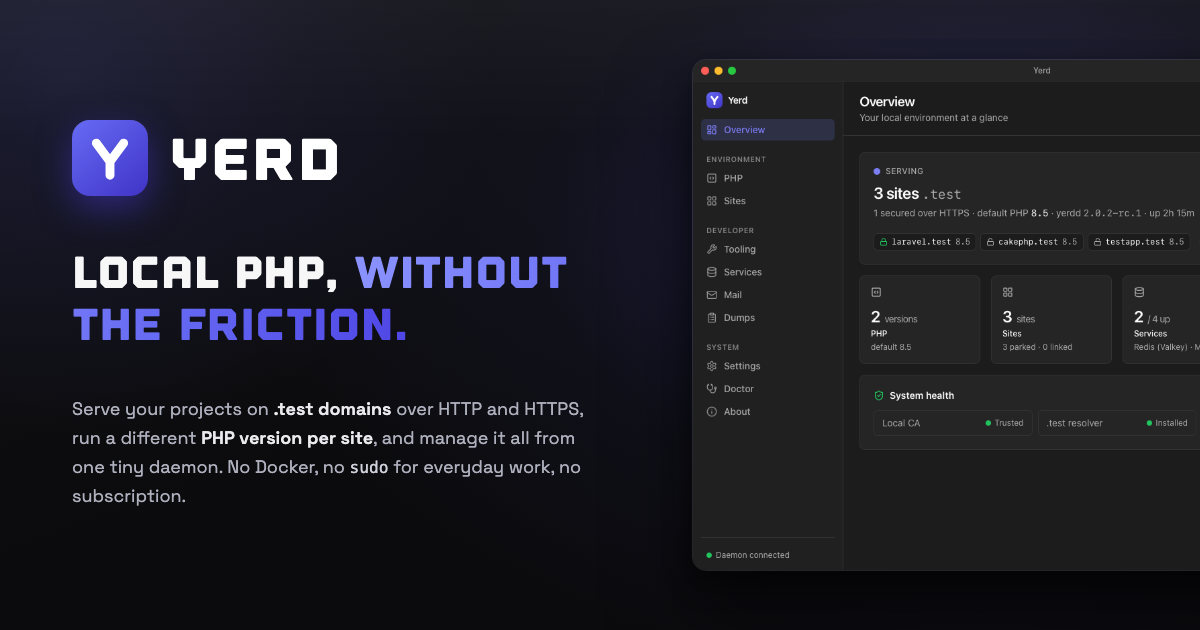
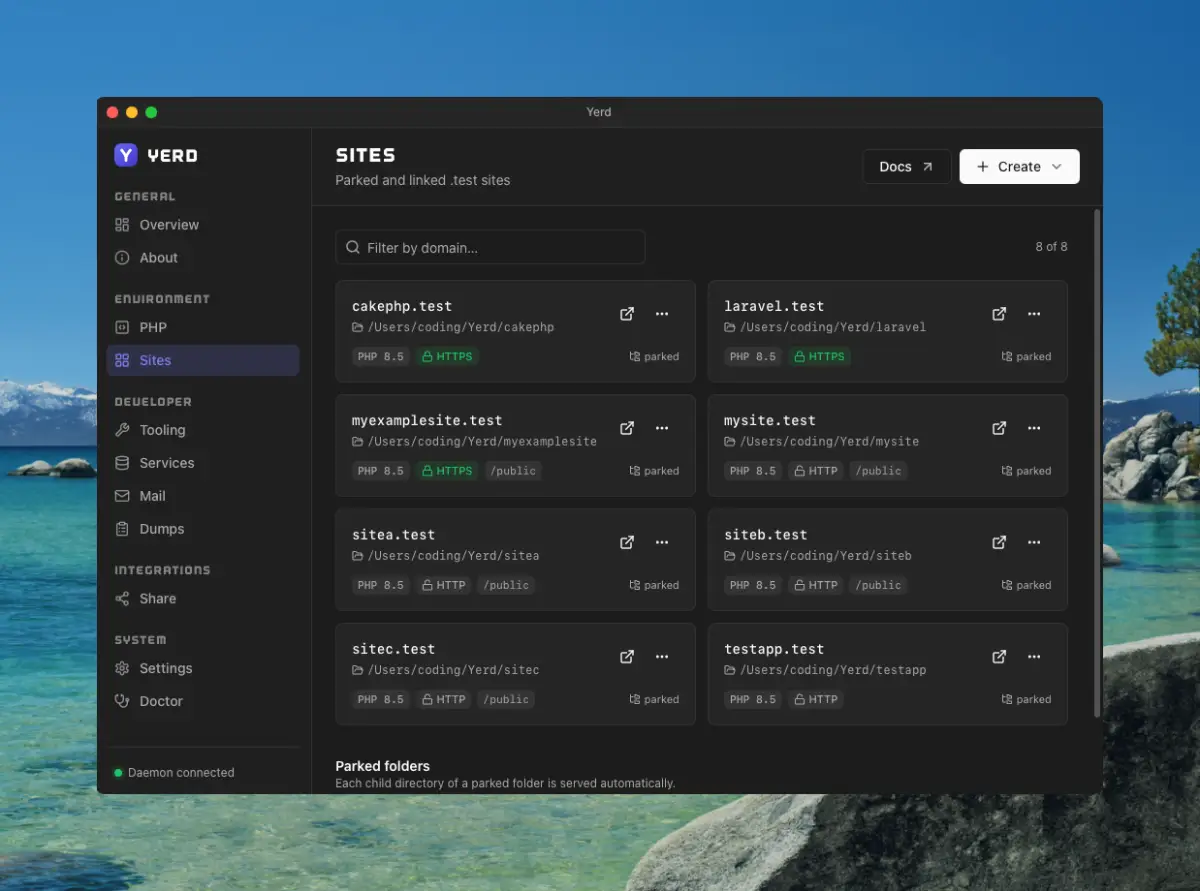
An open-source, Docker-free local PHP environment for macOS and Linux — automatic HTTPS, per-site PHP versions, zero-config sites. A direct alternative to Laravel Herd for developers.

Open sourceNo subscription
What to know
How it works
A local PHP development environment: park a folder and every project inside becomes instantly live at .test; issues per-site HTTPS certificates automatically; installs multiple PHP versions side by side, pinned per site; runs MySQL, MariaDB, PostgreSQL, Redis and an SMTP catcher as native processes supervised by one daemon; streams Laravel dump()/dd(), queries, jobs and requests to a dedicated window.
What's different
Open-source, rootless and Docker-free — a direct alternative to Laravel Herd, MIT licensed with every feature included.
Pricing
Open-source, no subscription.
Best for
macOS and Linux developers running local PHP/Laravel projects who want to avoid Docker.

Watched for 18 days · last checked 2d ago

Details →

Gives MSPs self-hosted IT documentation instead of paying for IT Glue or Hudu licenses.

FreeData stays with youOpen sourceSelf-hosted

Watched for 1 day · last checked 1d ago

Details →

Self-hosted admin panel framework for developers building internal CRMs/ERPs without npm or vendor lock-in.

Open sourceSelf-hosted
What to know
How it works
PHP 8.1+, PostgreSQL, vanilla JS, visual UI for tables/forms/dashboards
What's different
no npm, no Composer, no external libraries
Best for
teams building internal business apps who want full data ownership

Watched for 2 days · last checked 1d ago

Details →

RDB

Live

A free open-source desktop client for editing multiple database engines, instead of separate GUI tools per database.

FreeOpen source
What to know
How it works
One native Rust binary for macOS, Windows, and Linux supporting six database engines.
Best for
Developers who work across multiple database types.

Watched for 2 days · last checked 1d ago

Details →

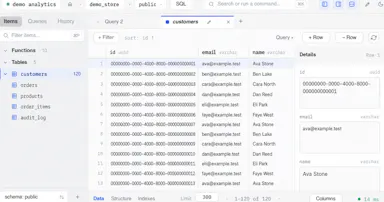
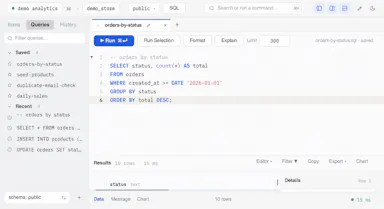
A native macOS PostgreSQL client for writing SQL, browsing schemas, and viewing explain plans locally.

Domain registered 2 months ago

Works offlineOpen source
What to know
How it works
Local-first SQL drafting with schema navigator, explain plans, and exports; supports Neon
Pricing
Open source

Watched for 5 days · last checked 4d ago

Details →

Aural

Live

An open-source platform for building AI-led interviews over voice, chat, or video, self-hostable instead of relying on a closed managed interview tool.

Domain registered 5 months ago

Open sourceSelf-hosted
What to know
How it works
Design adaptive interviews, share a link, and the AI conducts the conversation over voice, chat, or video with contextual follow-ups and structured reports; self-host with Docker on a Next.js/Supabase/PostgreSQL stack with pluggable LLM providers.
What's different
MIT-licensed and fully self-hostable.
Best for
teams that want to self-host their interview data instead of using the managed service.

Watched for 12 days · last checked 8d ago

Details →

An MIT-licensed authentication boilerplate for Node.js backends providing JWT with refresh-token rotation, role/permission middleware, Google OAuth, and a PostgreSQL/MySQL data layer switchable in one line.

Open source
What to know
How it works
Ships with a clean MVC structure and a full setup guide; works with Node.js 18+.

Watched for 12 days · last checked 8d ago

Details →

A self-hosted MRR and growth dashboard you deploy yourself for a one-time $49 instead of $108/month for Baremetrics. Built for indie hackers running their own infrastructure, not a plug-and-play SaaS.

Open sourcePay onceNo subscriptionSelf-hosted
What to know
How it works
Tracks MRR, churn rate, ARPU, Net New MRR, customer lifetime value, and 12-month revenue trends, with revenue data added manually or via API. Self-hosted on your own Railway + Supabase stack, works entirely offline with no third-party integrations required.
What's different
Sold as a one-time $49 purchase with full MIT-licensed source code instead of Baremetrics' $108/month subscription.
Pricing
One-time $49 purchase, no recurring fees.
Best for
Indie hackers at $0-$5k MRR who want a real growth dashboard before paying for Baremetrics.

Watched for 18 days · last checked today

Details →

A self-hosted license-key manager for indie hackers and digital product sellers, sold as a $49 one-time purchase instead of a $29/month subscription elsewhere.

Open sourcePay onceSelf-hosted
What to know
How it works
You generate license keys for your products, set activation limits, and validate keys via a simple API endpoint that buyers hit to check validity. Self-hosted on your own Railway + Neon stack, built with React 19, Express 5, PostgreSQL, and Drizzle ORM, deployable in under 15 minutes.
What's different
Sold as a one-time $49 purchase with full MIT-licensed source code instead of Lemon Squeezy's $29/month license key management fee.
Pricing
One-time $49 purchase, no recurring fees.
Best for
Gumroad or Lemon Squeezy sellers who want license key validation without a monthly SaaS fee.

Watched for 18 days · last checked 2d ago

Details →

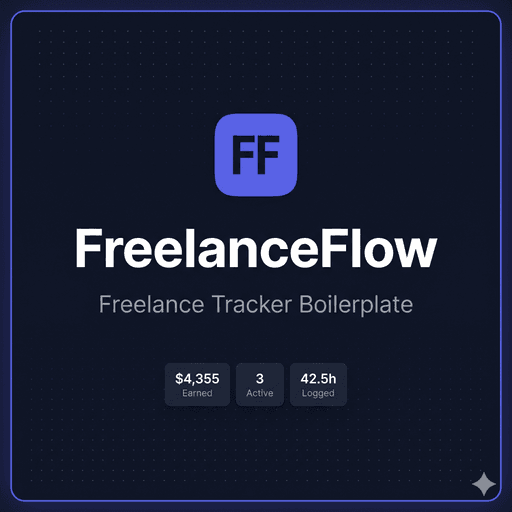
A self-hosted client, project and invoice tracker you deploy yourself for a one-time $49 instead of paying HoneyBook or Bonsai monthly. Built for developer-comfortable freelancers, not a no-code SaaS pick.

Open sourcePay onceNo subscriptionCan export my data
What to know
How it works
Manage clients, projects, and invoices in one place: track billable hours, generate invoice PDFs, and monitor monthly revenue with a built-in chart. Self-hosted on your own Railway + Supabase stack, built with React 19, Express 5, PostgreSQL, and Drizzle ORM, deployable in under 15 minutes.
What's different
Sold as a one-time $49 purchase with full source code (MIT licensed) instead of paying HoneyBook ($19/month) or Bonsai ($25/month) recurring fees.
Pricing
One-time $49 purchase, no recurring fees.
Best for
Freelance developers, designers, and consultants at $0-$5k/month who want a real CRM before paying for Bonsai.

Watched for 18 days · last checked 11d ago

Details →