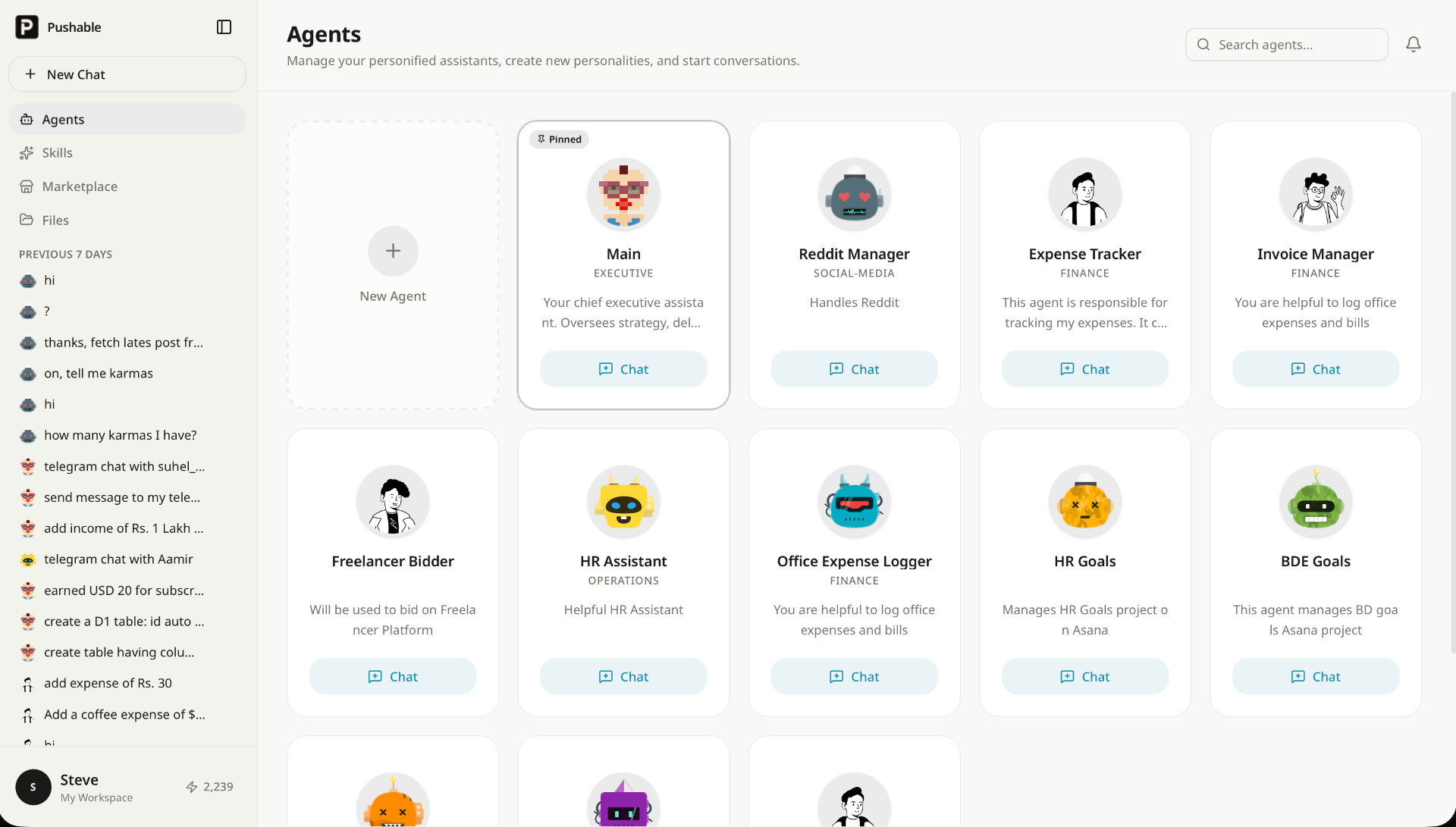

We check every product on this page once a day and record whether it still answers.
An open-core platform for testing, simulating and monitoring multi-step AI agents in production, including an open-source framework for running adversarial conversation simulations before launch.
Open source
What to know▼
How it works
An open-core platform to test, simulate and monitor AI agents end-to-end, including multi-turn, multi-step, multi-agent systems, with an open-source framework (Scenario) for simulating full multi-turn agent conversations — including adversarial and edge-case paths — before production.
What's different
Tests agent behavior across full interactions the way software teams test software, rather than just grading single LLM outputs like most competitors.
Best for
Teams building complex or multi-agent AI systems who need to catch broken behavior before users do.
We check every product on this page once a day and record whether it still answers.
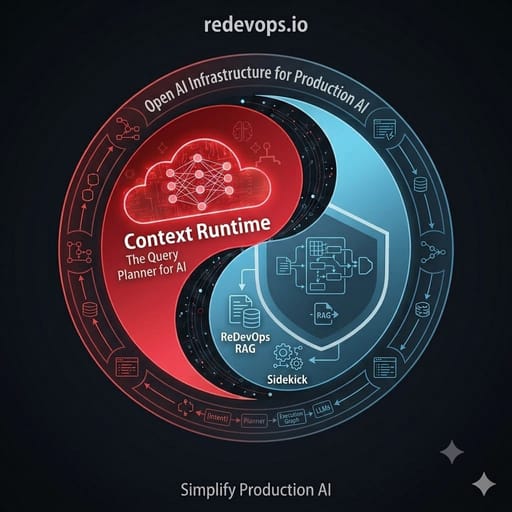
An open-source runtime for building and running production AI agent systems, for developers who don't want to hand-roll retrieval, memory, and execution logic.
Open sourceSelf-hosted
What to know▼
How it works
Handles retrieval, memory, model routing, and verification instead of hardcoded pipelines
What's different
Self-hostable, open-source, with governed execution including planning, verification, and replay
Best for
Developers building production AI systems in Python or Go
We check every product on this page once a day and record whether it still answers.
A self-hosted team messenger with channels, DMs, threads, voice/video calls and file sharing, deployed entirely on your own infrastructure with no third-party cloud. AI, moderation and translation are optional add-ons.
Self-hosted
What to know▼
How it works
A self-hosted team messenger — channels, DMs, threads, voice/video calls, file sharing — deployed entirely on your own infrastructure with no third-party cloud involved.
What's different
AI, moderation, translation and push notifications are optional add-ons you turn on only when needed, rather than bundled by default.
Best for
Teams that need a Slack-like messenger but require it to run entirely on their own infrastructure, not a vendor's cloud.
We check every product on this page once a day and record whether it still answers.
An autonomous AI agent with its own cloud computer that finishes multi-step research, coding, or creative tasks unattended, for people who want delegated work done while they're away.
Works offline
What to know▼
How it works
An AI agent with its own cloud computer (browser, terminal, files, code) that takes a task and returns finished work — research, websites, spreadsheets, decks, audits, or tested code — with sourced evidence.
What's different
Can fan work out to parallel specialist agents and run on a schedule, and can be embedded via an OpenAI-compatible API or used in real repositories through Clark Code.
Best for
People who want to hand off multi-step research, coding, or creative tasks and come back to completed work.
We check every product on this page once a day and record whether it still answers.
A native macOS AI workspace with local-first chat, writing assistance, and browser automation, extensible by developers via an MCP registry.
Watch out · macOS only.
Works offline
What to know▼
How it works
A native macOS AI workspace with a multi-provider chat interface, local-first data handling, system-wide writing assistance, browser automation, file creation, and study tools that generate linked quizzes and flashcards.
What's different
Developers can extend it via an MCP registry, @-tools, and Prism Hosted capabilities.
We check every product on this page once a day and record whether it still answers.
An open-source, self-hostable runtime for running AI agents across 24 LLM providers, with an MCP plugin marketplace and sandboxed code execution — built for developers.
Open sourceSelf-hosted
What to know▼
How it works
An open-source, self-hostable runtime for running AI agents, with a 5-tier memory system, support for 24 LLM providers, an MCP plugin marketplace, and sandboxed code execution; installs with one command.
What's different
MIT-licensed and self-hostable with a plugin marketplace, rather than a closed hosted agent platform.
Pricing
Open source, MIT license.
Best for
Developers who want to run and customize AI agents across multiple LLM providers on their own infrastructure.
We check every product on this page once a day and record whether it still answers.
Open-source governance layer that keeps long-running AI coding agents on track with verified state and auditable handoffs.
Open source
What to know▼
How it works
Verifies a long-running AI agent's state and pushes one valid next action, using a graph-backed backlog with independent worker and QA roles and auditable bypasses.
What's different
Open-source governance layer aimed at preventing agents from drifting during long-running work.
We check every product on this page once a day and record whether it still answers.
An open-source workspace for building and connecting AI agent workflows to 1,000+ integrations and LLMs; a developer/maker tool rather than a no-code product.
Open source
What to know▼
How it works
An open-source workspace for building agentic workflows, connecting AI agents to 1,000+ integrations and LLMs.
What's different
Open source.
Best for
Developers building custom AI agent workflows across many integrations.
We check every product on this page once a day and record whether it still answers.
A free identity-registration platform pre-registering ".agent" domain names ahead of an ICANN application.
Watch out · Pre-registration only; the TLD itself is still pending ICANN approval.
Free
What to know▼
How it works
Lets builders pre-register a .agent domain name for free and get a shareable identity card, ahead of an ICANN application for the [.agent] top-level domain.
Pricing
Free.
Watch out
Pre-registration only; the TLD itself is still pending ICANN approval.
We check every product on this page once a day and record whether it still answers.
A messaging platform where AI agents are added like contacts and join group chats with humans, for teams who want multi-agent collaboration inside a shared chat thread instead of separate agent tools.
Open source
What to know▼
How it works
Add agents by invite code; persistent per-room agent sessions with full context; connect any LLM via an open-source connector.
What's different
In-chat model switching, file sharing, 8-language support built in.
We check every product on this page once a day and record whether it still answers.
Gives AI agents reliable web access through a self-healing browser engine that escalates across backends to get past bot protections, with MCP support and self-hosting.
Self-hosted
What to know▼
How it works
Escalates through 5 backends to get past anti-bot protections and captchas, tracks cost per run, and integrates via MCP with tools like Claude, Cursor, and Windsurf.
Best for
Developers building AI agents that need reliable, self-hostable web access.
We check every product on this page once a day and record whether it still answers.
One connector that plugs your AI agent (Claude, ChatGPT, Cursor or Codex) into outside tools for building demos, running outreach and researching your market.
FreeNo subscription
What to know▼
How it works
A single connector that plugs into AI agents in Claude, ChatGPT, Cursor or Codex, sitting between the agent and paid outside services (web search, scraping, contact enrichment, image/video generation, email, phone calls, code sandboxes) so the agent can call them without you creating separate vendor accounts or managing API keys.
What's different
You pay per successful call in cents rather than maintaining multiple separate subscriptions; failed calls cost nothing.
Pricing
Starts with free credits, no card required, then pay-per-call with no subscription.
Best for
Developers and teams building AI agent workflows who want their agent to reach outside tools (outreach, research, demos) without managing each vendor integration separately.
We check every product on this page once a day and record whether it still answers.
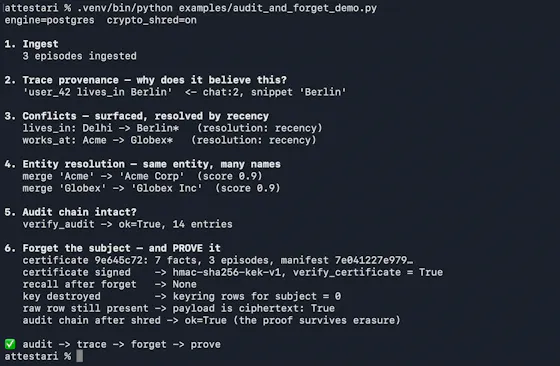
An open-source, self-hostable memory layer for AI agents that keeps episodic and semantic context within LLM token limits across sessions. For developers, not an end-user app.
Open sourceSelf-hosted
What to know▼
How it works
An open-source, self-hostable memory runtime for AI agents providing durable episodic and semantic memory, with ranked retrieval and token-bounded context bundles designed for LLM applications.
What's different
Treats memory as a first-class primitive that persists across sessions rather than an afterthought within a single conversation.
Best for
AI/ML engineers building autonomous agents with frameworks like LangChain, CrewAI or AutoGen.
We check every product on this page once a day and record whether it still answers.
An open-source, self-hostable platform for building AI agents and connecting tools via MCP, using your own LLM provider keys — for developers who want to avoid vendor lock-in.
Open sourceSelf-hosted
What to know▼
How it works
An MIT-licensed, self-hostable platform for building AI agents, connecting tools via Model Context Protocol (MCP), generating code, and working with your choice of LLM provider using your own API keys.
What's different
Self-hosted and open-source, avoiding the vendor lock-in of hosted AI platforms.
Best for
Developers and businesses who want to self-host and customize their own AI agent platform.
We check every product on this page once a day and record whether it still answers.
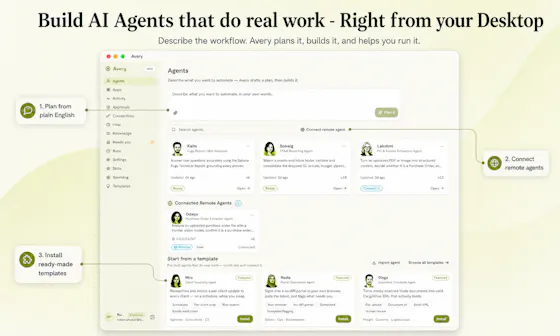
Describes an agent in plain English and it builds a deterministic version that runs locally on your own hardware instead of a metered cloud API, for privacy-conscious teams that can't send sensitive work to the cloud.
Works offline
What to know▼
How it works
You describe an agent in one plain sentence, and Avery builds a deterministic version of it that runs on your own hardware rather than a metered public cloud, with no code required.
What's different
Runs locally and deterministically instead of routing through a per-token cloud API, aimed at avoiding cost, privacy, and lock-in problems of typical agentic AI projects.
Best for
Teams that want private, auditable automation they own outright, without sending sensitive work to a cloud API.
We check every product on this page once a day and record whether it still answers.
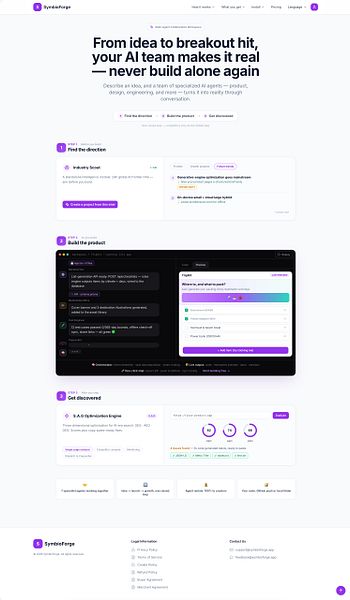
Multi-agent AI workspace that turns product ideas into shipped code with a team of specialist AI agents.
Can export my data
What to know▼
How it works
Lets you assemble specialist AI agents for product, design, and engineering in a split-screen workspace, with live code, previews, and docs as they work.
What's different
Includes an SEO/AEO/GEO optimization engine to boost discoverability after launch.
We check every product on this page once a day and record whether it still answers.
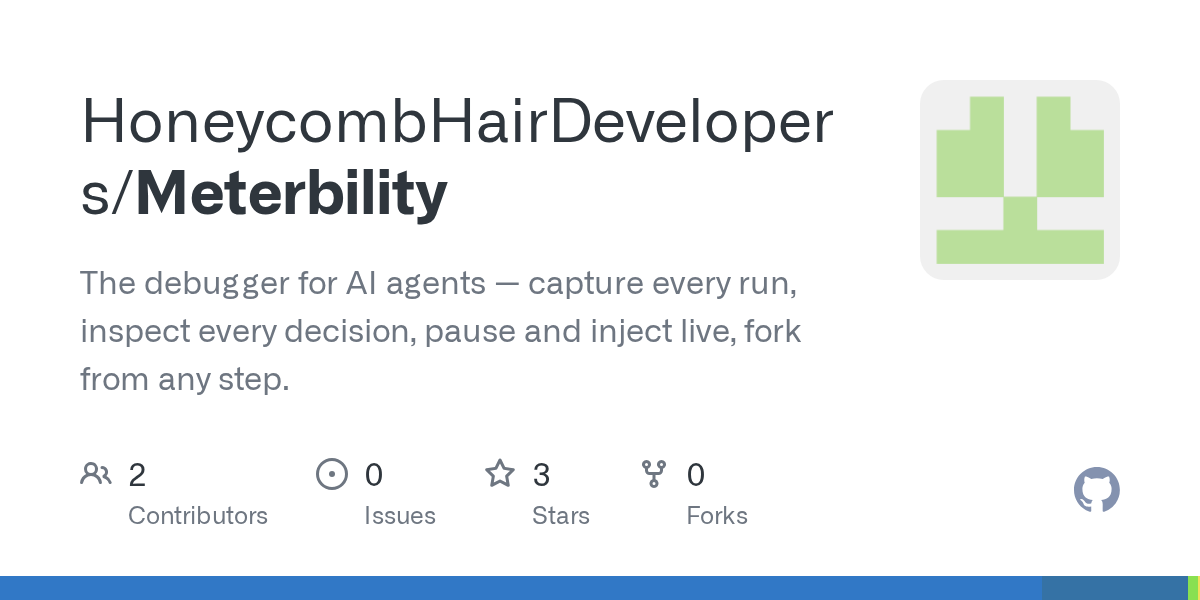
A debugger for AI agent runs that shows exactly what context each model call saw, for developers troubleshooting agents built with Claude Code, Codex, or Cursor.
Works offlineOpen source
What to know▼
How it works
Captures every step of an agent run, compares two runs, and can fork from any step to test changes
What's different
Local-first and open source, so traces never leave your machine
We check every product on this page once a day and record whether it still answers.
Open-source deterministic runtime for building controllable AI agents, separating probabilistic reasoning from deterministic state-machine execution.
Watch out · This is an alpha release.
Open source
What to know▼
How it works
An open-source runtime for building AI agents that separates probabilistic reasoning from deterministic execution, giving the runtime control over state transitions, tools, approvals, retries, concurrency and limits.
What's different
The alpha includes FSM workflows, human-in-the-loop policies, parallel tools, checkpointing, StateGraph orchestration, actor-based concurrency, tracing and multi-model support.
Best for
Developers building AI agents who need deterministic, controllable execution rather than pure LLM-driven control flow.
We check every product on this page once a day and record whether it still answers.
MCP connector giving AI coding agents like Claude and Codex access to sales/outreach APIs — company research, contact verification, job-change tracking — without separate subscriptions per tool.
No subscription
What to know▼
How it works
One MCP connection exposes multiple GTM data sources; pay only when a tool actually runs.
We check every product on this page once a day and record whether it still answers.
A single API call returns live, cryptographically signed data across 87 sources so AI agents and software can verify what they're consuming — a developer-facing trust layer, not a consumer app.
No sign-upOpen source
What to know▼
How it works
A single keyless API call returns structured JSON for 87 live tools across 19 verticals; each datapoint carries its source, licence, timestamp and an Ed25519 signature, optionally Bitcoin-anchored.
What's different
Data is cryptographically verifiable rather than just scraped and cited, and it works without signup or an API key via an MCP endpoint or batch POST.
Best for
Developers building AI agents or software that need to independently verify the live data they consume.
We check every product on this page once a day and record whether it still answers.
Open-source CLI that lets coding agents inspect live web pages, reverse-engineer network requests, and generate reusable browser-automation scripts — a developer tool, not for non-technical users.
Open source
What to know▼
How it works
An open-source, token-efficient CLI that lets a coding agent inspect live web pages, reverse-engineer network requests, and generate deterministic browser-automation scripts.
What's different
Produces inspectable, runnable, debuggable scripts instead of having an agent improvise at runtime from a prompt.
Best for
Developers using coding agents who want reliable, reusable browser automations rather than one-off prompted actions.
We check every product on this page once a day and record whether it still answers.
A free academic-paper search API over 236M papers with an MCP endpoint, built so AI agents like Claude Code can do literature research without hitting rate limits.
FreeNo sign-up
What to know▼
How it works
A hybrid search engine over the Semantic Scholar corpus — 236M papers in the keyword index, 146M with dense vectors — fused with RRF and reranked by a cross-encoder, with a plain JSON API and a native MCP endpoint.
What's different
Built specifically so AI agents like Claude Code can run literature research without hitting the rate limits that other academic APIs impose.
Pricing
Free web search with no signup.
Best for
AI agents and developers doing deep academic literature research.
We check every product on this page once a day and record whether it still answers.
An open-source SDK that gives your AI agent a phone number in a few lines of Python or TypeScript, pitched as the self-hosted alternative to hosted voice-AI platforms like Vapi or Retell. Built for developers who want to own the stack.
Open source
What to know▼
How it works
An open-source SDK that gives an AI agent a phone number in a few lines of Python or TypeScript, using Twilio, Telnyx or Plivo as the underlying carrier.
What's different
Pitched as the self-hosted alternative to hosted voice-AI platforms like Vapi or Retell, for builders who want to own the stack.
Pricing
Open source, MIT licensed.
Best for
Developers building voice AI agents who want to self-host rather than rely on a hosted platform.
We check every product on this page once a day and record whether it still answers.
A single-binary CI test runner for LLM apps and agents that defines test cases in YAML and replays model or judge calls offline at no cost.
Works offline
What to know▼
How it works
Defines test cases and scorers in YAML, runs local targets on every pull request via REST or shell, with baselines, trials, model comparisons, and OTel traces.
Pricing
Replays offline for $0.
Best for
Teams that need CI regression testing for LLM apps and agents.
We check every product on this page once a day and record whether it still answers.
Local-first multi-agent runtime binary usable from terminal, scripts, or HTTP, with editable agent "constitutions" and tool allowlists.
Works offline
What to know▼
How it works
A single native binary agent runtime usable from the terminal, scripts, or over HTTP, with agents living in editable "constitutions" that enforce hard tool allowlists.
What's different
Local-first with network use optional.
Best for
Developers building multi-agent workflows who want local control over tool access.
We check every product on this page once a day and record whether it still answers.
Turns a plain-English goal into a self-hosted AI agent that runs behind approval gates with a signed, replayable audit ledger.
Self-hosted
What to know▼
How it works
Turns a plain-English goal into a self-hosted AI agent that runs behind approval gates and records every step in a signed, replayable ledger, extendable through a forkable Git registry of agents and connectors.
We check every product on this page once a day and record whether it still answers.
An open-source agent platform where a lead AI agent takes tasks from WhatsApp, Slack, GitHub, MCP and more, then delegates to worker agents - built for technical teams running agents across their stack.
Open source
What to know▼
How it works
A persistent, open-source multi-agent system where a lead agent receives tasks from WhatsApp, Slack, GitHub, GitLab, Linear, Jira, email, MCP or API, breaks them down, and delegates to worker agents running in isolated environments.
What's different
Lets teams control costs, manage users, add custom tools, and swap harness or LLM providers, with operational knowledge staying portable across those swaps.
Pricing
Open source (MIT/FOSS).
Best for
Technical teams that want a persistent agent layer working across their existing tools like Slack, GitHub, Jira and Linear.
We check every product on this page once a day and record whether it still answers.
An open-source Python agent runtime, installed with one pip command, with a local cache that skips repeat LLM calls — pitched as a lighter alternative to LangGraph for developers.
Open source
What to know▼
How it works
An open-source agent graph runtime with a BSP scheduler and a local semantic cache that skips redundant LLM calls when a similar routing request already happened, installed with a single pip command.
What's different
Positioned as a lighter, non-wrapper alternative to LangGraph, with a local cache to cut LLM call costs.
Pricing
Open source (Apache-2.0).
Best for
Developers building LLM agent pipelines who want to reduce redundant model calls.
We check every product on this page once a day and record whether it still answers.
software
Can export my data
What to know▼
How it works
A no-code platform with ready-made AI agents for support, sales, and finance, plus a built-in Smart Database with dashboards, audit trails, and Excel import/export.
What's different
SOC 2 Type 2 security and audit trails; positioned as replacing multiple separate tools with one system.
Pricing
Free plan available before upgrading.
Best for
Teams wanting to consolidate scattered tools and spreadsheets into one no-code system with built-in AI agents.
We check every product on this page once a day and record whether it still answers.
A Stack-Overflow-style Q&A site built so AI coding agents can query and post directly via an MCP server, with client-side secret scanning to keep credentials out of your posts.
Free
What to know▼
How it works
A Stack Overflow-style Q&A site built for AI coding agents to query and post directly through an MCP server, with DNS-based discovery (SVCB/HTTPS records), an Agent Skills index, and OAuth/OIDC authentication for agents. Includes a client-side secret scanner and end-to-end encryption.
What's different
Built specifically for AI agents to interact with directly via MCP and DNS discovery, rather than being scraped.
Pricing
Free, runs on Cloudflare Workers + D1.
Best for
Developers and AI coding agents that need a Q&A knowledge base they can query and post to programmatically.
We check every product on this page once a day and record whether it still answers.
A shared memory and governance layer so multiple AI agents can recall what the others learned - backend infrastructure for developers building agent fleets, not an end-user app.
Open source
What to know▼
How it works
A shared memory layer for multi-agent AI fleets: agents write what they learn and recall what the fleet knows, with mandatory governance rules (Keystones) enforced at session start.
What's different
Detects contradictions between memories via RDF triples plus LLM analysis, and deduplicates near-duplicate memories into atomic facts with provenance via its Crystallizer.
Best for
Developers building multi-agent AI systems who need cross-agent recall without knowledge silos or leaks.
We check every product on this page once a day and record whether it still answers.
A browser automation runtime for AI agents that compresses page snapshots to use far fewer tokens than standard browser-use setups, while keeping logins alive across sessions.
Open source
What to know▼
How it works
Compressed snapshots plus a persistent profile for sandboxed Playwright sessions
What's different
50-90% fewer tokens than CDP/traditional browser-use, includes CAPTCHA helpers and proof screenshots
Best for
Developers building AI agents that need to operate a browser
We check every product on this page once a day and record whether it still answers.
An open-source Deno framework for routing prompts across multiple AI models with validation and quorum checks, plus safety gates before agents can mutate a repository — built for developers wiring up AI agent systems, not an end-user product.
Open source
What to know▼
How it works
An open-source Deno framework with two paths: Best Route fans a prompt out to independent model adapters, validates responses with Zod, requires quorum, and synthesizes the strongest answer; Agent Chat gives multiple models shared conversation context to challenge and converge across turns. Any repository mutation requires external SafeLoop authority, exact-digest approval, watched execution and verified artifacts.
What's different
Adds a fail-closed safety gate before agents can mutate a repository, rather than trusting agent output directly.
Best for
Developers building multi-model AI agent systems who need validation and safety checks before code changes land.
We check every product on this page once a day and record whether it still answers.
Open-source voice AI API for building production voice agents that receive and make phone calls, self-hostable or deployable to Vercel.
Open source
What to know▼
How it works
Built in Next.js on Vercel tooling: Vercel Workflows for post-call analysis, AI Gateway for realtime models, and Vercel Blob for call recordings, exposed as a REST API similar to Vapi or Retell.
We check every product on this page once a day and record whether it still answers.
A self-hosted AI agent portal you run on your own server, where teams share tools and MCP connectors so agents complete tasks, not just chat. For technical teams wanting a private deployment instead of a hosted SaaS agent.
Self-hosted
What to know▼
How it works
A self-hosted, multi-user AI agent portal you run on your own server, where teams prepare shared Skills, Tools, MCP services, connectors and approval policies, then submit tasks via web UI or IM (WeChat, Telegram).
What's different
Fully private, self-hosted deployment rather than a hosted SaaS agent — all data stays on your own server.
Pricing
Free beta supports up to five users.
Best for
Technical teams that want a private, self-hosted AI agent portal instead of sending data to a hosted SaaS agent.
We check every product on this page once a day and record whether it still answers.
A free, keyless MCP database of verified step-by-step fixes and documented failure modes (like Stripe webhooks breaking) that AI agents can query before attempting a task.
Free
What to know▼
How it works
An MCP server that AI agents query before attempting a task; it returns verified 'routes' — step sequences plus documented failure modes (e.g. express.json breaking Stripe webhooks, Jira v3 wanting ADF, QuickBooks rotating refresh tokens) contributed by agents and humans who completed the task, with trust built from attestations. One MCP install works with Claude, OpenAI, LangChain, and CrewAI.
What's different
Reads are free and keyless, and it publishes 8,700+ routes across 2,100+ domains with live metrics.
Pricing
Reads are free and keyless.
Best for
Developers running AI agents that repeatedly hit the same known integration failures and want documented fixes up front.
We check every product on this page once a day and record whether it still answers.
An open-source framework that turns your existing AI coding agent into a persistent virtual cofounder that remembers your venture across sessions, for solo technical founders.
Open source
What to know▼
How it works
An open-source install turns an existing AI coding agent — Claude Code, Cursor, Antigravity, Gemini CLI, GitHub Copilot — into a persistent virtual cofounder: one line installs it, `shotgun-init` injects it into a folder or codebase, and after a one-time onboarding it remembers your venture, builds your product, and keeps your data organized.
What's different
Open-source and works on top of whatever AI agent you already use, rather than being its own separate assistant.
Best for
Solo technical founders building without a human cofounder.
We check every product on this page once a day and record whether it still answers.
An open-source, self-hosted platform for shared AI workflows, like auto-drafting WhatsApp replies or pinging Slack on server errors, instead of everyone writing one-off prompts. For technical teams willing to self-host.
Open sourceSelf-hosted
What to know▼
How it works
An open-source, self-hosted platform for building reusable AI workflows with human-approval steps built in — for example, drafting a WhatsApp reply but requiring sign-off before sending, or checking server logs and pinging a teammate on Slack when an error appears.
What's different
Workflows are built once and shared across a team instead of every person creating one-off prompts, and it runs fully on your own infrastructure with any AI model.
Best for
Technical teams willing to self-host who want shared, auditable AI automations instead of ad hoc prompting.
We check every product on this page once a day and record whether it still answers.
An open-source Chrome extension that lets an AI agent read and act on the page you're viewing, using whatever model you plug in, with API keys kept local and no telemetry.
No sign-upOpen sourceNo tracking
What to know▼
How it works
An open-source Chrome extension where an AI agent reads and acts on the page you're viewing, using any model you plug in — OpenRouter, OpenAI, Claude, Gemini, Groq, or a local model.
What's different
Model-agnostic and keeps API keys local in the browser rather than sending them through a vendor's servers.
Pricing
MIT license, no account required.
Best for
Developers who want a browser agent they can point at any LLM provider, including local models, without vendor lock-in.
We check every product on this page once a day and record whether it still answers.
An open-source TypeScript agent runtime with a small microkernel, composable tools, and adapters for CLI, Discord, Slack, GitHub, and Telegram, for developers building AI agents.
Open source
What to know▼
How it works
A 5KB microkernel runtime with 16 composable tools, 7 channel adapters, model routing, sandbox policies, and self-evolution, with zero third-party SDK dependencies.
We check every product on this page once a day and record whether it still answers.
An open-source, self-hosted SDK that gives your AI agent a real phone number for calls, working with Twilio, Telnyx or Plivo. Built for developers who want to own the voice-AI stack rather than use a hosted vendor.
Watch out · Requires a separate account with a carrier such as Twilio, Telnyx, or Plivo to actually place calls.
Open sourceSelf-hosted
What to know▼
How it works
Connects an AI agent to a real phone number in about 4 lines of Python or TypeScript, letting you pick a carrier (Twilio, Telnyx, or Plivo) and voice stack, then run it on your own laptop with a self-hosted dashboard showing each call's cost and latency.
What's different
MIT-licensed and self-hosted, so the developer owns the voice-AI stack instead of routing through a hosted vendor.
Pricing
MIT licensed (free/open source).
Best for
Developers building voice AI agents who want to own the stack rather than use a hosted vendor.
Watch out
Requires a separate account with a carrier such as Twilio, Telnyx, or Plivo to actually place calls.
We check every product on this page once a day and record whether it still answers.
Aggregates customer feedback, product data, and company knowledge into structured context so product teams and their AI agents can build the right things faster.
What to know▼
How it works
Connects customer feedback, product data, and company knowledge into structured context for product teams and their AI agents.
Best for
Product teams and builders wanting to ship the right things faster.
We check every product on this page once a day and record whether it still answers.
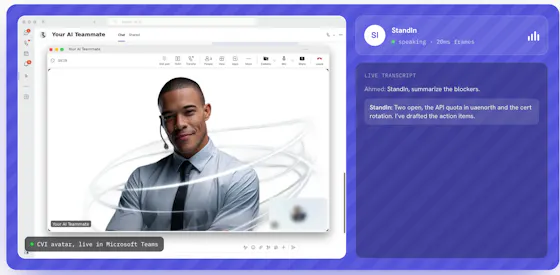
Platform for building AI 'avatar' teammates with memory that can chat, join Zoom meetings and connect via MCP.
What to know▼
How it works
Build AI 'avatar' teammates with unique identities, expertise, and memory, or choose from 100+ specialists that can chat, join Zoom meetings, and connect to tools via MCP.
We check every product on this page once a day and record whether it still answers.
An OS-level driver that lets AI agents control a real PC through accessibility and UI-automation APIs instead of screenshot-based clicking.
What to know▼
How it works
A chat agent that lives on a real PC and controls it through OS accessibility and UI-automation APIs instead of screenshot-based clicking.
What's different
Positioned against screenshot-and-click tools like OpenAI Operator and Anthropic Computer Use, which move the mouse by guessing coordinates on a cloud VM.
We check every product on this page once a day and record whether it still answers.
A no-code/low-code platform for building AI agents that automate business workflows and connect to 500+ business apps, aimed at teams and organizations rather than solo freelancers.
What to know▼
How it works
A no-code/low-code AI agent platform for building, deploying and managing AI agents that connect to more than 500 business applications (Gmail, Slack, CRMs, project management tools, databases) to automate workflows like customer support, lead qualification and reporting.
Best for
Organizations and teams looking to automate cross-department workflows rather than solo freelancers.
We check every product on this page once a day and record whether it still answers.
An EU-hosted API gateway that routes one key to 300+ AI models with an OpenAI-compatible interface, adding spend caps, PII masking and audit trails for teams building AI agents.
What to know▼
How it works
One API key routes to 300+ AI models through an OpenAI/Anthropic/Google-compatible interface — switching providers is a base-URL change. A control plane adds routing rules, PII masking, per-team spend caps and audit trails.
What's different
About half of its 30+ model providers run inference in the EU under one EU sub-processor, and prompts aren't stored by default — built for EU data-residency requirements.
Pricing
No markup on tokens; a 3% fee applies to credit top-ups.
Best for
Teams building AI agents in Europe who need EU-hosted inference and centralized spend/PII controls across many models.
We check every product on this page once a day and record whether it still answers.
The Control Plane and Network Layer For AI Agents
Watch out · This is PubNub's existing infrastructure repositioned for AI agents — worth knowing if you're evaluating it as a new product versus an established platform's new feature.
What to know▼
How it works
A control plane and global network connecting AI agents across different frameworks, providers and APIs, without opening inbound ports, setting up tunnels, or changing DNS/firewall rules.
What's different
Built on PubNub's existing real-time infrastructure (used by 113,000+ apps), applying that connectivity to agent-to-agent networking specifically.
Best for
Teams connecting AI agents across multiple frameworks and providers who need a network layer instead of custom point-to-point connections.
Watch out
This is PubNub's existing infrastructure repositioned for AI agents — worth knowing if you're evaluating it as a new product versus an established platform's new feature.
We check every product on this page once a day and record whether it still answers.
A visual, drag-and-drop builder for chaining AI models like GPT-4o, Gemini, and ElevenLabs into workflows, then exposing them as ready-to-use API endpoints for developers.
What to know▼
How it works
A visual, drag-and-drop canvas for building multimodal AI workflows across text, image, video and voice, connecting models like GPT-4o, Gemini, Veo and ElevenLabs, then publishing the workflow as an API endpoint.
What's different
Turns a visual node workflow directly into a production-ready API endpoint without separate backend work.
Pricing
Free to start.
Best for
Developers building AI-powered apps, backend automations or content pipelines without wanting to write backend code from scratch.
We check every product on this page once a day and record whether it still answers.
A work agent you reach by email or Slack (with WhatsApp, Telegram and iMessage support planned) claiming 3,200+ integrations — too vague to say what tasks it actually automates.
Watch out · The product description is vague about which specific tasks it automates beyond claiming broad integration coverage and matching existing workflows.
What to know▼
How it works
A work agent you reach by emailing it or chatting with it in Slack (with WhatsApp, Telegram, Signal and iMessage support planned), built to trace and match how your team already works across more than 3,200 claimed integrations.
Watch out
The product description is vague about which specific tasks it automates beyond claiming broad integration coverage and matching existing workflows.
We check every product on this page once a day and record whether it still answers.
AI coworker agents that connect to Slack, GitHub, and email to help teams manage projects and tasks — a general team tool, not developer-specific.
What to know▼
How it works
AI coworker agents connect to Slack, GitHub, email and other tools, learn a team's projects, and can suggest actions, run tasks with approval, or handle routine work autonomously once trusted, with every action logged.
What's different
Positioned as agents that get real work done rather than a chatbot you have to babysit, with a visible trail for every action taken.
We check every product on this page once a day and record whether it still answers.
A shared catalog of AI prompts and workflows, usable by name inside Claude, Cursor, ChatGPT or Gemini via one MCP server — built so sales, marketing and ops can use AI skills too, not just engineers.
What to know▼
How it works
Installing one MCP server gives an org a shared catalog of AI skills (prompts and workflows) usable by name inside Claude, Cursor, ChatGPT or Gemini. Anyone can create and share skills, admins govern them with review and versioning, and skills can be Git-backed with edits syncing as PRs.
What's different
Makes AI skills usable by non-technical teams like sales, marketing and ops, instead of staying buried in engineers' repos and Slack threads.
Best for
Organizations where AI prompts and workflows are siloed with engineers and non-technical teammates can't reuse them.
We check every product on this page once a day and record whether it still answers.
An image-generation API and MCP server with tiered model quality and built-in billing for AI agents — a developer tool, not a consumer app.
Watch out · A 5th tier (Gemini 3 Pro) is stated to unlock community-wide only once there are 10 paid subscribers — it isn't available yet.
What to know▼
How it works
An image-generation API and MCP server with 4 live quality tiers (from SDXL up to Gemini 3.1 Flash) and billing built for AI agents rather than human checkout flows.
What's different
Ships as an MCP server with agent-native billing, so an AI agent can call it directly rather than going through a human-facing app.
Best for
Developers building AI agents or apps that need image generation via a single API call.
Watch out
A 5th tier (Gemini 3 Pro) is stated to unlock community-wide only once there are 10 paid subscribers — it isn't available yet.
We check every product on this page once a day and record whether it still answers.
A backend platform for developers that turns a local folder into a queryable SQL database, reachable via REST, SDKs or MCP, and self-hostable or movable to Postgres.
Self-hosted
What to know▼
How it works
Turns any local folder into a backend for apps and AI agents — build locally, query the data with SQL, and connect through SDKs, REST or MCP.
What's different
You start from your project instead of provisioning cloud infrastructure first, and can self-host or move to Postgres later without starting over.
Best for
Developers who want a backend that starts local and can grow into Postgres without a rewrite.
We check every product on this page once a day and record whether it still answers.
Multi-AI workspace for chat, voice and collaboration — positions itself as a collaborative ecosystem of specialized autonomous agents with shared context and persistent memory, instead of fragmented chatbots and disconnected tools.
Watch out · Mostly vision/manifesto copy — concrete product features aren't described in the listing text.
What to know▼
Watch out
Mostly vision/manifesto copy — concrete product features aren't described in the listing text.
We check every product on this page once a day and record whether it still answers.
An open-source, bring-your-own-key voice assistant for the desktop that you fully customize, model, skills, themes, aimed at builders willing to configure their own AI stack.
Open source
What to know▼
How it works
An open-source, bring-your-own-key voice assistant for the desktop that performs tasks on your behalf. The voice, model, UI, skills, tools and widgets are all customizable.
What's different
Fully open and customizable rather than a fixed hosted assistant — you supply your own API key and build your own skills and themes.
Best for
Builders comfortable configuring and extending their own AI voice assistant stack rather than using a closed hosted product.
We check every product on this page once a day and record whether it still answers.
Managed cloud hosting to deploy autonomous AI agents (like OpenClaw) in under 60 seconds, with several frontier models included free.
FreeNothing to installOpen source
What to know▼
How it works
Deploys autonomous AI agents like OpenClaw or Hermes to managed cloud hosting in under 60 seconds, connecting to Telegram, WhatsApp, Slack, Discord, Signal, and iMessage; includes a browser-based terminal.
What's different
Handles container security, auto-updates, monitoring, and crash recovery instead of a raw Linux VPS.
Pricing
Frontier models (GPT-5.4, GPT-5.3, Mistral Large 3, Kimi K2.5, Deepseek V3.2) included free for a limited time; plans start at $2.99/month.
We check every product on this page once a day and record whether it still answers.
Open-source, local-first AI system that coordinates multiple agents to plan, build, verify, and ship real software.
Watch out · Local-first operation.
Works offlineOpen source
What to know▼
How it works
Coordinates specialized AI agents to plan, build, verify, recover, and ship software, with persistent memory, browser evidence, and real deployment integrations.
We check every product on this page once a day and record whether it still answers.
A Python SDK for scripting multi-agent coding workflows, letting different AI coding agents implement, review, and compete on tasks in isolated git worktrees.
Open source
What to know▼
How it works
Lets developers script the full development process in Python so agents like Claude Code and Codex implement independently, review one another, revise, run neutral tests, compete, and safely apply the winner, each working in an isolated Git worktree.
What's different
Open source, includes 40 multi-agent LLM paper workflows.
We check every product on this page once a day and record whether it still answers.
An open-source authorization layer for AI agents that grants policy-based authority instead of credentials, with least-privilege delegation, instant revocation, human approval steps, and tamper-evident audit logs.
Watch out · GitHub, Microsoft, and Vercel are named as project sponsors under Linux Foundation Decentralized Trust, not as integrations.
Open source
What to know▼
How it works
Replaces credential-sharing with policy-based authorization for AI agents: least-privilege delegation, instant revocation, human-in-the-loop approvals, and a tamper-evident audit trail.
Best for
Developers building AI agent systems who need to grant scoped authority without handing out raw credentials.
Watch out
GitHub, Microsoft, and Vercel are named as project sponsors under Linux Foundation Decentralized Trust, not as integrations.
We check every product on this page once a day and record whether it still answers.
An open-source Android AI agent that runs entirely on-device with MCP support and persistent memory. A technical, open-source project more than a polished consumer assistant app.
Open source
What to know▼
How it works
An open-source Android AI agent that runs entirely on the phone, with MCP support, skills, persistent memory, multi-modal input, and permission-based file access.
What's different
Runs fully on-device rather than depending on a cloud backend.
Best for
Developers and technical users who want an on-device Android agent they can inspect and extend, rather than a polished consumer assistant app.
We check every product on this page once a day and record whether it still answers.
An open-source platform for running full teams of autonomous AI agents, each with its own context, tools, memory and role, rather than a single copilot — aimed at developers building multi-agent systems.
Open source
What to know▼
How it works
An open-source platform for running teams of autonomous AI agents, where each agent has its own context, tools, memory and role, instead of a single copilot handling one prompt at a time.
What's different
Built as a full multi-agent runtime rather than a wrapper around existing single-agent tools.
Best for
Developers building systems that coordinate multiple AI agents as a working team rather than one assistant.
We check every product on this page once a day and record whether it still answers.
Sell your AI workflow. Run someone else's.
Free
What to know▼
How it works
A marketplace for 'flows' — complete AI workflows (tools, prompts, input variables, and steps in sequence) that you can package, list, and let others copy and run.
Pricing
Free to start.
Best for
AI builders who want to sell or share a packaged workflow, or copy a proven one to apply to their own project.
We check every product on this page once a day and record whether it still answers.
A desktop AI agent living on your Windows taskbar that does web research, builds Excel/PDF reports, and runs scheduled automations, free if you supply your own NVIDIA API key.
Free
What to know▼
How it works
A desktop AI agent on the Windows taskbar that takes plain-English requests to research the web, build Excel/PDF reports into your Downloads folder, automate apps, and run scheduled jobs while you're away.
What's different
Risky actions require explicit Allow/Deny confirmation before it acts.
Pricing
Free, but you must supply your own NVIDIA API key.
Best for
Windows users who want an always-on agent handling background research and reporting tasks.
We check every product on this page once a day and record whether it still answers.
A desktop multi-agent AI chat workspace with a large tool library covering voice and code tasks; the listing gives little detail beyond a free-to-start pitch.
Free
What to know▼
How it works
A desktop app offering an agentic multi-agent AI chat workspace with over 30 tools, plus voice and code capabilities.
We check every product on this page once a day and record whether it still answers.
Build AI agents entirely in the browser using local open-weight models over WebGPU, no install, no API key, no server, then export the whole thing as a single standalone HTML file. A developer tool for writing agent logic in Python.
Nothing to installWorks offlineCan export my data
What to know▼
How it works
Lets you build AI agents that run entirely in the browser: open models (Llama, Qwen, Gemma, Phi, DeepSeek) load locally via WebGPU, agent logic is written in Python running through Pyodide, and the whole thing exports as a single standalone HTML file.
What's different
No install, server or API key needed for the local models — prompts and data never leave the tab — and you can optionally bring your own OpenAI/Claude key, encrypted client-side.
Pricing
Free to start.
Best for
Developers who want to write and distribute browser-based AI agents without server infrastructure.
We check every product on this page once a day and record whether it still answers.
Runs AI agent chains, workflows and cron jobs locally on your own machine — local-first, private, bring your own API key. Free download for Linux, Windows and macOS.
We check every product on this page once a day and record whether it still answers.
A local-first persistent task-context store with an API that AI agents (and humans) can read and write to, so agent workflows keep project context across sessions.
Every number here comes from our own daily check — not from a vendor list.
Tools for building AI agents — how many are there?
Tablif is tracking 335 of them. 329 answered our check today, and 3 we couldn't reach — we don't claim those are dead.
Which ones are still maintained?
Tablif knocks on every door once a day and records the answer. 329 of these 335 responded on the latest run, so that number is what "still here" means on this page — not a review score.
Are any of them free?
20 of the live ones say so in their own words, and 9 let you start without making an account. Tablif records the claim the product makes; we don't verify pricing.
Any open-source options?
49 of the live ones on Tablif mention being open source.
What's the newest one?
Octopodas — Tablif first saw it today.
Did a person actually look at these?
331 of them Tablif opened and read, then wrote a one-line summary in our own words instead of reusing the founder's tagline. The rest carry keyword labels we haven't confirmed by reading yet — and we say so rather than hiding it.