We check every product on this page once a day and record whether it still answers.
An open-core platform for testing, simulating and monitoring multi-step AI agents in production, including an open-source framework for running adversarial conversation simulations before launch.
Open source
What to know▼
How it works
An open-core platform to test, simulate and monitor AI agents end-to-end, including multi-turn, multi-step, multi-agent systems, with an open-source framework (Scenario) for simulating full multi-turn agent conversations — including adversarial and edge-case paths — before production.
What's different
Tests agent behavior across full interactions the way software teams test software, rather than just grading single LLM outputs like most competitors.
Best for
Teams building complex or multi-agent AI systems who need to catch broken behavior before users do.
We check every product on this page once a day and record whether it still answers.
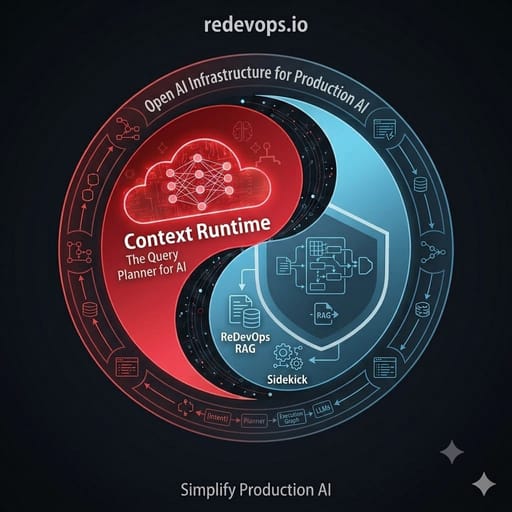
An open-source runtime for building and running production AI agent systems, for developers who don't want to hand-roll retrieval, memory, and execution logic.
Open sourceSelf-hosted
What to know▼
How it works
Handles retrieval, memory, model routing, and verification instead of hardcoded pipelines
What's different
Self-hostable, open-source, with governed execution including planning, verification, and replay
Best for
Developers building production AI systems in Python or Go
We check every product on this page once a day and record whether it still answers.
An open-source, self-hostable runtime for running AI agents across 24 LLM providers, with an MCP plugin marketplace and sandboxed code execution — built for developers.
Open sourceSelf-hosted
What to know▼
How it works
An open-source, self-hostable runtime for running AI agents, with a 5-tier memory system, support for 24 LLM providers, an MCP plugin marketplace, and sandboxed code execution; installs with one command.
What's different
MIT-licensed and self-hostable with a plugin marketplace, rather than a closed hosted agent platform.
Pricing
Open source, MIT license.
Best for
Developers who want to run and customize AI agents across multiple LLM providers on their own infrastructure.
We check every product on this page once a day and record whether it still answers.
Open-source governance layer that keeps long-running AI coding agents on track with verified state and auditable handoffs.
Open source
What to know▼
How it works
Verifies a long-running AI agent's state and pushes one valid next action, using a graph-backed backlog with independent worker and QA roles and auditable bypasses.
What's different
Open-source governance layer aimed at preventing agents from drifting during long-running work.
We check every product on this page once a day and record whether it still answers.
An open-source workspace for building and connecting AI agent workflows to 1,000+ integrations and LLMs; a developer/maker tool rather than a no-code product.
Open source
What to know▼
How it works
An open-source workspace for building agentic workflows, connecting AI agents to 1,000+ integrations and LLMs.
What's different
Open source.
Best for
Developers building custom AI agent workflows across many integrations.
We check every product on this page once a day and record whether it still answers.
A messaging platform where AI agents are added like contacts and join group chats with humans, for teams who want multi-agent collaboration inside a shared chat thread instead of separate agent tools.
Open source
What to know▼
How it works
Add agents by invite code; persistent per-room agent sessions with full context; connect any LLM via an open-source connector.
What's different
In-chat model switching, file sharing, 8-language support built in.
We check every product on this page once a day and record whether it still answers.
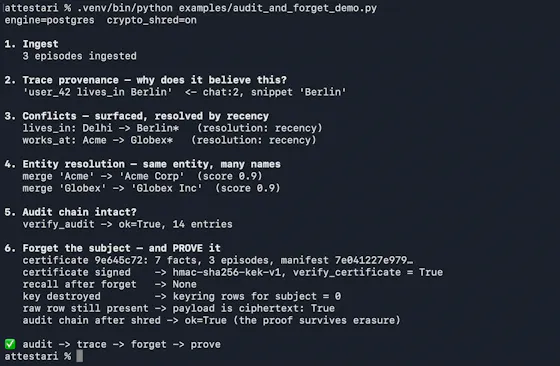
An open-source, self-hostable memory layer for AI agents that keeps episodic and semantic context within LLM token limits across sessions. For developers, not an end-user app.
Open sourceSelf-hosted
What to know▼
How it works
An open-source, self-hostable memory runtime for AI agents providing durable episodic and semantic memory, with ranked retrieval and token-bounded context bundles designed for LLM applications.
What's different
Treats memory as a first-class primitive that persists across sessions rather than an afterthought within a single conversation.
Best for
AI/ML engineers building autonomous agents with frameworks like LangChain, CrewAI or AutoGen.
We check every product on this page once a day and record whether it still answers.
An open-source, self-hostable platform for building AI agents and connecting tools via MCP, using your own LLM provider keys — for developers who want to avoid vendor lock-in.
Open sourceSelf-hosted
What to know▼
How it works
An MIT-licensed, self-hostable platform for building AI agents, connecting tools via Model Context Protocol (MCP), generating code, and working with your choice of LLM provider using your own API keys.
What's different
Self-hosted and open-source, avoiding the vendor lock-in of hosted AI platforms.
Best for
Developers and businesses who want to self-host and customize their own AI agent platform.
We check every product on this page once a day and record whether it still answers.
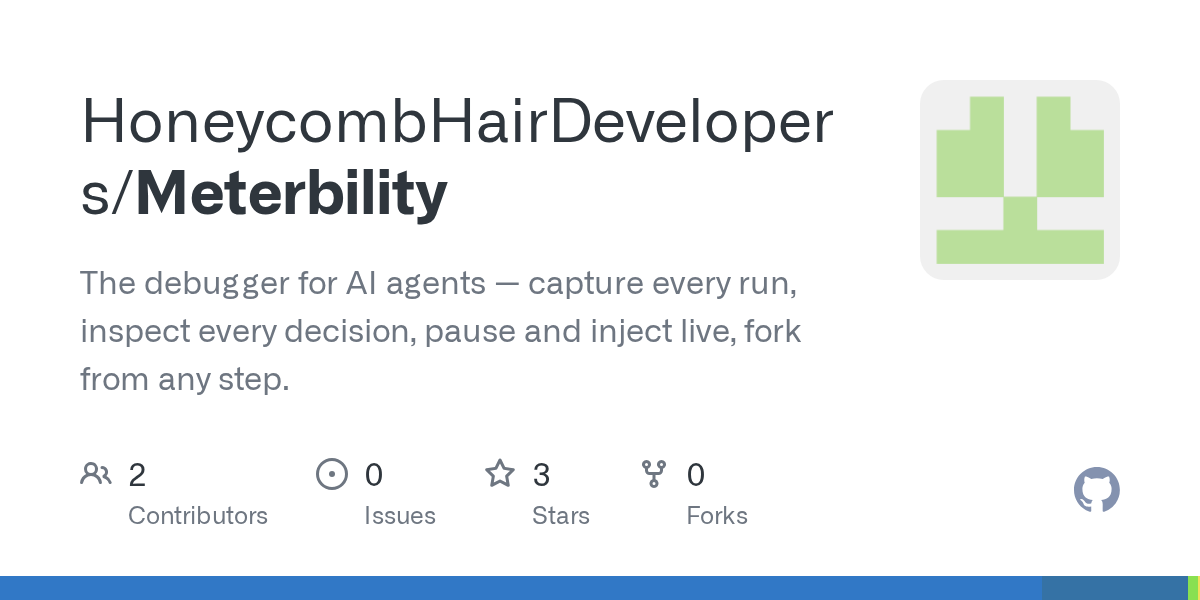
A debugger for AI agent runs that shows exactly what context each model call saw, for developers troubleshooting agents built with Claude Code, Codex, or Cursor.
Works offlineOpen source
What to know▼
How it works
Captures every step of an agent run, compares two runs, and can fork from any step to test changes
What's different
Local-first and open source, so traces never leave your machine
We check every product on this page once a day and record whether it still answers.
Open-source deterministic runtime for building controllable AI agents, separating probabilistic reasoning from deterministic state-machine execution.
Watch out · This is an alpha release.
Open source
What to know▼
How it works
An open-source runtime for building AI agents that separates probabilistic reasoning from deterministic execution, giving the runtime control over state transitions, tools, approvals, retries, concurrency and limits.
What's different
The alpha includes FSM workflows, human-in-the-loop policies, parallel tools, checkpointing, StateGraph orchestration, actor-based concurrency, tracing and multi-model support.
Best for
Developers building AI agents who need deterministic, controllable execution rather than pure LLM-driven control flow.
We check every product on this page once a day and record whether it still answers.
A single API call returns live, cryptographically signed data across 87 sources so AI agents and software can verify what they're consuming — a developer-facing trust layer, not a consumer app.
No sign-upOpen source
What to know▼
How it works
A single keyless API call returns structured JSON for 87 live tools across 19 verticals; each datapoint carries its source, licence, timestamp and an Ed25519 signature, optionally Bitcoin-anchored.
What's different
Data is cryptographically verifiable rather than just scraped and cited, and it works without signup or an API key via an MCP endpoint or batch POST.
Best for
Developers building AI agents or software that need to independently verify the live data they consume.
We check every product on this page once a day and record whether it still answers.
Open-source CLI that lets coding agents inspect live web pages, reverse-engineer network requests, and generate reusable browser-automation scripts — a developer tool, not for non-technical users.
Open source
What to know▼
How it works
An open-source, token-efficient CLI that lets a coding agent inspect live web pages, reverse-engineer network requests, and generate deterministic browser-automation scripts.
What's different
Produces inspectable, runnable, debuggable scripts instead of having an agent improvise at runtime from a prompt.
Best for
Developers using coding agents who want reliable, reusable browser automations rather than one-off prompted actions.
We check every product on this page once a day and record whether it still answers.
An open-source SDK that gives your AI agent a phone number in a few lines of Python or TypeScript, pitched as the self-hosted alternative to hosted voice-AI platforms like Vapi or Retell. Built for developers who want to own the stack.
Open source
What to know▼
How it works
An open-source SDK that gives an AI agent a phone number in a few lines of Python or TypeScript, using Twilio, Telnyx or Plivo as the underlying carrier.
What's different
Pitched as the self-hosted alternative to hosted voice-AI platforms like Vapi or Retell, for builders who want to own the stack.
Pricing
Open source, MIT licensed.
Best for
Developers building voice AI agents who want to self-host rather than rely on a hosted platform.
We check every product on this page once a day and record whether it still answers.
An open-source agent platform where a lead AI agent takes tasks from WhatsApp, Slack, GitHub, MCP and more, then delegates to worker agents - built for technical teams running agents across their stack.
Open source
What to know▼
How it works
A persistent, open-source multi-agent system where a lead agent receives tasks from WhatsApp, Slack, GitHub, GitLab, Linear, Jira, email, MCP or API, breaks them down, and delegates to worker agents running in isolated environments.
What's different
Lets teams control costs, manage users, add custom tools, and swap harness or LLM providers, with operational knowledge staying portable across those swaps.
Pricing
Open source (MIT/FOSS).
Best for
Technical teams that want a persistent agent layer working across their existing tools like Slack, GitHub, Jira and Linear.
We check every product on this page once a day and record whether it still answers.
An open-source Python agent runtime, installed with one pip command, with a local cache that skips repeat LLM calls — pitched as a lighter alternative to LangGraph for developers.
Open source
What to know▼
How it works
An open-source agent graph runtime with a BSP scheduler and a local semantic cache that skips redundant LLM calls when a similar routing request already happened, installed with a single pip command.
What's different
Positioned as a lighter, non-wrapper alternative to LangGraph, with a local cache to cut LLM call costs.
Pricing
Open source (Apache-2.0).
Best for
Developers building LLM agent pipelines who want to reduce redundant model calls.
We check every product on this page once a day and record whether it still answers.
A shared memory and governance layer so multiple AI agents can recall what the others learned - backend infrastructure for developers building agent fleets, not an end-user app.
Open source
What to know▼
How it works
A shared memory layer for multi-agent AI fleets: agents write what they learn and recall what the fleet knows, with mandatory governance rules (Keystones) enforced at session start.
What's different
Detects contradictions between memories via RDF triples plus LLM analysis, and deduplicates near-duplicate memories into atomic facts with provenance via its Crystallizer.
Best for
Developers building multi-agent AI systems who need cross-agent recall without knowledge silos or leaks.
We check every product on this page once a day and record whether it still answers.
A browser automation runtime for AI agents that compresses page snapshots to use far fewer tokens than standard browser-use setups, while keeping logins alive across sessions.
Open source
What to know▼
How it works
Compressed snapshots plus a persistent profile for sandboxed Playwright sessions
What's different
50-90% fewer tokens than CDP/traditional browser-use, includes CAPTCHA helpers and proof screenshots
Best for
Developers building AI agents that need to operate a browser
We check every product on this page once a day and record whether it still answers.
An open-source Deno framework for routing prompts across multiple AI models with validation and quorum checks, plus safety gates before agents can mutate a repository — built for developers wiring up AI agent systems, not an end-user product.
Open source
What to know▼
How it works
An open-source Deno framework with two paths: Best Route fans a prompt out to independent model adapters, validates responses with Zod, requires quorum, and synthesizes the strongest answer; Agent Chat gives multiple models shared conversation context to challenge and converge across turns. Any repository mutation requires external SafeLoop authority, exact-digest approval, watched execution and verified artifacts.
What's different
Adds a fail-closed safety gate before agents can mutate a repository, rather than trusting agent output directly.
Best for
Developers building multi-model AI agent systems who need validation and safety checks before code changes land.
We check every product on this page once a day and record whether it still answers.
Open-source voice AI API for building production voice agents that receive and make phone calls, self-hostable or deployable to Vercel.
Open source
What to know▼
How it works
Built in Next.js on Vercel tooling: Vercel Workflows for post-call analysis, AI Gateway for realtime models, and Vercel Blob for call recordings, exposed as a REST API similar to Vapi or Retell.
We check every product on this page once a day and record whether it still answers.
An open-source framework that turns your existing AI coding agent into a persistent virtual cofounder that remembers your venture across sessions, for solo technical founders.
Open source
What to know▼
How it works
An open-source install turns an existing AI coding agent — Claude Code, Cursor, Antigravity, Gemini CLI, GitHub Copilot — into a persistent virtual cofounder: one line installs it, `shotgun-init` injects it into a folder or codebase, and after a one-time onboarding it remembers your venture, builds your product, and keeps your data organized.
What's different
Open-source and works on top of whatever AI agent you already use, rather than being its own separate assistant.
Best for
Solo technical founders building without a human cofounder.
We check every product on this page once a day and record whether it still answers.
An open-source, self-hosted platform for shared AI workflows, like auto-drafting WhatsApp replies or pinging Slack on server errors, instead of everyone writing one-off prompts. For technical teams willing to self-host.
Open sourceSelf-hosted
What to know▼
How it works
An open-source, self-hosted platform for building reusable AI workflows with human-approval steps built in — for example, drafting a WhatsApp reply but requiring sign-off before sending, or checking server logs and pinging a teammate on Slack when an error appears.
What's different
Workflows are built once and shared across a team instead of every person creating one-off prompts, and it runs fully on your own infrastructure with any AI model.
Best for
Technical teams willing to self-host who want shared, auditable AI automations instead of ad hoc prompting.
We check every product on this page once a day and record whether it still answers.
An open-source Chrome extension that lets an AI agent read and act on the page you're viewing, using whatever model you plug in, with API keys kept local and no telemetry.
No sign-upOpen sourceNo tracking
What to know▼
How it works
An open-source Chrome extension where an AI agent reads and acts on the page you're viewing, using any model you plug in — OpenRouter, OpenAI, Claude, Gemini, Groq, or a local model.
What's different
Model-agnostic and keeps API keys local in the browser rather than sending them through a vendor's servers.
Pricing
MIT license, no account required.
Best for
Developers who want a browser agent they can point at any LLM provider, including local models, without vendor lock-in.
We check every product on this page once a day and record whether it still answers.
An open-source TypeScript agent runtime with a small microkernel, composable tools, and adapters for CLI, Discord, Slack, GitHub, and Telegram, for developers building AI agents.
Open source
What to know▼
How it works
A 5KB microkernel runtime with 16 composable tools, 7 channel adapters, model routing, sandbox policies, and self-evolution, with zero third-party SDK dependencies.
We check every product on this page once a day and record whether it still answers.
An open-source, self-hosted SDK that gives your AI agent a real phone number for calls, working with Twilio, Telnyx or Plivo. Built for developers who want to own the voice-AI stack rather than use a hosted vendor.
Watch out · Requires a separate account with a carrier such as Twilio, Telnyx, or Plivo to actually place calls.
Open sourceSelf-hosted
What to know▼
How it works
Connects an AI agent to a real phone number in about 4 lines of Python or TypeScript, letting you pick a carrier (Twilio, Telnyx, or Plivo) and voice stack, then run it on your own laptop with a self-hosted dashboard showing each call's cost and latency.
What's different
MIT-licensed and self-hosted, so the developer owns the voice-AI stack instead of routing through a hosted vendor.
Pricing
MIT licensed (free/open source).
Best for
Developers building voice AI agents who want to own the stack rather than use a hosted vendor.
Watch out
Requires a separate account with a carrier such as Twilio, Telnyx, or Plivo to actually place calls.
We check every product on this page once a day and record whether it still answers.
An open-source, bring-your-own-key voice assistant for the desktop that you fully customize, model, skills, themes, aimed at builders willing to configure their own AI stack.
Open source
What to know▼
How it works
An open-source, bring-your-own-key voice assistant for the desktop that performs tasks on your behalf. The voice, model, UI, skills, tools and widgets are all customizable.
What's different
Fully open and customizable rather than a fixed hosted assistant — you supply your own API key and build your own skills and themes.
Best for
Builders comfortable configuring and extending their own AI voice assistant stack rather than using a closed hosted product.
We check every product on this page once a day and record whether it still answers.
Managed cloud hosting to deploy autonomous AI agents (like OpenClaw) in under 60 seconds, with several frontier models included free.
FreeNothing to installOpen source
What to know▼
How it works
Deploys autonomous AI agents like OpenClaw or Hermes to managed cloud hosting in under 60 seconds, connecting to Telegram, WhatsApp, Slack, Discord, Signal, and iMessage; includes a browser-based terminal.
What's different
Handles container security, auto-updates, monitoring, and crash recovery instead of a raw Linux VPS.
Pricing
Frontier models (GPT-5.4, GPT-5.3, Mistral Large 3, Kimi K2.5, Deepseek V3.2) included free for a limited time; plans start at $2.99/month.
We check every product on this page once a day and record whether it still answers.
Open-source, local-first AI system that coordinates multiple agents to plan, build, verify, and ship real software.
Watch out · Local-first operation.
Works offlineOpen source
What to know▼
How it works
Coordinates specialized AI agents to plan, build, verify, recover, and ship software, with persistent memory, browser evidence, and real deployment integrations.
We check every product on this page once a day and record whether it still answers.
A Python SDK for scripting multi-agent coding workflows, letting different AI coding agents implement, review, and compete on tasks in isolated git worktrees.
Open source
What to know▼
How it works
Lets developers script the full development process in Python so agents like Claude Code and Codex implement independently, review one another, revise, run neutral tests, compete, and safely apply the winner, each working in an isolated Git worktree.
What's different
Open source, includes 40 multi-agent LLM paper workflows.
We check every product on this page once a day and record whether it still answers.
An open-source authorization layer for AI agents that grants policy-based authority instead of credentials, with least-privilege delegation, instant revocation, human approval steps, and tamper-evident audit logs.
Watch out · GitHub, Microsoft, and Vercel are named as project sponsors under Linux Foundation Decentralized Trust, not as integrations.
Open source
What to know▼
How it works
Replaces credential-sharing with policy-based authorization for AI agents: least-privilege delegation, instant revocation, human-in-the-loop approvals, and a tamper-evident audit trail.
Best for
Developers building AI agent systems who need to grant scoped authority without handing out raw credentials.
Watch out
GitHub, Microsoft, and Vercel are named as project sponsors under Linux Foundation Decentralized Trust, not as integrations.
We check every product on this page once a day and record whether it still answers.
An open-source Android AI agent that runs entirely on-device with MCP support and persistent memory. A technical, open-source project more than a polished consumer assistant app.
Open source
What to know▼
How it works
An open-source Android AI agent that runs entirely on the phone, with MCP support, skills, persistent memory, multi-modal input, and permission-based file access.
What's different
Runs fully on-device rather than depending on a cloud backend.
Best for
Developers and technical users who want an on-device Android agent they can inspect and extend, rather than a polished consumer assistant app.
We check every product on this page once a day and record whether it still answers.
An open-source platform for running full teams of autonomous AI agents, each with its own context, tools, memory and role, rather than a single copilot — aimed at developers building multi-agent systems.
Open source
What to know▼
How it works
An open-source platform for running teams of autonomous AI agents, where each agent has its own context, tools, memory and role, instead of a single copilot handling one prompt at a time.
What's different
Built as a full multi-agent runtime rather than a wrapper around existing single-agent tools.
Best for
Developers building systems that coordinate multiple AI agents as a working team rather than one assistant.